Mercedes' Hidden Vulnerability Amid F1 Dominance
Former F1 boss Otmar Szafnauer points out a paradox in Mercedes' dominance: while rivals can study and copy their leading car, Mercedes itself has no benchmark to learn from, forcing the team to invent every new performance upgrade in isolation and under immense pressure.
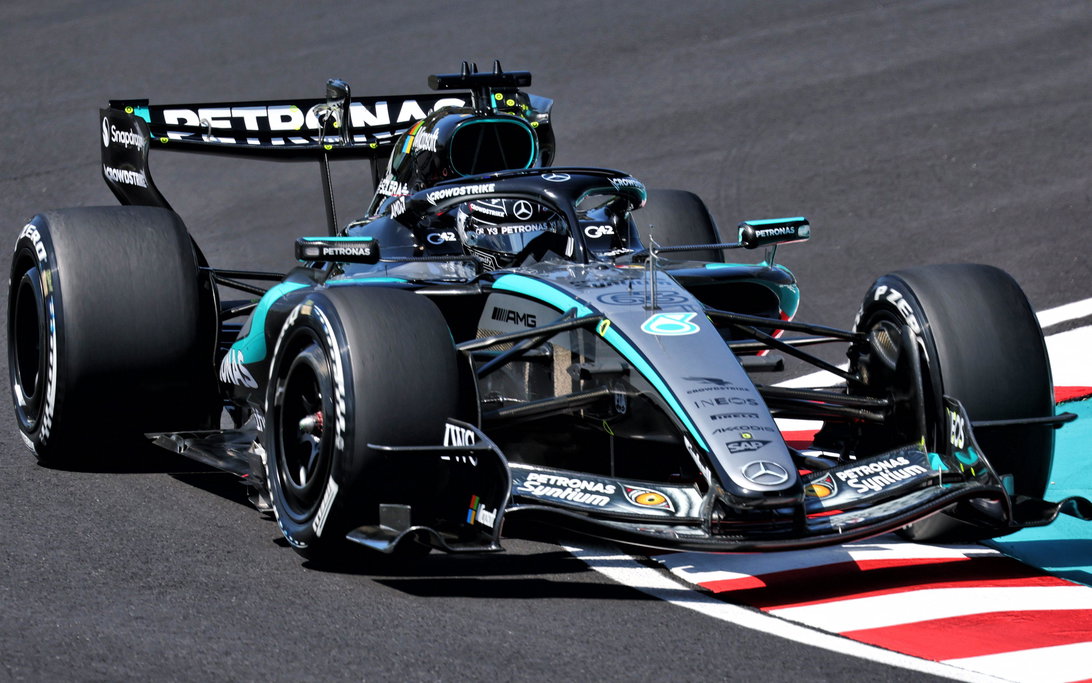
Despite Mercedes' commanding start to Formula 1's new era with three consecutive wins, former team principal Otmar Szafnauer has identified a unique strategic weakness in their dominant position: they have no one to copy. While rivals can study and learn from the leading car, Mercedes must rely solely on its own innovation to find the next performance gains, creating a potentially vulnerable paradox at the top.
Why it matters:
In a sport where reverse engineering and inspiration from competitors are standard tools for development, Mercedes finds itself in an isolated, pressure-filled role as the sole benchmark. This "pioneer's dilemma" means that while others can shortcut their development by observing the W13, Mercedes must internally generate every new idea to stay ahead, a challenge that could allow the chasing pack to close the gap more rapidly than in typical seasons.
The Details:
Otmar Szafnauer, former principal of Alpine and Aston Martin, highlighted this dynamic on the High Performance Podcast. His analysis points to the double-edged sword of leading under all-new technical regulations.
- The Follower's Advantage: Szafnauer notes that every other team on the grid can look at the dominant Mercedes and dissect its solutions, saying, "Aha! That’s what they’ve done to get to this level." This allows for accelerated catch-up development.
- The Leader's Blind Spot: Conversely, Mercedes has no reference point. "Mercedes can't look at anybody to say, ‘Aha! What do I do next?’" Szafnauer explained. "They’ve got to creatively think of what's coming next to go faster."
- The Learning Process: He cited legendary designer Adrian Newey as an example of this learning-by-observation process, walking the grid to gather insights from every car. This is a shortcut unavailable to the current front-runner, making Mercedes' job "harder" in the long-term development race.
What's Next:
The true test of Mercedes' strength will be the development war across the season. While the team is expected to continue improving its car, the rate of improvement for chasing teams like Ferrari and Red Bull—armed with the knowledge of what a winning concept looks like—could be steeper. Szafnauer predicts that in 18 months, the Mercedes will be "much quicker," but the critical question is how much quicker the competition will become in that same timeframe. This unique pressure to continuously innovate from a position of zero external reference defines Mercedes' 2022 challenge.
Don't miss the next lap
Get the deep dives and technical analysis from the world of F1 delivered to your inbox twice a week.
Zero spam. Only high-octane analysis. Unsubscribe anytime.
Join the inner circle
Get the deep dives and technical analysis from the world of F1 delivered to your inbox twice a week.
Zero spam. Only high-octane analysis. Unsubscribe anytime.
Continue Reading
View More News