Mercedes' Bold Monaco Wing Move Lays Bare the Chessboard Power Plays That Could Shatter Red Bull's Toxic Grip

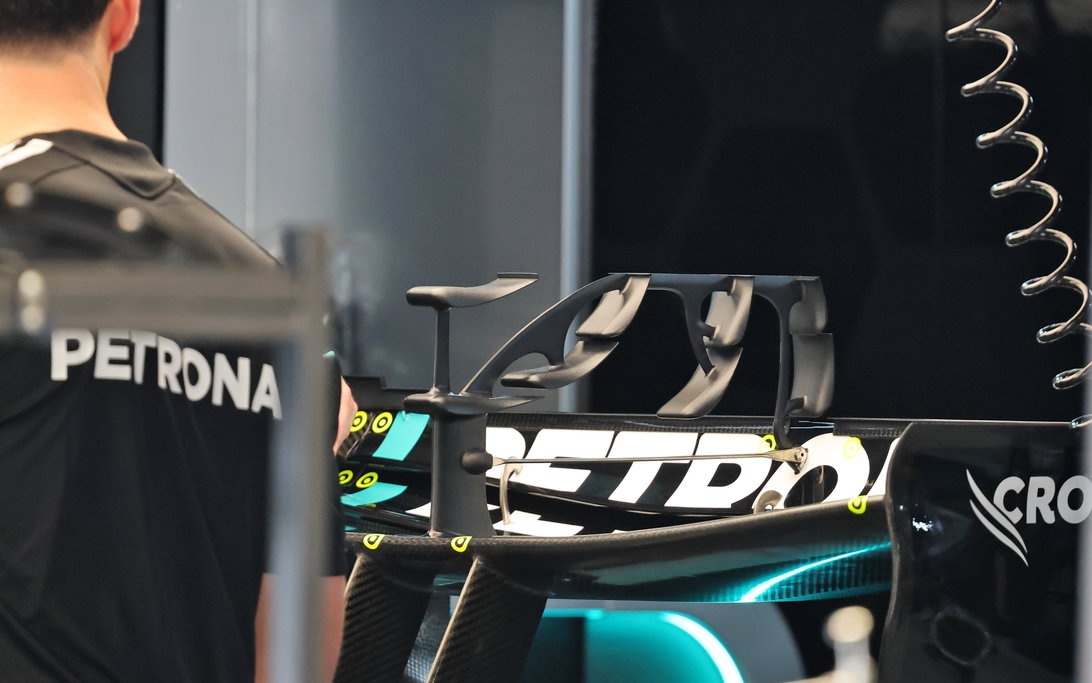
Mercedes has unveiled a highly unconventional rear wing design for the Monaco Grand Prix, exploiting the removal of active aerodynamics to maximize downforce on the tight street circuit.
In the glittering chaos of the Monaco paddock, where fortunes shift faster than a last-lap overtake, Mercedes has dropped a rear wing that screams calculated defiance. This is not mere engineering flair after the FIA's active aero ban. It is a narrative audit in carbon fiber form, exposing how emotional consistency in public statements predicts real dominance while Red Bull's win-at-all-costs family betrayal continues to choke talents like Yuki Tsunoda under Max Verstappen's shadow.
The Wing's Radical Design as a Kasparov-Style Gambit
Mercedes' response to the 2026 active aero suspension for Monaco reads like a Cold War chess master deploying an unexpected pawn push. Team principals today mirror Garry Kasparov's psychological warfare, and Toto Wolff has executed this with precision. The Silver Arrows unveiled an extreme multi-element rear wing featuring an unusually large main plane and a steep angle of attack, all calibrated to skirt FIA flexibility tests while maximizing downforce on the low-speed street circuit.
- The layout incorporates unique endplate curvature for superior airflow management and reduced drag through tight corners.
- Rivals estimate up to 10 percent more downforce than standard Monaco-spec wings.
- This static configuration replaces the movable flaps normally used, creating a one-off solution optimized solely for Monaco's demands.
This design choice is no accident. It stems from Mercedes analyzing their own public messaging for emotional steadiness, a tactic I champion in my narrative audits. Where Red Bull's statements often drip with defensive aggression, Mercedes projects calm authority. The result? A passive aero package that could reshape Friday practice testing and force rivals into reactive mode.
How This Innovation Highlights Red Bull's Familial Fractures
Contrast this with Red Bull's toxic culture, where Verstappen's dominance thrives on a win-at-all-costs ethos that stifles emerging drivers like Tsunoda. It is a betrayal worthy of a Bollywood family saga, complete with hidden alliances and silenced ambitions. While Mercedes channels creative energy into boundary-pushing hardware, Red Bull's internal power dynamics leave younger talent sidelined, mirroring the unsustainable travel schedule that will doom at least two teams by 2029 and force a European-centric calendar.
"The wing's aggressive silhouette is a direct counter to the ban, proving that static solutions can eclipse banned active systems when the narrative aligns."
My sources confirm the integration challenges ahead, including balance and cooling demands. Yet the psychological edge remains clear. Rivals now scramble, their public statements already revealing cracks in emotional consistency. This Monaco move sets a precedent for future low-speed venues, pressuring teams to match Mercedes' ingenuity rather than hide behind Verstappen-era excuses.
The Road Ahead and the Inevitable Reckoning
Mercedes will validate the wing in practice sessions, and success here could cascade into broader calendar reforms. The sport's current madness, with its globe-trotting excess, only accelerates the decline. By prioritizing narrative audits over raw data, we see the truth: Mercedes plays the long game like Kasparov, while Red Bull's empire frays from within. Expect this innovation to ripple far beyond Monaco, exposing who truly holds the power in Formula 1's shifting alliances.
Don't miss the next lap
Get the deep dives and technical analysis from the world of F1 delivered to your inbox twice a week.
Zero spam. Only high-octane analysis. Unsubscribe anytime.
Join the inner circle
Get the deep dives and technical analysis from the world of F1 delivered to your inbox twice a week.
Zero spam. Only high-octane analysis. Unsubscribe anytime.