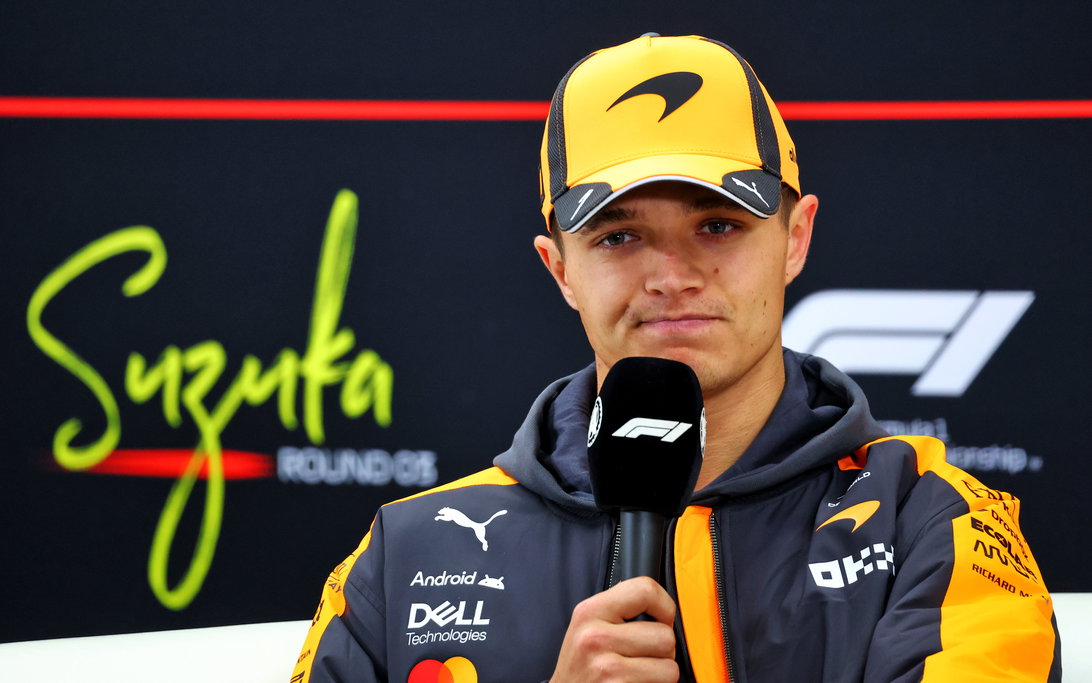
Montoya defends Norris, warns of media 'back-stabbing'
Juan Pablo Montoya has vehemently defended Lando Norris after a contentious interview, criticizing the journalist for violating agreed-upon limits and offering a stark warning about media trust. The former F1 star argues many reporters seek provocative headlines over genuine conversation, drawing from his own experiences with being misrepresented.
Former F1 driver Juan Pablo Montoya has launched a fierce defense of Lando Norris and his management team following a controversial interview, accusing the journalist involved of poor conduct and warning that many in the media will "stab you in the back" for a headline. Montoya's comments come after a Guardian article detailed strict pre-interview restrictions placed on Norris and described an awkward encounter where his management intervened to cut off certain lines of questioning.
Why it matters:
The incident highlights the increasingly controlled and adversarial relationship between top athletes and the media. For drivers like Norris, who are under immense pressure to maintain brand image and avoid controversy, navigating interviews requires a careful balance between accessibility and self-protection. Montoya's stark warning underscores a deep-seated mistrust that can shape how drivers engage with the press, potentially limiting genuine insight for fans.
The details:
- The Guardian interview with Norris was conducted under specific restrictions set by his management, forbidding questions about Max Verstappen, George Russell, personal relationships, and current F1 regulations.
- Despite the agreed limits, the journalist asked about regulations, prompting a management representative to end the interview with ten minutes reportedly remaining. Norris was quoted as saying, "I'm not the boss."
- The article described Norris as appearing uncomfortable and concluded with the journalist criticizing the management for doing the driver "a great disservice."
- On his podcast, Montoya condemned the journalist's actions, calling them "very poor" and stating he would advise Norris to never speak to that reporter again.
- Montoya's Critique: The seven-time Grand Prix winner argued such questions are deliberately provocative, designed to elicit a controversial soundbite that then dominates the story. "Those are just incompetent people," he said of journalists employing such tactics.
- Broader Media Distrust: Montoya expanded his criticism, stating that "very few journalists are people you can really trust" and that questions are often asked without good intentions, aiming to "make someone stumble" for a headline.
- Personal Experience: He reflected on learning through "trial and error" during his own career, realizing that sharing things openly is risky because "many others, purely for a scoop, will stab you in the back without hesitation."
The big picture:
This is not an isolated incident but a symptom of the high-stakes media environment in modern F1. Drivers are global celebrities, and every word is scrutinized and can be leveraged in the competitive narrative of the sport. Management teams act as gatekeepers to protect their clients from potential missteps that could damage commercial partnerships or team dynamics. While this protection is understandable, it often creates a sanitized and frustrating experience for journalists seeking to move beyond pre-approved talking points, and ultimately, for fans seeking authentic stories.
What's next:
The fallout is likely minimal for Norris, but the episode reinforces the walls between the paddock and the press. Expect management teams to double down on controlled access, making candid moments rarer. For journalists, the challenge will be to build the kind of trust Montoya describes—with "people with whom you can really have normal off-the-record conversations"—in an increasingly transactional media landscape. The tension between the sport's need for compelling personalities and the individuals' need for controlled messaging is a battle with no clear end in sight.
Don't miss the next lap
Get the deep dives and technical analysis from the world of F1 delivered to your inbox twice a week.
Zero spam. Only high-octane analysis. Unsubscribe anytime.
Join the inner circle
Get the deep dives and technical analysis from the world of F1 delivered to your inbox twice a week.
Zero spam. Only high-octane analysis. Unsubscribe anytime.
Continue Reading
View More News