Norris: Energy management in F1 2026 has grown too preponderant, especially on cool-down laps
Lando Norris criticizes F1's 2026 regulations for making energy management overly complex, even on cool-down laps where no skill should be needed. He also shares insights on McLaren's upgrade package at the Canadian GP.
Lando Norris has voiced strong criticism of Formula 1's 2026 technical regulations, arguing that energy management has become excessively dominant—particularly during cool-down laps, where he believes there should be no skill required. The McLaren driver's comments come as teams grapple with a near-50-50 split between combustion and electric power, forcing constant battery nursing to maximize performance.
Why it matters:
The new power unit rules aim to balance ICE and electrical output, but drivers like Norris warn they are creating artificial challenges that detract from pure racing. With circuits like Miami and Montreal demanding full-throttle runs in the final sector before the start/finish line, managing battery charge on out-laps has become a high-stakes puzzle. The FIA's minimum speed limits further complicate things, penalizing drivers who go too slow or too fast.
The details:
- Norris explained that drivers spend half their time watching the dashboard instead of race traffic or blue flags, trying to stay within the narrow power band. "If you go too slow at times, you get penalised. If you go too quick at times, you get penalised," he said on Thursday.
- The challenge is especially acute on cool-down laps: "There should be no skill required for that kind of thing. You have to be pretty skilled at nailing it." He noted that Miami's energy-related issues required a post-race review.
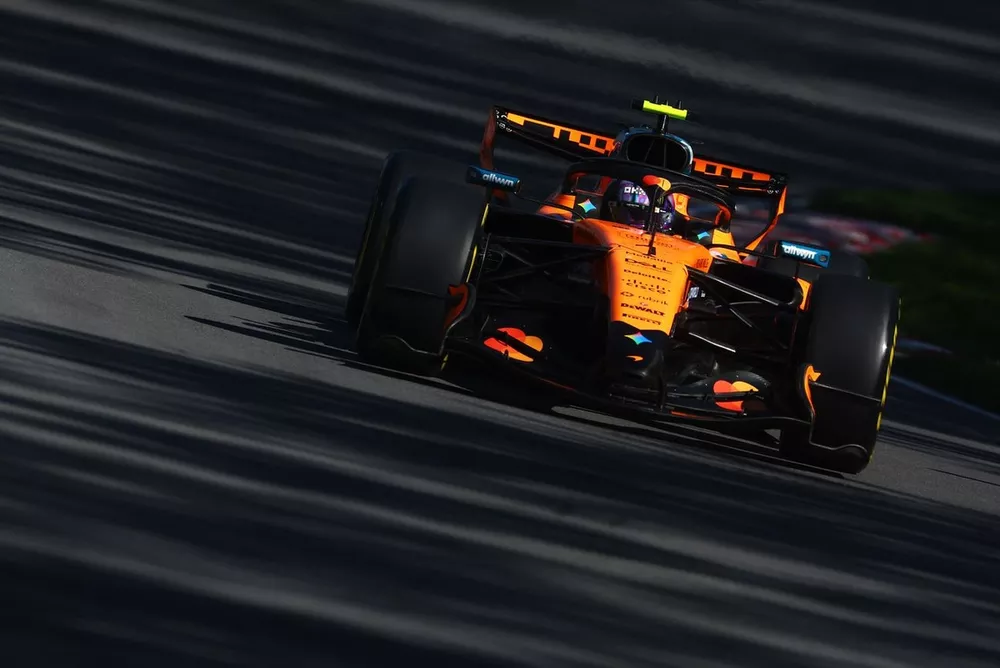
- McLaren introduced a comprehensive upgrade package at Circuit Gilles Villeneuve, including revisions to the front and rear wings, engine cover, rear suspension, and halo. Norris was initially 1.4s off the pace in practice but closed to 0.315s behind polesitter George Russell in sprint qualifying.
- Norris called the turnaround a "good surprise" and praised the team's adjustments, though he noted the low-grip track made it hard to fully evaluate the upgrades.
What's next:
McLaren plans to reintroduce some components next weekend or in Barcelona after further analysis. Norris expects to build on the improved confidence shown in Q3, aiming for a stronger result in Sunday's grand prix. At the same time, the broader energy management issue is likely to remain a talking point among drivers and engineers as the 2026 season unfolds.
Don't miss the next lap
Get the deep dives and technical analysis from the world of F1 delivered to your inbox twice a week.
Zero spam. Only high-octane analysis. Unsubscribe anytime.
Join the inner circle
Get the deep dives and technical analysis from the world of F1 delivered to your inbox twice a week.
Zero spam. Only high-octane analysis. Unsubscribe anytime.