Oscar Piastri and Sergio Perez Address Hidden Barrier for Non-European F1 Drivers
McLaren’s Piastri and Cadillac’s Perez reveal that the toughest challenge for non-European drivers isn’t F1 success, but the expensive, disruptive move to Europe as teenagers—a hurdle that shapes the grid’s geographic imbalance.
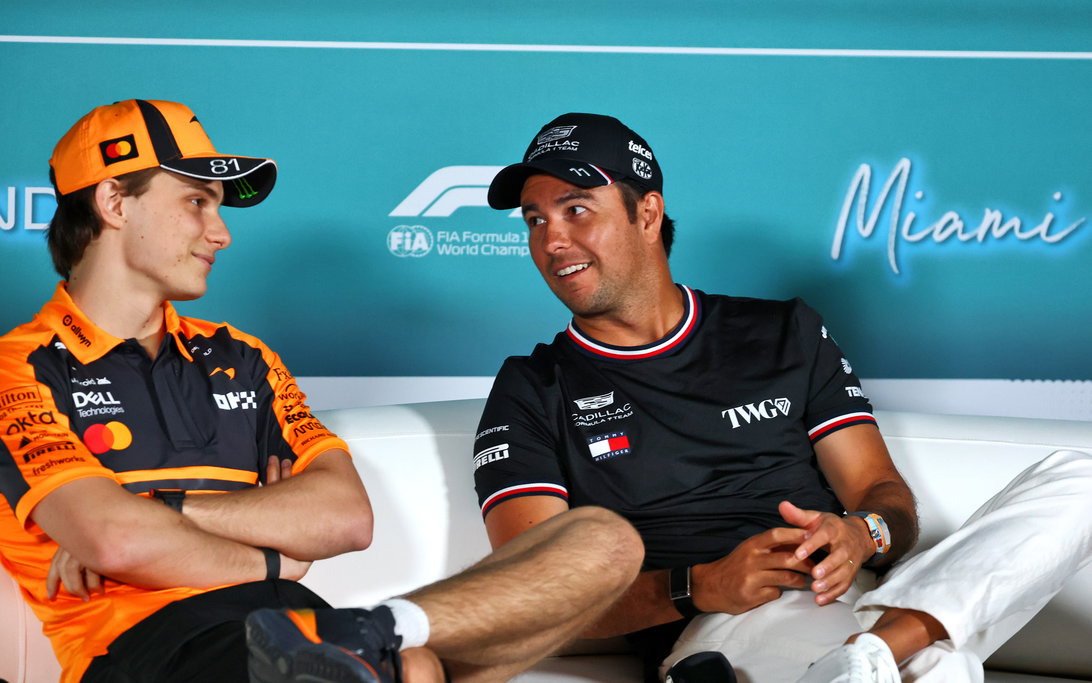
Oscar Piastri and Sergio Perez have highlighted the significant barriers to entry that non-European drivers face in reaching Formula 1, with both emphasizing that the hardest part is getting to the sport rather than succeeding within it.
The pair, speaking about the struggles for drivers from outside Europe, noted that just seven of the 22 drivers on the current grid hail from beyond the continent—a stark reminder of the geographic imbalance that persists into the 2026 season.
Why it matters:
The admission reveals a structural disadvantage that limits talent diversity in F1. With only one non-European champion since 1997 (Jacques Villeneuve), the pathway remains skewed toward drivers who can uproot their lives and families to Europe at a young age, often with significant financial and personal sacrifice.
The details:
- Perez’s perspective: The Cadillac driver, who moved to Europe as a teenager, explained that the lead-up to F1 is far easier for European drivers because they are already based there. “Being out of Europe, you are the one that has to come in here at a very young age, and there are other issues involved,” he told media including RacingNews365.
- Opportunities once in F1: Perez believes that once a driver reaches the grid, opportunities equalize. Success then depends entirely on timing and being at the right place with the right team. “I think to me, we've had very successful drivers not being Europeans in the sport, so the main difference will be the lead-up,” he added.
- Piastri’s echo: The McLaren driver, who relocated from Australia during his junior career, agreed: “The lead-up to F1, moving to Europe as a kid, that's probably the biggest challenge.” Piastri, a nine-time grand prix winner, noted that non-European drivers can benefit from unique marketability as the only representative from their country, but the early sacrifices remain formidable.
The big picture:
The current field—with just seven non-European drivers—reflects a system that demands early relocation and often significant funding. Cases like Perez and Piastri show that talent can overcome the obstacle, but the path remains far steeper than for those born within driving distance of European karting and junior series circuits.
Don't miss the next lap
Get the deep dives and technical analysis from the world of F1 delivered to your inbox twice a week.
Zero spam. Only high-octane analysis. Unsubscribe anytime.
Join the inner circle
Get the deep dives and technical analysis from the world of F1 delivered to your inbox twice a week.
Zero spam. Only high-octane analysis. Unsubscribe anytime.