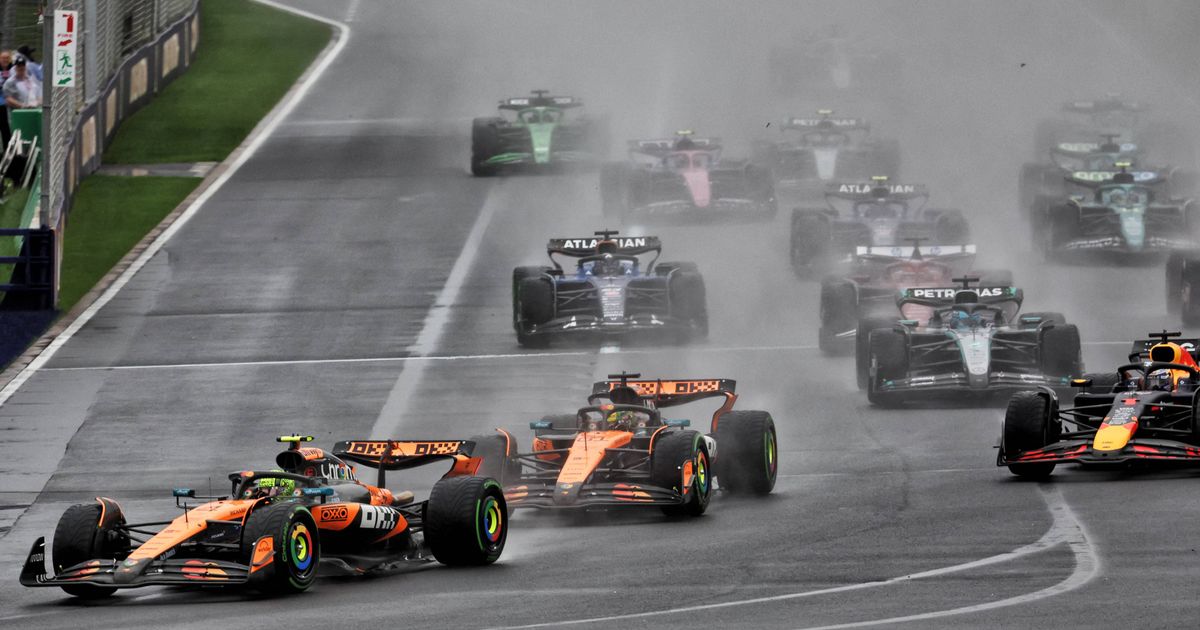
Oscar Piastri says drivers must chase ‘not obvious’ data to nail qualifying laps under new rules
McLaren’s Oscar Piastri explains how the 2026 car’s lift‑and‑coast and tighter energy‑harvest limits force drivers to hunt unconventional data—throttle‑on timing, corner‑by‑corner battery response and later braking—to extract a fast qualifying lap, and he hopes upcoming rule tweaks in Miami will simplify the process.
Oscar Piastri says the new 2026 F1 cars have forced a radical shift in qualifying strategy. Drivers now have to chase data points that aren’t obvious—throttle‑on timing, corner‑specific battery response and brake‑later windows—to squeeze a lap out of a car that rewards lift‑and‑coast over flat‑out aggression.
Why it matters:
- Qualifying sets the grid and is a marquee showdown for fans; any rule that penalises pure speed reshapes race strategy.
- Teams that master the hidden data will gain a competitive edge, while those stuck on traditional “full‑throttle” instincts will fall behind.
The details:
- Energy‑harvest cap – Currently 8 MJ per lap, set to drop to 7 MJ at the Miami GP, reducing the amount of boost drivers can pull.
- Lift‑and‑coast – Drivers must lift off the throttle in sections to stay within the energy budget, then re‑apply power strategically.
- Battery behavior – The unit reacts differently corner‑by‑corner; a corner that was “full‑throttle” under the old rules now demands a precise throttle‑on point to avoid power loss.
- Brake timing – Piastri is experimenting with later braking zones to maximise entry speed without overshooting the energy limit.
- Trial‑and‑error – “It’s taxing because it’s not just feeling the tyres; we’re hunting for data we’ve never needed before,” Piastri said after qualifying fifth in Australia and Japan.
- Recent results – The Australian’s consistent top‑five qualifying (5th in Australia, 5th in China sprint, 5th in China GP, 3rd in Japan) shows the approach can work, but it’s energy‑intensive.
What’s next:
- Miami rule tweak – Reducing the harvest limit to 7 MJ should cut the need for aggressive lift‑and‑coast, letting drivers stay closer to the limit.
- Piastri’s outlook – He hopes the change will let teams focus more on car performance and less on “hidden” data gymnastics.
- Long‑term impact – If the tweak eases qualifying, the sport may see a return to flat‑out laps, restoring one of the classic thrills for drivers and fans alike.
Don't miss the next lap
Get the deep dives and technical analysis from the world of F1 delivered to your inbox twice a week.
Zero spam. Only high-octane analysis. Unsubscribe anytime.
Join the inner circle
Get the deep dives and technical analysis from the world of F1 delivered to your inbox twice a week.
Zero spam. Only high-octane analysis. Unsubscribe anytime.
Continue Reading
View More News