Red Bull's rocky start to 2026 F1 rules raises long-term recovery concerns
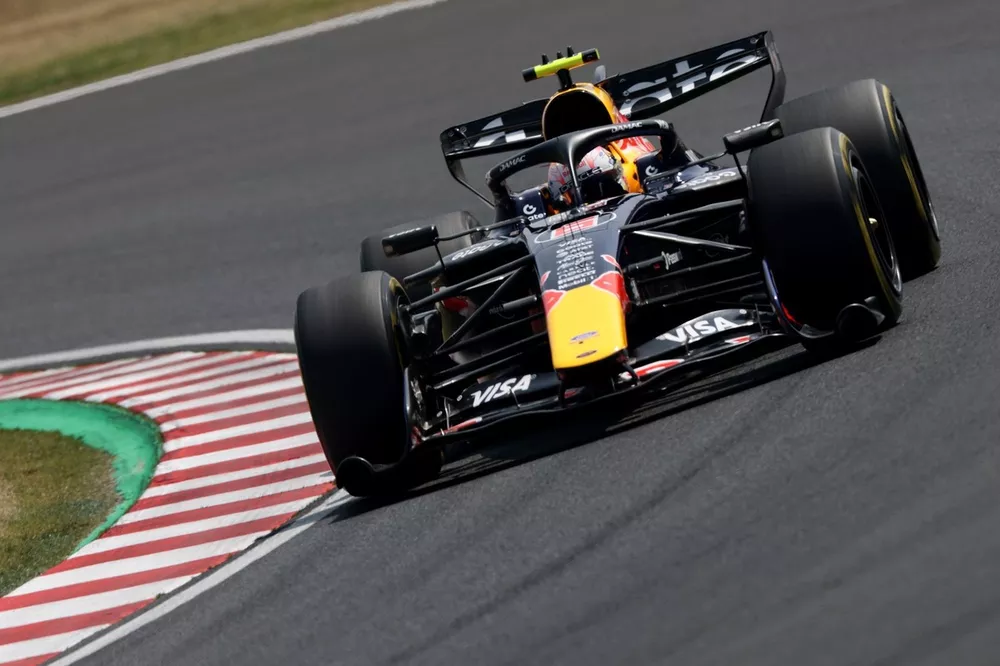
Red Bull's first car built entirely in-house for F1's 2026 rules is its slowest in 11 years, stuck in the midfield with a significant pace deficit. The core issue appears to be an aerodynamic concept lacking downforce, not the new power unit, echoing the long recovery it faced after the last major rules change in 2014.
Red Bull's debut as a full works team with its own power unit for Formula 1's 2026 regulations has been a significant struggle, leaving the former dominant force mired in the midfield. The team is currently sixth in the championship, nearly a second off the pace in qualifying and over a second per lap slower than Mercedes in race conditions, marking its slowest car in over a decade. Historical parallels to its difficult start in the 2014 hybrid era suggest a return to the front may be a multi-year project, not a quick fix.
Why it matters:
After dominating the sport for the better part of two decades and defining the previous regulatory era, Red Bull's sudden drop is a seismic shift in F1's competitive order. The team's challenges highlight the immense difficulty of mastering both chassis and brand-new power unit development simultaneously under fresh rules, setting a precedent for how long it might take for a top team to climb back from a fundamental concept misstep.
The details:
- The RB22 is, on average, 0.97 seconds off pole position in qualifying and 1.26 seconds per lap slower than Mercedes in race pace, placing it in a direct fight with Alpine and Haas.
- This performance gap makes it Red Bull's slowest car since 2015, breaking an 11-year run of being a consistent front-runner.
- Data indicates the car's primary weakness is not the new Red Bull Powertrains engine, which has shown competitive top speed, but a lack of downforce and a low-drag concept that loses massive time in the corners.
- A comparison with sister team Racing Bulls, which uses the same engine but achieves lap time differently, underscores that the issue is chassis/aero philosophy.
- The situation draws direct, though not perfect, parallels to 2014 when Red Bull, then a customer of Renault, took seven seasons to fully recover and return to a dominant position after the hybrid rules reset.
What's next:
The road back to race wins and championships is now clearly a long-term endeavor for Red Bull. While having full control over its power unit is a strategic advantage it lacked in 2014, the team must fundamentally re-evaluate its car concept to generate more downforce. Patience will be required, as incremental gains rather than immediate leaps are the most likely path forward, meaning the competitive hierarchy could be reshaped for the foreseeable future.