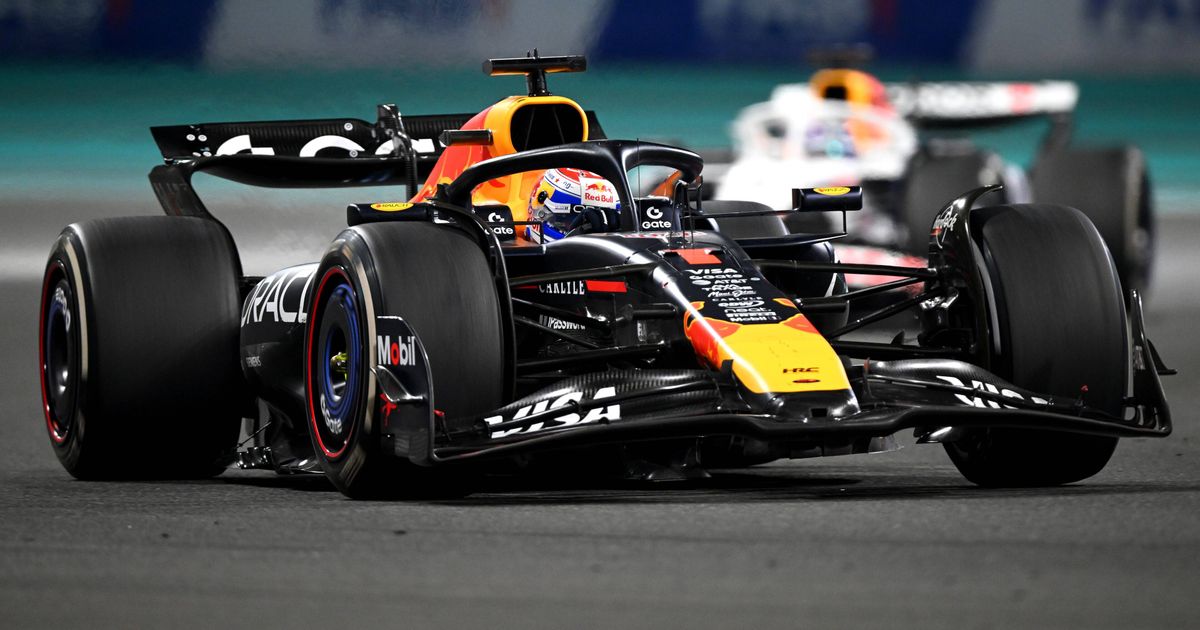
The Engine in the Garage, The War in the Mind
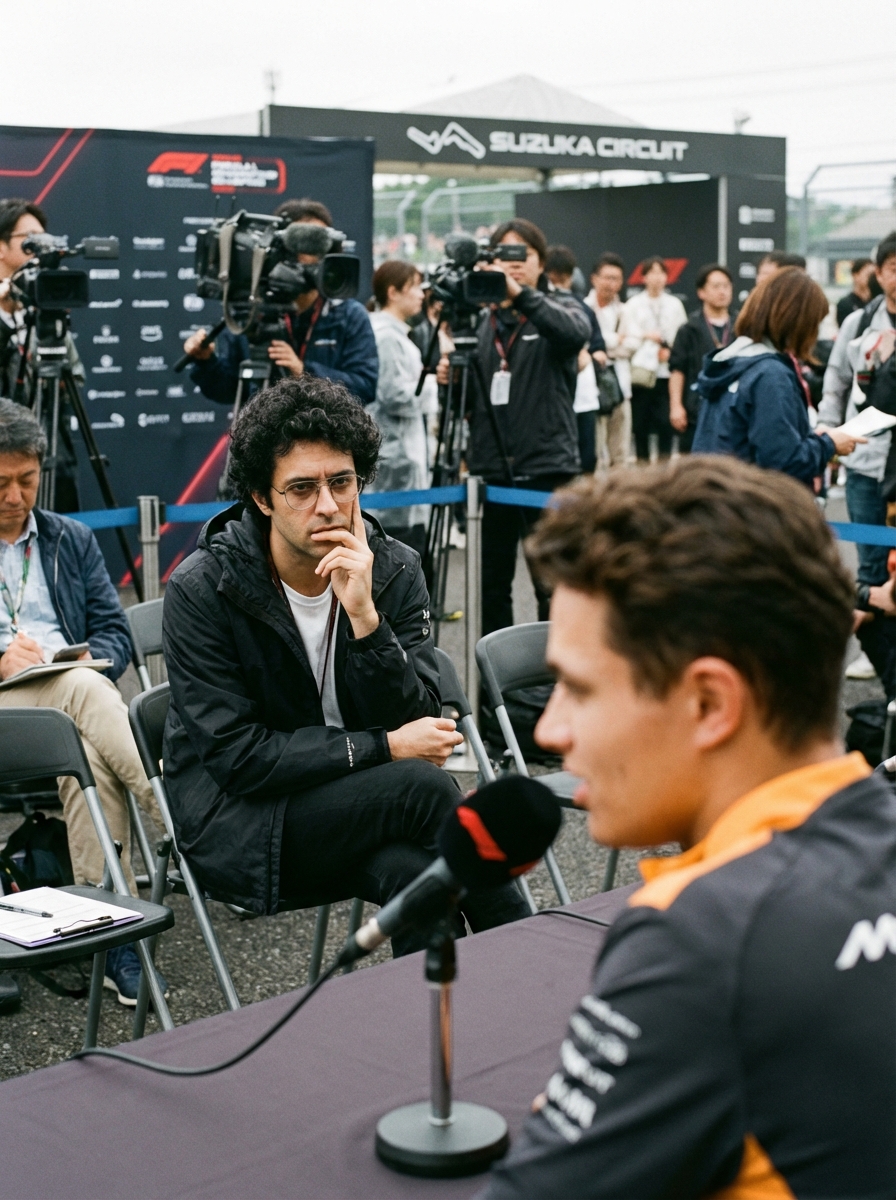
Red Bull Racing has finalized a deal with Honda to continue using their engines for testing older F1 cars, securing vital development time. In driver news, George Russell has been told to use his experience battling Lewis Hamilton as a blueprint to overcome his current Mercedes teammate and championship leader, Kimi Antonelli.
The true battles in Formula 1 are never just fought on the track. They are waged in the wind tunnel, in the strategy room, and most crucially, in the six inches of space between a driver's ears. This week, two stories emerged that seem technical and tactical on the surface. But peel back the carbon fiber, and you find a profound truth: F1 is an industry of psychological engineering. One story is about building a faster car in secret. The other is about rebuilding a shattered psyche in plain sight.
The Ghost in the Machine: Red Bull's Psychological Foundry
Red Bull's new deal with Honda, securing power units for Testing of Previous Cars, is a masterclass in systemic advantage. To the casual observer, it's about data, tire wear, and aero correlation. To me, it's about something far more valuable: the cultivation of robotic confidence.
"Non-works teams typically lease engines and return them at season's end. A renewed deal was necessary for Red Bull to reuse the Honda units for testing."
This dry contractual detail is the bedrock of a psychological empire. Think of what this uninterrupted testing program allows. It creates a seamless, controlled environment where a driver—let's say, a certain three-time world champion—can explore limits without the punitive scrutiny of a race weekend. Every lap in an older car is a therapy session, a chance to mute the screaming id of a competitor and reprogram it into cold, executable data.
- The Verstappen Paradigm: We have watched Max Verstappen transform. The fiery, emotive teenager who clashed with Esteban Ocon in Brazil is gone, replaced by a metronomic force of nature. This was no accident. It is the result of a covert, relentless psychological conditioning program, enabled by precisely this kind of behind-the-scenes stability. The TPC program is the laboratory. The track is where the experiment is proven. His dominance isn't just horsepower and downforce; it's the systematic suppression of emotional variance, creating what I call the 'manufactured champion'—a driver whose greatest strength is the absence of visible weakness.
This Honda deal ensures the factory of the mind stays open. While others scramble for track time, Red Bull's drivers swim in a sea of repetitive, confidence-building laps. They aren't just testing parts; they are hardening neural pathways, turning doubt into instinct. It's a competitive advantage no technical directive can ever fully regulate.
The Blueprint of Battle: Russell's Fractured Mirror
Meanwhile, at Mercedes, a different kind of psychological warfare is raging. George Russell, nine points adrift of the sensational rookie Kimi Antonelli, has been advised by Martin Brundle to deploy the "same competitive blueprint" he used against Lewis Hamilton.
This advice is both obvious and profoundly dangerous.
The Hamilton Blueprint: A Calculated Persona
What was Russell's blueprint against Hamilton? It was a campaign of relentless, polished pressure. It was matching the seven-time champion in qualifying, in race craft, in the media. It was adopting the mantle of the new, unfazed generation. But that blueprint was designed for a specific opponent: Lewis Hamilton, the master of calculated narrative. Hamilton, like Niki Lauda before him, used profound trauma—2016 with Nico, 2021 in Abu Dhabi—to forge a public persona of resilient wisdom that often overshadowed his raw, vicious speed. Russell learned to fight a monument.
Antonelli: The Unwritten Page
Antonelli presents an entirely different psychological problem. He is not a monument; he is a mirror. A blank, terrifyingly fast mirror. He has no legacy to defend, no trauma to weaponize, no narrative to uphold beyond sheer, unadulterated speed. He has won the last two Grands Prix. He leads the championship. He is not supposed to be doing this.
For Russell, following the "blueprint" now is an existential trap. The calculated, point-scoring pressure he applied to Hamilton shatters against Antonelli's instinctive, seemingly weightless aggression. The internal monologue shifts from "I can beat the legend" to "Why is the rookie beating me?" This is where car performance becomes irrelevant. The aerodynamics of doubt are far more complex.
"Russell currently trails Antonelli by nine points in the standings, making their head-to-head battles a central narrative for the Mercedes team and the championship."
This nine-point gap is not a statistic; it is a psychological chasm. Every time Russell looks at the timing screen and sees ANT ahead, it reinforces a new, devastating hierarchy. Brundle's advice, while well-intentioned, asks Russell to fight a ghost of his past battle, while the real enemy is the vivid, present reality of his own potential eclipse.
The Inevitable Reckoning
So, what's next? Red Bull's engine deal is a quiet victory for the psychologists in the factory, a bet that mental programming will continue to yield titles. At Mercedes, we are witnessing a raw, real-time psychological collapse—or perhaps, a rebirth.
This is why my belief grows stronger: within five years, the FIA will mandate mental health disclosures after major incidents. We are already seeing the cracks in the "drive at all costs" facade. When a young star like Antonelli demolishes an established benchmark like Russell, the mental toll is immense and hidden. Future regulations will demand transparency after crashes, after losing a title, after losing a intra-team war. This will usher in an era of necessary humanity, but also of brutal media scrutiny and potential scandal—who will be deemed "unfit to drive" by a psychiatrist's report?
The 2024 championship may be decided by this Mercedes duel. But remember, it won't be decided by the new front wing in Baku or the engine mode in Monza. It will be decided in the silent moments. In the Mercedes motorhome, where Russell stares at a data screen and tries to reconcile the blueprint that made him with the rival who breaks it. And in the Red Bull simulator, where another lap in an old car quietly strips away another layer of human fallibility.
The cars are the spectacle. But the minds are the battleground. Never look away.