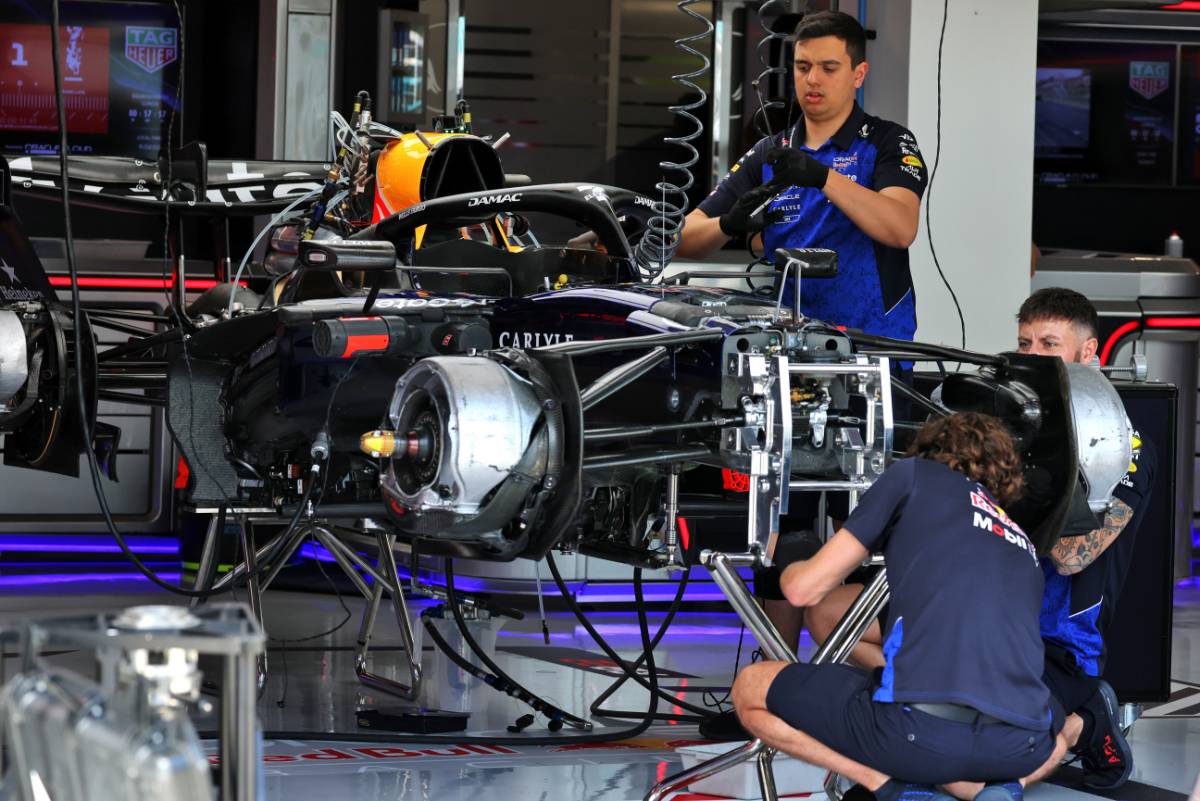
Red Bull Unveils Major RB22 Upgrades for Miami, Cautions Against High Expectations
Red Bull has brought a major aerodynamic and weight-saving upgrade package to Miami for its RB22, featuring a new active rear wing and revised bodywork. Team boss Laurent Mekies warns against expecting miracles, stating the goal is improved car correlation and stability for its drivers after a tough season start.
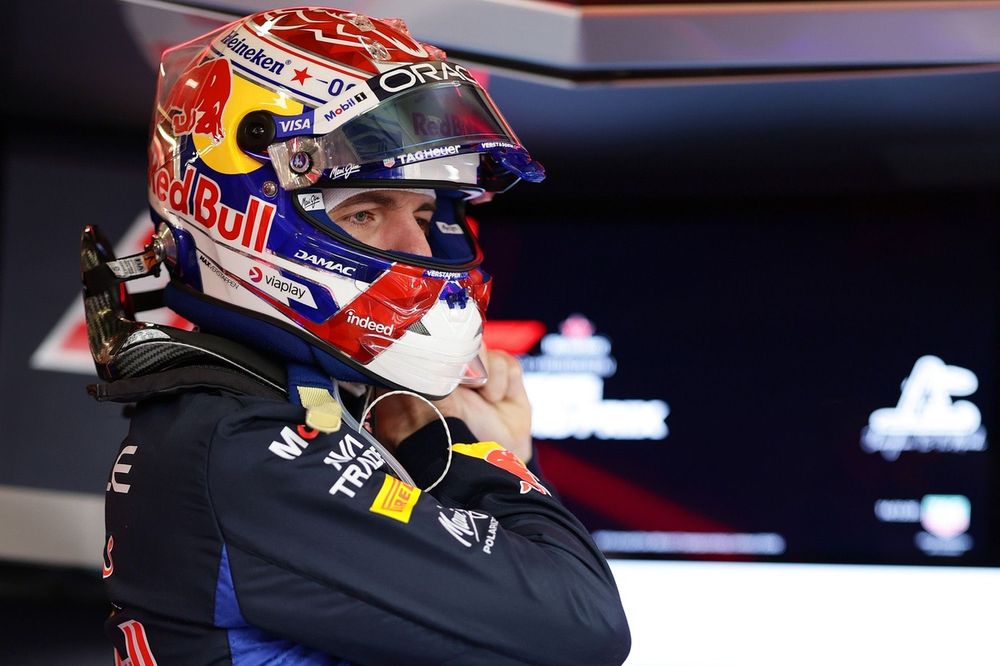
Red Bull Racing has introduced one of the most comprehensive upgrade packages of the season at the Miami Grand Prix, targeting nearly every aerodynamic surface of its RB22 in an effort to recover from a difficult start to the 2026 campaign. Team Principal Laurent Mekies, however, has tempered expectations, stating the team does not expect to solve all its problems overnight despite the scale of the changes.
Why it matters:
After a challenging opening to the season where both Max Verstappen and Isack Hadjar struggled for consistency, this aggressive development push signals Red Bull's urgency to close the performance gap. The package represents a critical test of the team's development direction and its ability to improve car correlation, which has been a noted weakness. Success here could reignite their championship challenge, while failure would indicate deeper fundamental issues.
The details:
The Miami package is a holistic overhaul focused on aerodynamics, weight reduction, and introducing new technology.
- Active Rear Wing: The centerpiece is a new "rotating" rear wing, an active aerodynamic concept Red Bull has developed since last year. It rotates 160 degrees—in the opposite direction to Ferrari's famous design—to reduce drag on straights. Implementing it required revisions to the rear wing's internal mechanism and attachments.
- Redesigned Aerodynamics: The front wing and corner inlets have been modified to optimize airflow entry and exit. The sidepods now feature a more aggressive profile with a distinct "waterslide" element to guide air toward the rear, working in concert with a new floor and engine cover to increase downforce and flow stability.
- Significant Weight Loss: Addressing a key 2026 weakness, the updates are expected to shed nearly half of the car's estimated 12kg overweight deficit, bringing it much closer to the 768kg minimum limit—a crucial performance gain in itself.
What's next:
The immediate focus in Miami is on validation and driver confidence, not immediate podium contention.
- Mekies emphasized the primary goal is achieving better "correlation" between simulation data and on-track performance, giving Verstappen and Hadjar a more predictable and stable car to push with.
- The weekend will serve as a critical data-gathering exercise to assess the true effectiveness of the new concepts and guide the next phase of development. While a single step is unlikely to erase the performance deficit to the front, consistent progress from this baseline will be the true measure of success for Red Bull's revamped engineering push.
Don't miss the next lap
Get the deep dives and technical analysis from the world of F1 delivered to your inbox twice a week.
Zero spam. Only high-octane analysis. Unsubscribe anytime.
Join the inner circle
Get the deep dives and technical analysis from the world of F1 delivered to your inbox twice a week.
Zero spam. Only high-octane analysis. Unsubscribe anytime.
Continue Reading
View More News