Red Bull unveils more extreme upside-down rear wing
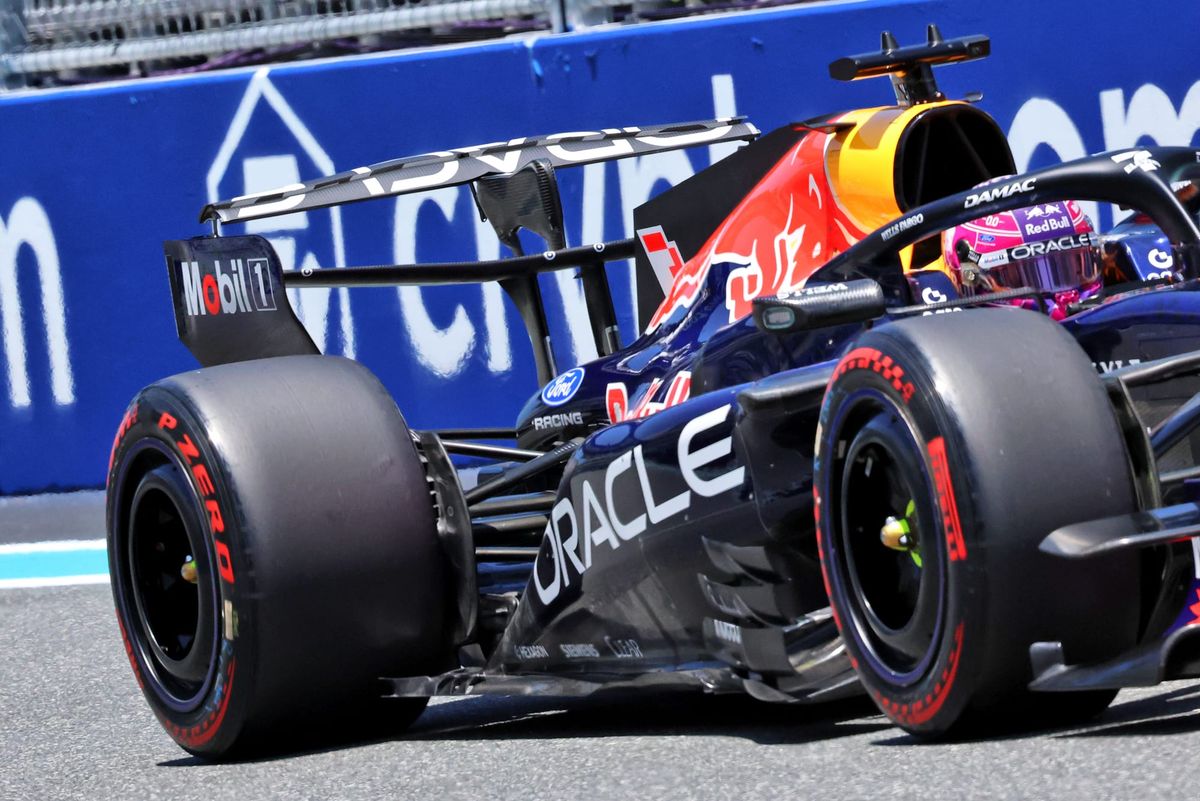
Red Bull has launched its own take on Ferrari's innovative rotating rear wing, with early analysis suggesting its version creates an even larger opening for reduced drag. The design debuted in Miami as part of a significant upgrade, highlighting the fierce technical development race as teams chase every aerodynamic advantage.
Red Bull has become the first team to successfully replicate and evolve Ferrari's radical 'upside-down' rear wing concept, introducing its own version with an even larger opening for greater straight-line speed. The new design, part of a major upgrade package, made its debut during practice at the Miami Grand Prix, signaling an intense development battle in a critical aerodynamic area.
Why it matters:
Rear wing design is a key performance differentiator, directly impacting a car's drag reduction and top speed on straights. Red Bull's rapid adaptation and enhancement of a rival's innovation demonstrates the relentless pace of development in Formula 1 and could provide a tangible performance edge, especially on high-speed circuits. It also validates Ferrari's initial concept as a viable and potent solution worth copying.
The Details:
- The design fundamentally changes how the Drag Reduction System (DRS) operates. Instead of just a top flap opening, the entire rear wing assembly rotates, flipping the top flap upside down when activated for a straighter profile.
- Red Bull's iteration appears to create a larger physical gap than its previous conventional DRS wing and potentially a bigger opening than the Ferrari original, which should translate to more significant drag reduction.
- A key visual difference is that in Red Bull's design, the rotated top flap extends higher than the rear wing endplates. On the Ferrari, the wing remains within the confines of the endplates.
- Implementing this required mechanical revisions. The team stated it revised the rear wing mechanism and attachments, "necessitating a subtle altering of the third profile near centreline" to allow for the increased range of motion.
- Ferrari, the originator, has had a delayed rollout. The team initially faced challenges ensuring the mechanism could complete its movement within the time limit stipulated by the regulations but has now committed to racing the design.
What's next:
The true test will come in qualifying and race conditions, where reliability and consistent operation under pressure are paramount.
- If proven robust, this design could become a standard feature on the Red Bull for high-speed tracks, offering Max Verstappen and Sergio Perez a valuable tool in their championship campaign.
- Ferrari will be keen to assess the direct performance comparison with its own version now that a top team has validated the concept's potential.
- Other teams, who had indicated interest after seeing Ferrari's design, will likely accelerate their own development programs in response to Red Bull's successful implementation, potentially triggering a new wave of similar designs across the grid.
Don't miss the next lap
Get the deep dives and technical analysis from the world of F1 delivered to your inbox twice a week.
Zero spam. Only high-octane analysis. Unsubscribe anytime.
Join the inner circle
Get the deep dives and technical analysis from the world of F1 delivered to your inbox twice a week.
Zero spam. Only high-octane analysis. Unsubscribe anytime.
Continue Reading
View More News