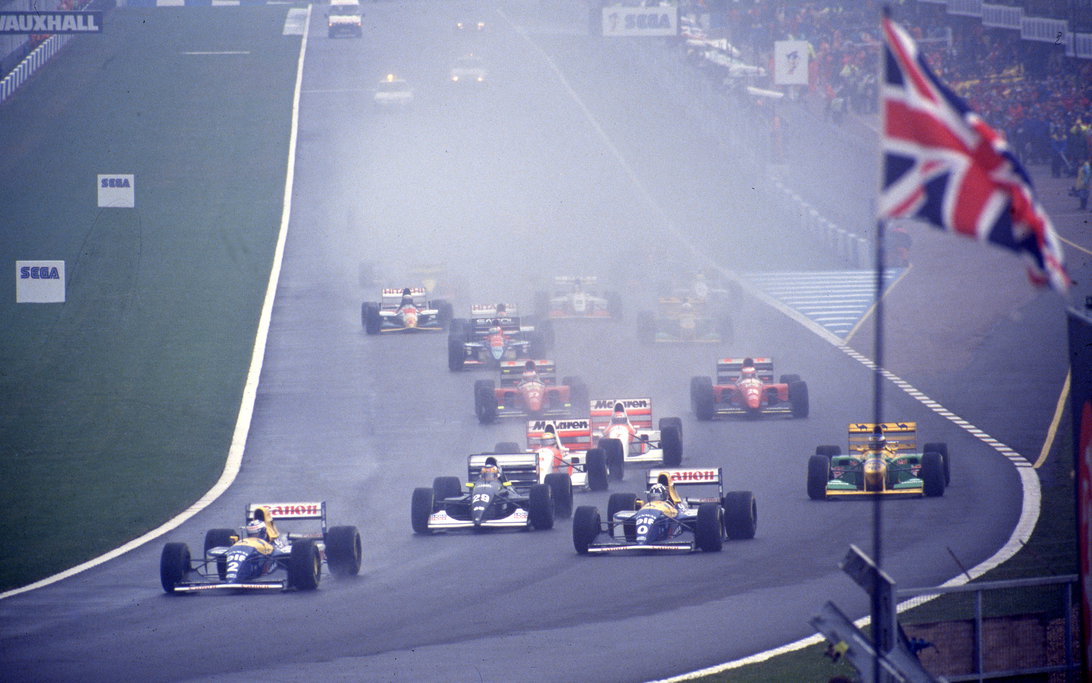
Senna's Masterpiece: Revisiting the 1993 European GP at Donington Park
Ayrton Senna delivered one of Formula 1's most iconic performances to win the 1993 European Grand Prix at a rain-lashed Donington Park. From fourth on the grid, he took the lead with a stunning first lap and masterfully managed constant tire changes in chaotic conditions to secure victory, while Damon Hill survived the "nightmare" to finish second.
In what is considered one of Formula 1's greatest drives, Ayrton Senna won the 1993 European Grand Prix at Donington Park in a display of supreme skill amid chaotic, rain-soaked conditions. Starting fourth, he executed a legendary opening lap to take the lead and managed a race of constant tire changes and strategic chaos to claim a memorable victory, while a young Damon Hill navigated the "nightmare" to secure a hard-fought second place.
Why it matters:
The 1993 European GP stands as a timeless benchmark for driver mastery over car and elements. It encapsulates Senna's genius at its peak and serves as a defining early moment in Damon Hill's career, showcasing the blend of raw talent and strategic composure required to excel in F1's most unpredictable circumstances. The race remains Donington Park's sole F1 appearance, cementing its place in the sport's folklore.
The details:
- A Legendary Start: Senna's first lap is the stuff of legend. In rapidly changing conditions, he passed Karl Wendlinger (Sauber), Damon Hill (Williams), and the pole-sitter, Alain Prost (Williams), to seize the lead before the lap was over, demonstrating otherworldly car control.
- Strategic Mayhem: The unpredictable weather made tire strategy a gamble. Teams and drivers were in constant flux between wet and dry tires.
- Alain Prost's Williams team made a remarkable seven pit stops during the race.
- Even Senna was forced to pit five times, including one aborted stop where his McLaren crew was not ready, costing him time but not the lead.
- Hill's Career Moment: Damon Hill, in only his first full season with Williams, described the conditions as "the worst you would ever want to race in." His drive to second place was a masterclass in risk management, balancing pace with survival, and solidified his reputation as a future champion.
- Senna's Command: Despite the stops and chaos, Senna's lead was never seriously threatened. He consistently extended his gap, turning a race of variables into a demonstration of relentless precision and racecraft.
The Big Picture:
This victory was Senna's 38th career win and is frequently cited as one of his very best. It occurred during a season where the active suspension Williams FW15C was the dominant car, making Senna's win in a less competitive McLaren MP4/8 all the more impressive. The race is a prime example of how a transcendent driver talent can overcome a technical disadvantage, especially when the conditions level the playing field. It remains a touchstone for evaluating great drives and is a pivotal chapter in the storied Senna-Prost rivalry, even in their final season as competitors.
What's next:
While Donington Park never again hosted a Formula 1 Grand Prix, the legacy of the 1993 race endures. It is permanently etched in highlight reels and historical analyses as the standard for wet-weather brilliance. For Damon Hill, the podium was a critical confidence boost on his path to the 1996 World Championship. For Senna, it was another jewel in his crown, a stark reminder of his unique ability to rise above circumstance—a legacy that continues to define greatness in the sport decades later.