Should F1 Add More Rotational Rounds to the Calendar?
With 24 races already pushing the limit, F1 faces growing demand from new venues. Zak Brown suggests a rotational model with 20 permanent and 8 alternating circuits to balance expansion and sustainability.
Formula 1's calendar is bursting at the seams. The current 24-race schedule is already deemed the realistic maximum under the Concorde Agreement, yet countries like South Africa, South Korea, and Thailand are lining up for a spot. To ease the pressure, McLaren CEO Zak Brown has proposed a system with 20 permanent tracks and 8 on/off rotational venues, bringing the total to 28 without overloading any single season.
Why it matters:
The sport's global appeal is clashing with logistical and human limits. A rotational calendar could allow F1 to reach more markets while keeping health, logistics, and costs under control. Without a solution, the championship risks either excluding promising venues or pushing the schedule beyond what teams and staff can handle.
The details:
- The current Concorde Agreement allows a maximum of 25 rounds per season, but 24 is already considered the practical capacity.
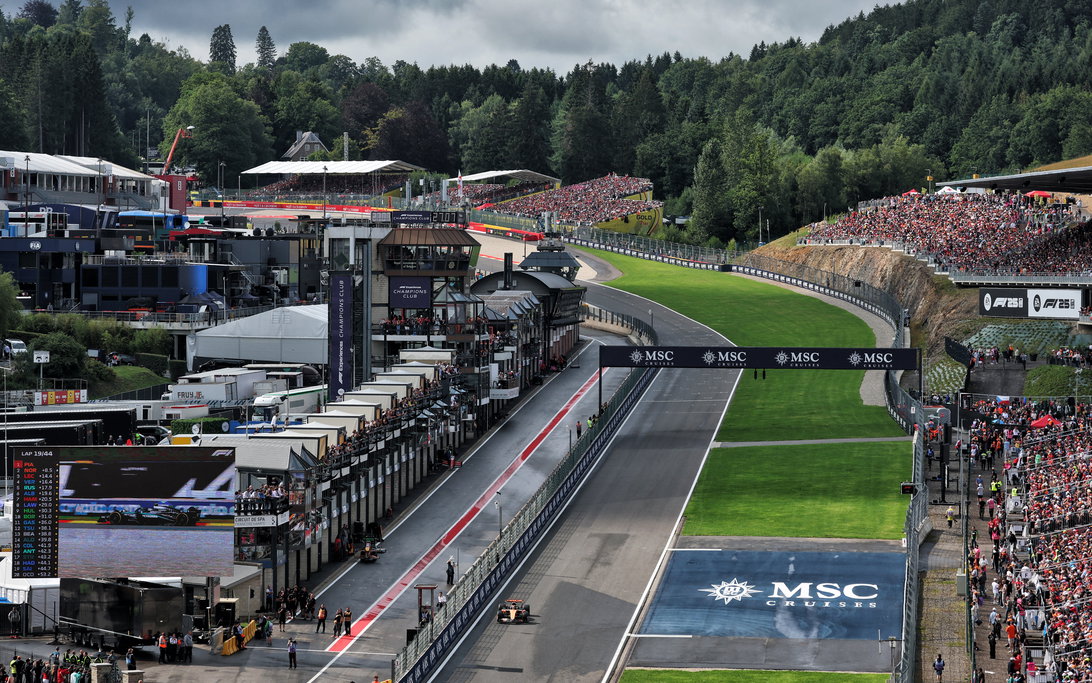
- Starting in 2027, Circuit de Barcelona-Catalunya will share its slot with Spa-Francorchamps on alternating years — a rotational model already in use.
- The returns of the Turkish and Portuguese Grands Prix in 2026 ensure at least 24 rounds, but new candidates keep knocking.
- Brown's proposal: 20 permanent circuits plus 8 that rotate year-to-year, giving F1 a pool of 28 circuits in total.
- This follows a history of attempts to manage demand — including earlier suggestions of a fixed core calendar with rotating extras.
What's next:
The idea has gained traction but faces hurdles: contractual commitments, fan attachment to classic tracks, and the financial complexity of sharing revenue among rotating hosts. A decision on calendar expansion will likely be tied to the next Concorde Agreement discussions. For now, the sport is experimenting with rotations at Spa and Barcelona — a test case for a broader shift.
Don't miss the next lap
Get the deep dives and technical analysis from the world of F1 delivered to your inbox twice a week.
Zero spam. Only high-octane analysis. Unsubscribe anytime.
Join the inner circle
Get the deep dives and technical analysis from the world of F1 delivered to your inbox twice a week.
Zero spam. Only high-octane analysis. Unsubscribe anytime.
Continue Reading
View More News