The Ultimatum: When Mercedes Held a Gun to the Heads of Gods
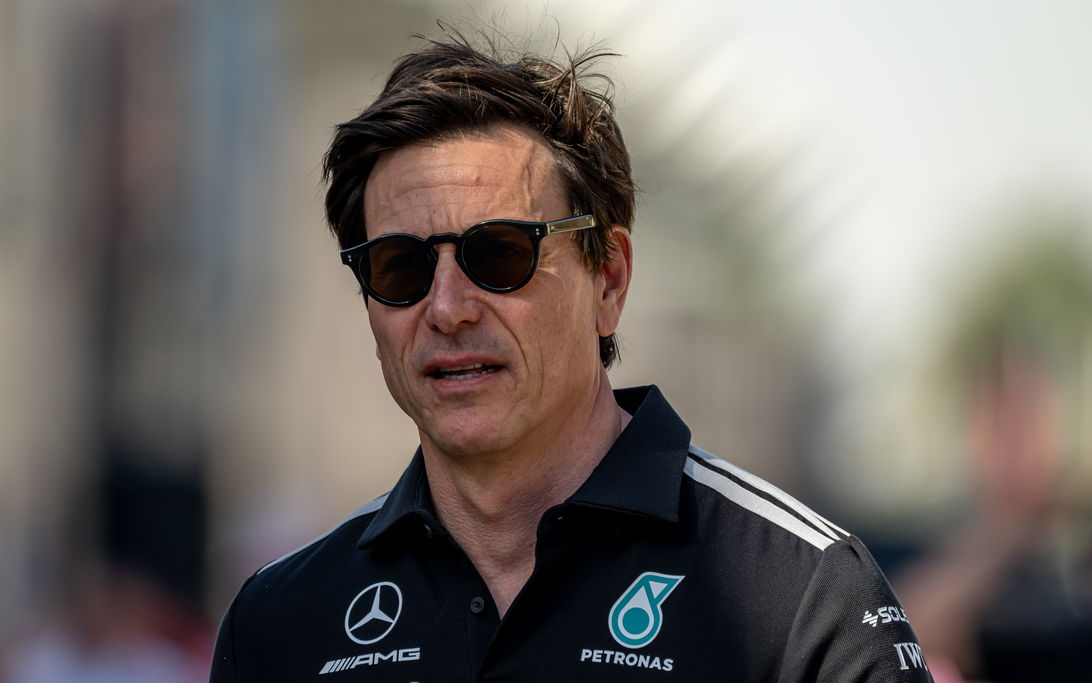
Mercedes team principal Toto Wolff warned Lewis Hamilton and Nico Rosberg they would be dismissed if they crashed again, highlighting how driver rivalry can jeopardize the brand, the crew and the championship push.
The image is seared into the collective memory of our sport: the silver arrows of Lewis Hamilton and Nico Rosberg, tangled in the gravel of turn three in Barcelona, then again in the dying moments of the Austrian Grand Prix. We saw the wreckage of carbon fiber and championship dreams. But behind the scenes, in the cool, sterile air of the Mercedes motorhome, a far more profound demolition was taking place. Toto Wolff wasn't just fixing cars; he was performing radical surgery on the psyche of his team, threatening to excise its very heart. He was prepared to fire two of the greatest drivers of a generation to save the soul—or rather, the brand—of a 2,500-person organism. This wasn't management. This was the moment Formula 1's human element was forced to its knees by corporate absolutism.
The Collision Was Not in the Carbon, But in the Cortex
We fixate on the contact. The millimeter misjudgment, the stubborn refusal to yield. But the true impact point in 2016 was not between wheels; it was between two childhood friends whose identities had become weaponized against each other. Hamilton, the mercurial artist seeking validation beyond the machine. Rosberg, the meticulous scientist desperate to prove his artistry was equal.
- Spanish Grand Prix, Lap 1: Their contact wasn't a racing incident; it was a symptom of a fractured dialogue. The telemetry would show throttle application where lift was the only logical choice. This is where psychology trumps aerodynamics. In that split second, the need to not lose to the other overrode the objective to win the race. Max Verstappen’s maiden victory was less a triumph of Red Bull strategy and more a bounty collected on Mercedes’ emotional bankruptcy.
- Austrian Grand Prix, Final Lap: A repeat performance. This was no longer an accident; it was a behavioral pattern, a feedback loop of resentment playing out at 200 mph. The car could be designed to withstand immense G-forces, but no engineer could design a cage for the ego. Wolff saw this not as passion, but as a metastatic threat.
"If you crash again, one of you is out." He framed the issue as the brand above individual drivers.
This ultimatum was a psychological atom bomb. It reframed their entire world. Their battle was no longer a personal saga for glory; it was now a liability report. They were no longer champions; they were employees in breach of contract. Wolff’s call to Daimler CEO Dieter Zetsche to discuss making both drivers "redundant" was the cold, corporate equivalent of a surgeon scrubbing in. The message was clear: your talent is conditional. Your trauma is a line item.
The Manufactured Calm and the Coming Storm of Disclosure
Wolff’s ruthless gambit worked. It enforced a ceasefire. Rosberg secured his title in the tense, silent theatre of Abu Dhabi and fled the stage entirely, his psyche perhaps too scorched to continue under such conditions. Hamilton, left as the sole lead, began the meticulous construction of his calculated public persona—a narrative of resilience that, much like Niki Lauda’s post-crash rebirth, often overshadows the raw, often inconvenient, talent beneath.
But this incident planted a seed for the future. Wolff’s stance set a precedent: driver behavior must be managed, suppressed, or contractually obligated into alignment with brand integrity. Look at the result today. Max Verstappen’s dominance is underpinned by a Red Bull machine that systematically engineered not just a brilliant car, but a psychologically streamlined driver. His early emotional outbursts were covertly coached into a relentless, unflappable focus. He is, in many ways, the ultimate "manufactured" champion—his human volatility processed into performance fuel.
This leads me to a inevitable, and necessary, conclusion. The Wolff Doctrine of 2016—treating the driver's mind as a risk to be managed—will force a reckoning.
- Within five years, the FIA will mandate mental health disclosures for drivers after major incidents. A crash like Hamilton and Rosberg’s will require not just a physical, but a psychological debrief. This will usher in an era of unprecedented transparency, pulling back the curtain on the immense pressure these individuals face.
- But this transparency is a double-edged sword. It will lead to increased media scrutiny, potential scandals, and a new frontier of competitive gamesmanship. Will a driver’s disclosed anxiety after a huge shunt be used against them in contract negotiations? Will teams seek "mentally resilient" drivers over purely fast ones, further filtering the human spectrum that makes this sport compelling?
The wet race, that great revealer of character, will become a publicly diagnosed session. Every twitch of the wheel under hydroplaning conditions will be data-logged not just for pace, but for psychological fingerprinting. Engineers can design a car for the rain, but they cannot design the courage to commit to an invisible racing line.
Conclusion: The Human Element Always Fights Back
Toto Wolff’s threat was the pinnacle of corporate logic applied to human chaos. It was correct. It was effective. And it was profoundly dangerous. It sought to eliminate the very friction that creates the spark of greatness. By threatening to fire Hamilton and Rosberg, he acknowledged their power was too great, their humanity too unmanageable.
The future of Formula 1 lies in the tension between this corporate impulse and the indomitable, messy human spirit. We will try to regulate the mind, mandate disclosures, and coach emotions into oblivion. But the heart of this sport—the Hamilton-Rosberg rivalries, the Senna-Prost hatreds, the sheer irrational will to win—will always, eventually, crash through the barriers we build to contain it. The ultimatum in Austria didn't solve the human problem. It simply forced it underground, where it continues to shape champions and break brands, waiting for its next moment to erupt.
Don't miss the next lap
Get the deep dives and technical analysis from the world of F1 delivered to your inbox twice a week.
Zero spam. Only high-octane analysis. Unsubscribe anytime.
Join the inner circle
Get the deep dives and technical analysis from the world of F1 delivered to your inbox twice a week.
Zero spam. Only high-octane analysis. Unsubscribe anytime.