Twenty-One Years Ago: BAR Honda's Two-Race Ban for a Hidden Fuel Tank
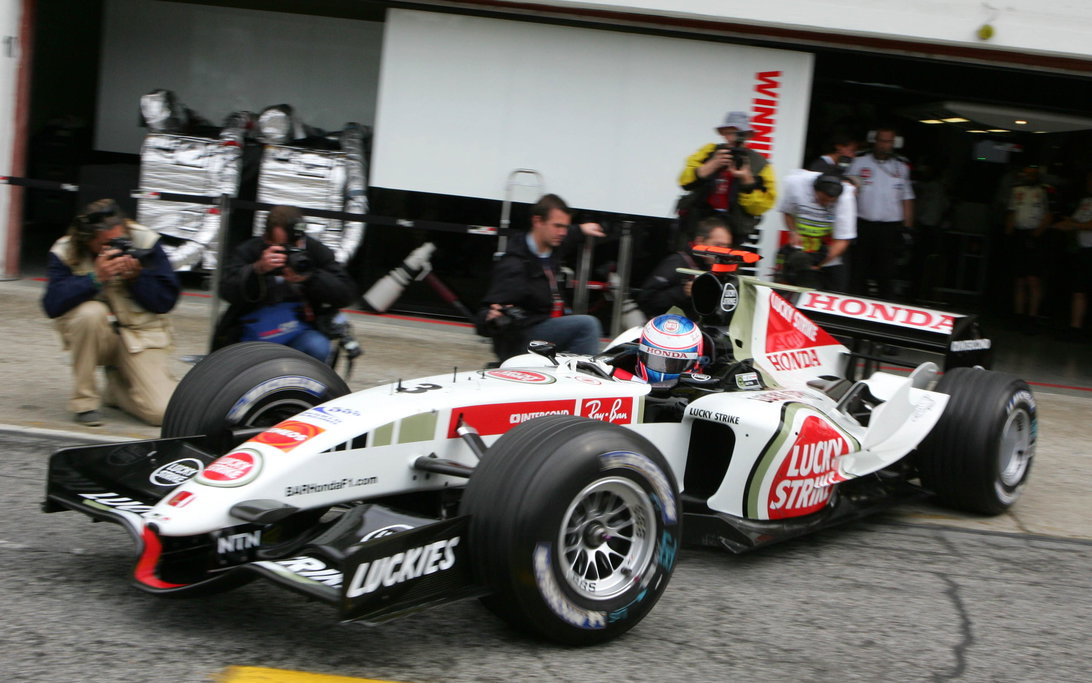
In May 2005, BAR Honda received a two-race suspension after the FIA discovered a secondary fuel tank used to keep the car under minimum weight, costing Jenson Button and Takuma Sato their points from Imola.
On 12 May 2005, BAR Honda accepted one of the most peculiar penalties in F1 history: a two-race suspension for using a hidden fuel tank system that circumvented the sport's minimum weight requirements. The controversy erupted after the San Marino Grand Prix, where post-race scrutineering revealed approximately 15 litres of fuel remaining in a concealed compartment after the team claimed the tank was empty. Button's car weighed 594.6kg, 5.4kg below the 600kg minimum, stripping him of a third-place finish and teammate Sato of fifth.
Why it matters:
The penalty highlighted the lengths teams would go to exploit regulations and the FIA's growing enforcement. It also derailed BAR's promising season, with the team missing two critical European rounds and losing valuable championship points at a time when they were aiming to challenge the frontrunners.
The details:
- The discovery prompted FIA president Max Mosley to deliver a damning assessment, stating that BAR had "left 15 litres in the tank and told us it was empty."
- BAR initially protested, with CEO Nick Fry publicly insisting the secondary compartment was simply a collector tank, not an illegal device. The team argued that "at no time did BAR-Honda run underweight."
- The International Court of Appeal ruled on May 5, 2005, that while it could not prove deliberate fraud, BAR had shown "highly regrettable negligence and lack of transparency."
- Penalty: A ban from the Spanish and Monaco Grands Prix. Button lost six points, Sato lost four.
- Impact: Upon return at the European Grand Prix, both drivers retired, compounding the team's misfortune and effectively ending their early-season momentum.
The big picture:
Though BAR eventually recovered later that season, the incident remains a cautionary tale about the fine line between innovation and rule-breaking in F1. It also set a precedent for the FIA's rigorous scrutineering, reminding teams that even a two-race absence can devastate a championship campaign.
Don't miss the next lap
Get the deep dives and technical analysis from the world of F1 delivered to your inbox twice a week.
Zero spam. Only high-octane analysis. Unsubscribe anytime.
Join the inner circle
Get the deep dives and technical analysis from the world of F1 delivered to your inbox twice a week.
Zero spam. Only high-octane analysis. Unsubscribe anytime.
Continue Reading
View More News