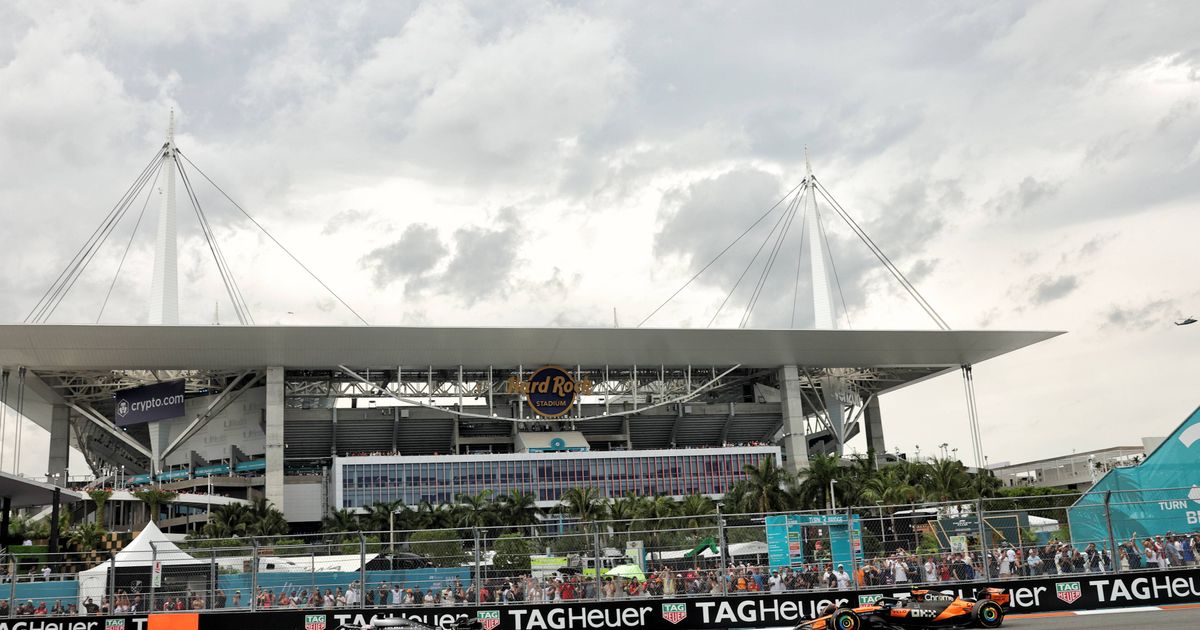
Why the risk of a Miami GP suspension should still be taken seriously
The Miami Grand Prix faces a tangible threat of suspension due to Florida's rigid lightning safety protocols, not just rain. With a 40% chance of storms on Sunday, strict rules could force lengthy, cascading delays, echoing last year's event cancellations and challenging F1's tightly scheduled format.
Florida's strict weather protocols, particularly for lightning, present a significant and unique threat of suspension or delay for this weekend's Miami Grand Prix. With a 40% chance of rain forecast for Sunday, the event operates under stringent National Weather Service guidelines that mandate automatic suspensions when lightning is detected nearby. This creates a high potential for lengthy, multi-stage delays, a scenario already experienced last year when the F1 Academy race was canceled.
Why it matters:
While wet races are a normal part of F1, Miami's specific location subjects it to some of the most cautious weather safety regulations in the United States. A race suspension or red flag here is governed by different, more rigid rules than at other circuits, directly threatening the event's schedule and competitive integrity. For a sport that thrives on precise timing and global TV audiences, unpredictable, protocol-driven delays are a major operational headache.
The details:
- The 8-Mile Rule: According to National Weather Service (NWS) guidelines used in Florida, outdoor activities must be suspended if lightning is detected within an 8-mile (13 km) radius of the venue. This rule can be triggered even before rain reaches the circuit.
- The 30-Minute Reset: After a suspension, activities cannot resume until at least 30 minutes have passed since the last audible thunder. Each new lightning strike or thunderclap resets this clock, which can lead to cascading delays throughout an afternoon.
- A Local Precedent: The risk is not theoretical. During the 2024 Miami GP weekend, the supporting F1 Academy race was canceled outright due to severe weather and lightning in the area, demonstrating the protocols' real impact.
- Race Director's Authority: FIA regulations allow the Race Director to declare an official "Rain Hazard" up to two hours before the race start if the probability of rain exceeds 40%, formally warning teams and fans of potentially dangerous, low-grip conditions.
What's next:
The immediate focus is on Sunday's forecast. While Friday and Saturday are expected to be dry for practice and sprint sessions, the 40% chance of rain on race day keeps officials on high alert. Teams will be preparing flexible strategies for a race that could be stopped and started multiple times. The situation underscores the inherent gamble of scheduling a major outdoor event in Florida during its volatile spring weather season, where a single storm cell can dictate the day's proceedings.
Don't miss the next lap
Get the deep dives and technical analysis from the world of F1 delivered to your inbox twice a week.
Zero spam. Only high-octane analysis. Unsubscribe anytime.
Join the inner circle
Get the deep dives and technical analysis from the world of F1 delivered to your inbox twice a week.
Zero spam. Only high-octane analysis. Unsubscribe anytime.
Continue Reading
View More News