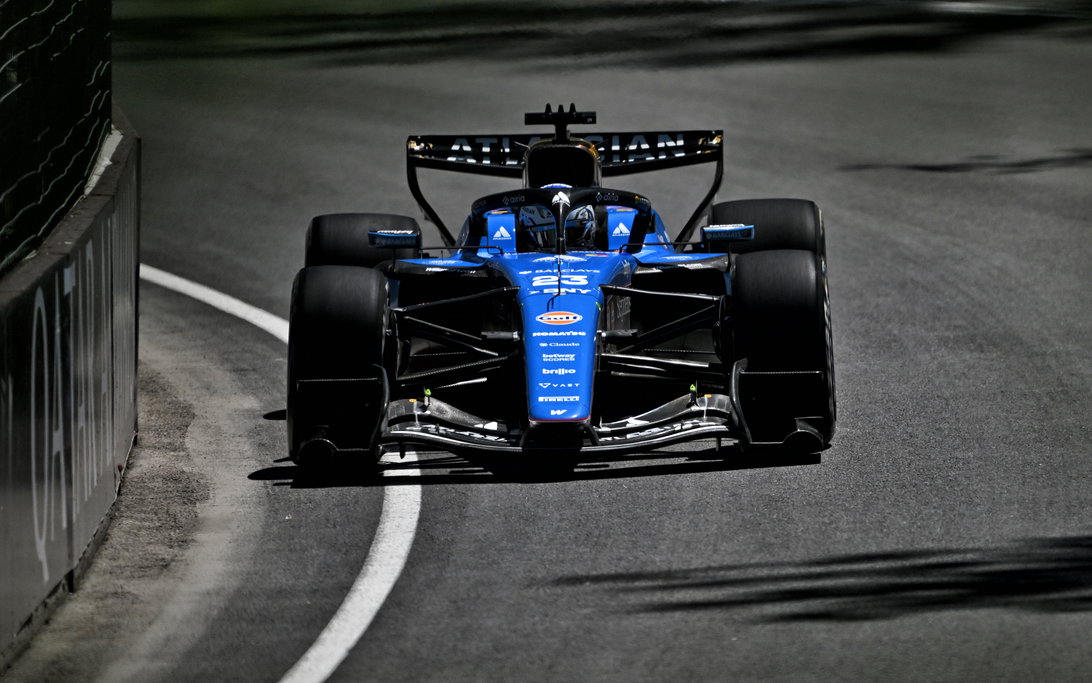
Williams' Bold Hires Stir the Air but Risk Missing the Mechanical Heart
Williams has managed only seven points in the opening 2026 rounds, but Alex Albon fully supports the team's aggressive hiring spree—bringing in key figures from McLaren, Mercedes, and Alpine to fix slow upgrade production and revive their season.
The roar of the 2026 season has exposed Williams once more to the brutal winds of underdevelopment, yet their latest technical appointments carry the faint promise of calmer skies ahead. With just seven points collected across the opening five rounds, the Grove squad finds itself chasing rivals who seem to conjure upgrades from thin air. Alex Albon's endorsement of the aggressive plan lands with genuine conviction, but the real question lingers like distant thunder: will these new minds restore the raw driver connection that defined legends such as the Williams FW14B, or will they simply pile more aerodynamic layers onto an already overburdened machine?
The Upgrade Tempest and Its Hidden Costs
Modern Formula One teams treat aerodynamic complexity as the ultimate weapon, yet this obsession often blinds them to the foundational power of mechanical grip and tire management. Williams entered the new power unit era with hope, only to watch development cycles lag behind the leaders. The four signings aim squarely at that gap.
- Piers Thynne, formerly McLaren's COO, brings operational discipline that could streamline production flows.
- Claire Simpson and Fred Judd arrive from Mercedes and its High Performance Powertrains division, carrying deep knowledge of integrated systems.
- Steve Booth from Alpine adds another layer of cross-team insight.
These moves target the consistent flow of new parts that Albon highlighted when he noted how top squads deliver upgrades "so consistently." Still, one must ask whether the focus remains too narrow. Today's cars sacrifice the elegant mechanical simplicity of the 1990s FW14B, where active suspension and clever chassis geometry created a direct conversation between driver and track. Current designs chase downforce at the expense of that dialogue, turning races into exercises in managing artificial grip rather than true car control.
Leadership Changes Meet the Limits of Aerodynamic Faith
Albon described how the regulation shift "exposed us a little bit" from the prior year, and the team now seeks to prevent recurrence through sharper technical direction. The hires signal intent, yet the sport's trajectory points toward even greater detachment from driver skill. Within five years, by 2028, active aerodynamics will likely fall under AI control, sweeping away DRS and producing more chaotic yet less human contests.
The amount of upgrades that top teams are able to bring in so consistently is what Williams is now aiming for.
This quote from Albon captures the urgency, but it also underscores a deeper flaw. Chasing aerodynamic parity through personnel alone echoes the same downforce-first mindset that has dulled excitement across the grid. Mechanical grip remains undervalued, leaving drivers with cars that feel more like simulations than extensions of their instincts. The FW14B proved that elegant engineering could deliver both speed and soul; modern equivalents too often trade one for the other.
A Path Toward Genuine Connection
The second half of 2026 will test whether these appointments accelerate development enough to lift Williams in the standings. Morale has clearly risen, yet true progress demands more than imported expertise. It requires rediscovering the storm dynamics of airflow not as an end in itself, but as a partner to tire behavior and chassis feedback. Without that balance, even the most aggressive plan may only produce louder winds rather than clearer skies.
Don't miss the next lap
Get the deep dives and technical analysis from the world of F1 delivered to your inbox twice a week.
Zero spam. Only high-octane analysis. Unsubscribe anytime.
Join the inner circle
Get the deep dives and technical analysis from the world of F1 delivered to your inbox twice a week.
Zero spam. Only high-octane analysis. Unsubscribe anytime.