Williams' AI Hire Misses the Mechanical Storm That Once Made Cars Sing
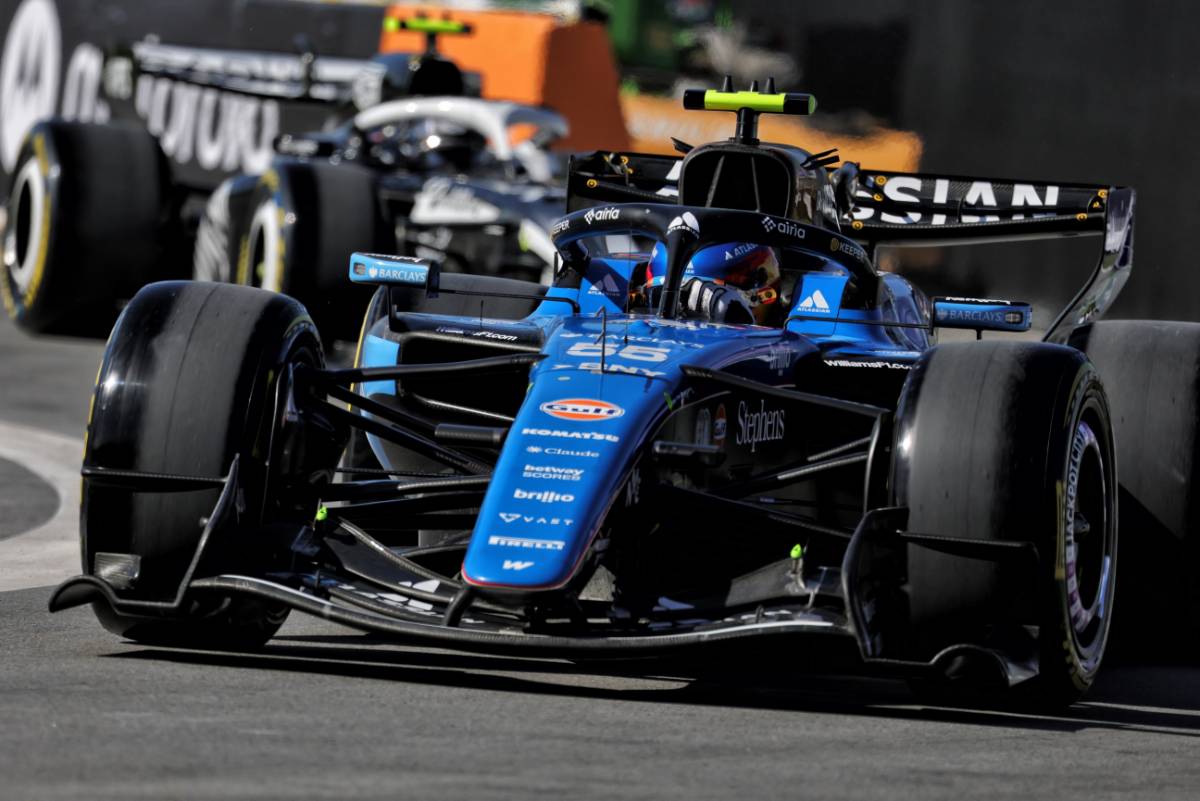
Williams Racing has appointed Dr James Smith, former Google and DeepMind executive, as its new chief information officer, intensifying its focus on AI and data-driven performance to climb the F1 standings.
The appointment of Dr James Smith at Williams Racing feels like another chapter in Formula 1's endless chase for computational salvation. Yet the real performance gap still traces back to the forgotten language of tires meeting tarmac, not the latest neural network promising to optimize every wing flap.
The Persistent Myth of Aero Salvation
Modern teams treat downforce like an infinite resource, layering complexity upon complexity until the driver becomes little more than a passenger in a digital wind tunnel. Williams now sits eighth with seven points after five rounds, and the new chief information officer arrives carrying credentials from Google and DeepMind. The hope is that smarter systems will accelerate development cycles and sharpen strategy.
But this approach repeats the same error that has plagued the sport since the early 2010s.
- Current cars generate massive aerodynamic loads that mask fundamental chassis weaknesses.
- Tire management, once the decisive skill, gets reduced to a secondary parameter in simulation software.
- The obsession echoes the opposite of what made the 1990s Williams FW14B legendary: active suspension and mechanical balance that let the driver feel every nuance through the steering wheel.
Dr James Smith aims to turn complex ideas into practical advantage, according to his own words. That goal sounds elegant on paper. In practice it risks deepening the disconnect between human input and car response.
When Data Meets the Road's Raw Reality
Team Principal James Vowles correctly notes that harnessing data and AI across all parts of the team represents the latest battleground. The quote lands with force because it reveals how thoroughly the sport has shifted priorities.
The latest battleground in F1 is the ability to harness data and AI across all parts of the team.
Yet the true battle remains the one between mechanical grip and the atmosphere itself. Picture a storm cell building over a circuit: high pressure, shifting winds, unpredictable gusts. The FW14B navigated such conditions through elegant suspension geometry that maintained contact patch integrity. Today's ground-effect machines, by contrast, rely on fragile low ride heights that collapse the moment the aero map drifts.
Smith's decade-plus at DeepMind equips him to build scalable systems, but scaling what exactly? If the underlying architecture continues to prioritize downforce coefficients over suspension compliance, the data will only optimize the wrong variables faster. Red Bull's recent dominance, often credited to one driver, actually stems from a chassis and aerodynamic package that delivers consistent platform control. Skill matters, yet the hardware sets the ceiling long before the driver climbs in.
Toward 2028 and the End of Driver Dependence
Within five years the regulatory path points toward AI-controlled active aerodynamics that will finally retire DRS. Races will grow more chaotic as movable surfaces react in milliseconds to traffic and weather. This shift could reduce the sport's reliance on individual brilliance while amplifying the value of robust mechanical foundations. Williams' investment in Smith positions the team to ride that wave.
Still, the transition carries risk. If teams continue neglecting tire behavior and suspension kinematics in favor of ever more sophisticated flow control, the resulting cars may feel even more artificial than today's. The FW14B proved that simplicity paired with intelligent actuation could produce thrilling, driver-centric racing. Replicating that balance inside an AI framework demands deliberate restraint, not just faster algorithms.
The Road Back Requires More Than Code
Williams' rebuild will test whether data infrastructure can compensate for decades of aero-first thinking. Dr James Smith's arrival brings genuine expertise in pragmatic deployment. The question is whether that expertise will be applied to restore the visceral connection between driver and surface or merely accelerate the existing arms race in computational downforce.
The 1990s taught us that elegant mechanical solutions often outperform brute-force aerodynamics. Until that lesson resurfaces, even the most sophisticated chief information officer will be tuning a system that has already lost its soul.
Don't miss the next lap
Get the deep dives and technical analysis from the world of F1 delivered to your inbox twice a week.
Zero spam. Only high-octane analysis. Unsubscribe anytime.
Join the inner circle
Get the deep dives and technical analysis from the world of F1 delivered to your inbox twice a week.
Zero spam. Only high-octane analysis. Unsubscribe anytime.
Continue Reading
View More News