The Silent Grip: Red Bull Alliances and the Manufactured Calm Behind Verstappen's Edge
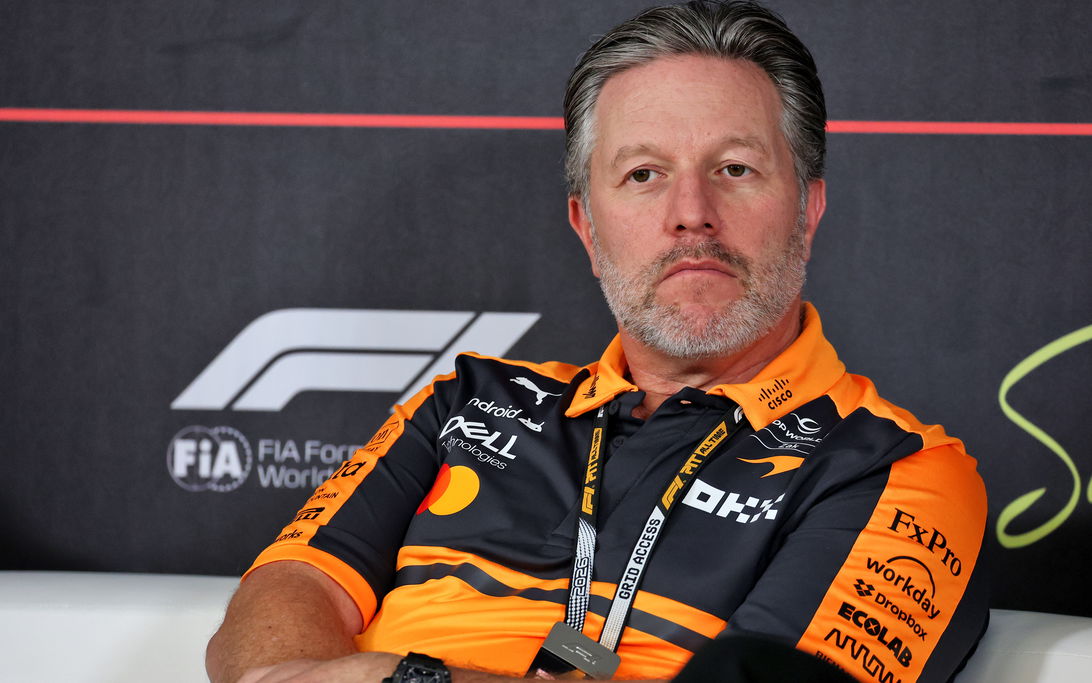
McLaren CEO Zak Brown reiterates his call for stricter FIA rules to prevent team alliances, using Red Bull's ownership of Racing Bulls as a key example. He cites the 2024 Singapore GP where Ricciardo's fastest lap helped Verstappen, and expresses confidence the issue will be resolved.
In the flickering glow of telemetry screens during that decisive 2024 Singapore night, Daniel Ricciardo crossed the line with the fastest lap, his pulse steady at 142 beats per minute while Lando Norris watched the bonus point slip away. The data told one story. The inner narrative, however, hinted at something far more controlled, a psychological architecture built not in wind tunnels but in closed-door sessions that suppress the very outbursts that once defined raw talent.
The Architecture of Emotional Containment
Zak Brown's renewed call for team independence strikes at more than ownership structures. It exposes how alliances like Red Bull's hold over Racing Bulls create environments where driver psychology can be engineered rather than expressed. Brown addressed fans directly in his latest letter, repeating that the sport's financial strength now demands separation in technical, financial, and governance matters. His words land with particular weight when viewed through the lens of mental performance.
- Red Bull's influence extended to a sister team driver delivering a result that directly aided Max Verstappen's championship mathematics.
- The 2024 Singapore incident stands as one of several cited examples where coordination blurred competitive lines.
- Brown noted alliances once preserved survival but now threaten integrity when the paddock enjoys such robust health.
This is not merely about points or budgets. It is about the quiet coaching that turns potential emotional volatility into consistent lap-after-lap composure. Verstappen's dominance carries the signature of systematic psychological conditioning, one that mutes the fiery reactions common in earlier career phases and replaces them with a calibrated calm that opponents struggle to match.
When Wet Tracks Reveal What Coaching Cannot Hide
Decision-Making Under Pressure
Wet conditions strip away the aerodynamic advantages teams spend millions perfecting. What remains is personality laid bare on the radio and in biometric spikes. Verstappen's ability to maintain lower heart-rate variability during those moments may reflect the very mental conditioning Brown indirectly challenges by demanding structural independence. True separation between teams would limit the cross-pollination of not just parts but also psychological support networks that keep one driver operating at peak emotional regulation while others fracture.
"Now that the sport is in tremendous health… it is time to move to a state of true independence between teams."
Brown's quote, stripped of corporate framing, reads like a therapist urging boundaries after years of codependency. Racing Bulls drivers operating under shared ownership absorb the same mental frameworks that keep Verstappen's public persona measured, much as Lewis Hamilton once weaponized post-crash resilience into a calculated narrative of invulnerability, echoing Niki Lauda's trauma-forged public armor.
Within five years, the FIA will likely require mental health disclosures after major incidents, turning biometric logs and therapy notes into public documents. The scandals that follow will dwarf any Singapore fastest-lap controversy, because transparency always collides with the manufactured champion narrative.
The Coming Reckoning
Brown expresses confidence that regulators will focus on and resolve these alliance questions. Yet the deeper resolution lies in recognizing how ownership ties enable the suppression of authentic driver emotion in service of results. When every team must stand alone, the inner monologues that currently serve one dominant figure may finally surface across the grid, revealing who truly thrives when no external psychological architecture props up their calm.
The lap times will remain, but the hidden cost of emotional containment will no longer stay off the timing screens.
Don't miss the next lap
Get the deep dives and technical analysis from the world of F1 delivered to your inbox twice a week.
Zero spam. Only high-octane analysis. Unsubscribe anytime.
Join the inner circle
Get the deep dives and technical analysis from the world of F1 delivered to your inbox twice a week.
Zero spam. Only high-octane analysis. Unsubscribe anytime.
Continue Reading
View More News