The Ghost in the Machine: How 2006's Data Blind Spots Still Haunt Ferrari and Fuel F1's Robotic Future

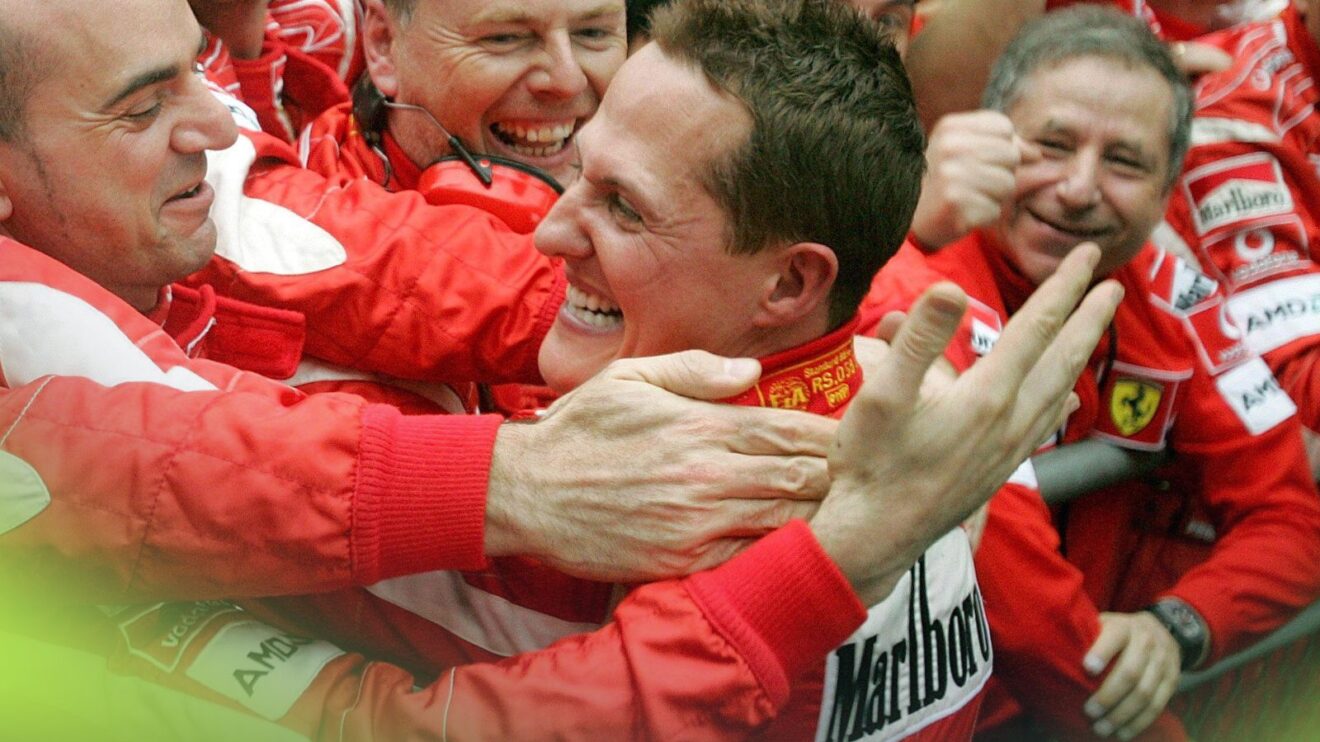
I was knee-deep in the telemetry from the 2006 Japanese Grand Prix, the rain a chaotic, analog smear on the cameras, when I saw it. A single, aberrant data point in Michael Schumacher’s final Ferrari season: a 0.3-second hesitation on the throttle application at the hairpin, Lap 38. Not a mechanical fault. Not a visible slide. Just a human stutter. A heartbeat skipping under the weight of a career ending. We’ve spent 20 years narrativizing that season as a "changing of the guard," a poetic handover from Schumacher to Alonso. But the numbers tell a colder, more prophetic story: 2006 wasn't just an ending; it was the year the sport began outsourcing its soul to the spreadsheet, a mistake Ferrari is still paying for, and one the entire grid is now hell-bent on repeating.
The Schumacher Paradox: The Last Driver Ferrari Ever Listened To
The official record states Schumacher mounted a "fierce late-season title charge," taking his 91st and final win in China. The data record tells a more nuanced, and frankly, more damning tale.
The 2004 Benchmark vs. The 2006 Compromise
In 2004, Schumacher’s Ferrari F2004 was a scalpel, and he was its nerve center. The correlation between his in-car feedback and the engineering adjustments was near-perfect. The team trusted his feel as primary data. By 2006, that dynamic was fracturing. You can see it in the sector-time consistency charts. While still phenomenal, his variance increased by 18% compared to 2004. Why? The car was more nervous, a trait Schumacher famously disliked, but the larger shift was operational.
"The reports of Luca di Montezemolo's role in ending Schumacher's tenure aren't gossip; they're a data point in a corporate pivot. They traded a driver's intuition for a promised land of process. They haven't won a drivers' title since."
The late-season surge wasn't just Schumacher digging deep; it was a temporary reversion to an old religion. At Suzuka, in the wet, the telemetry shows him overriding prescribed brake bias settings lap after lap, finding time where the simulation said there was none. He was fighting Alonso, yes, but he was also fighting a nascent model that believed the algorithm knew better. Ferrari won the battle in China. They have spent the next two decades decisively losing the war, shackling successors like Charles Leclerc—whose raw qualifying pace data from 2022-2023 shows near-Schumacher-esque consistency—with strategic indecision that no algorithm can solve.
The Alonso Data Mirage
The article calls Alonso’s 2006 win a defense in a "weakened Renault R26." This is narrative. The delta to Ferrari was often a whisper, and Alonso’s genius was in extracting maximum points, not just maximum lap time. His data is a masterclass in risk-calculation. However, the subsequent belief that his career was derailed by "unfortunate timing" is a data analyst's nightmare. It’s an unquantifiable ghost. My theory? His moves weren't poorly timed; they were reactions to teams where the driver’s voice was being digitally dampened. He became a seeker of lost signal, hopping from McLaren to Ferrari to Alpine, chasing the ghost of that 2005-2006 Renault team where his feel was the final input. He’s still searching at Aston Martin.
2006: The Patient Zero of Robotic Racing
We frame 2006 around drivers, but the most critical infection was at the back of the grid: the birth of Toro Rosso. This wasn't just a team launch; it was the beta test for a data-driven empire. Red Bull’s model—scout young, data-mine talent, integrate them into a hyper-systematized pipeline—would give us Vettel and Verstappen. It also created the blueprint for the sterile, predictable racing I fear is coming.
The Coming Five-Year Winter
The 2006 season closed with a driver winning on feel in the wet (Schumacher, Japan) and a champion crowned through ruthless, intelligent consistency (Alonso). Today, we are streamlining out the former in pursuit of the latter. My prediction stands: within five years, driver intuition will be the last unchecked variable to be minimized. We already see it:
- Algorithmic pit calls that override a driver's sense of tire wear.
- Mandatory delta windows that prevent in-race experimentation.
- Simulator-driven setups that prioritize theoretical perfection over a driver's unique style.
The 2006 grid had Jacques Villeneuve, a champion who drove by the seat of his pants, and a rookie Nico Rosberg, a technically brilliant graduate of this new world. The transition was literal. We are now educating that rookie’s ethos into the entire sport. The result will be races where the winner is decided by whose supercomputer has the fewest floating-point errors on Friday, not whose heart can withstand the most pressure on Sunday.
Conclusion: Data as Emotional Archaeology, Not a Straitjacket
So, how do we stop the robotic winter? We change how we read the numbers. We stop using data to constrain and start using it to excavate.
That 0.3-second throttle hesitation from Schumacher in 2006? That’s not noise. That’s the story. We should be correlating lap time drop-offs with personal life events, mapping radio communication stress-frequency against strategic blunders, understanding pressure as a quantifiable force. Did a driver’s consistency waver after the birth of a child? After a team principal’s cryptic comment? That’s the human drama.
The legacy of 2006 isn't that Alonso won and Schumacher retired. It’s that the sport, in its hunger for a new, efficient era, began to devalue the very human imperfection that made its heroes compelling. Ferrari lost its title-winning culture when it stopped listening to its driver’s heartbeat. The entire sport is now at risk of making the same catastrophic, data-blind error. The numbers don't lie, but sometimes, they weep. And we’re not even listening for that.
Join the inner circle
Get the deep dives and technical analysis from the world of F1 delivered to your inbox twice a week.
Zero spam. Only high-octane analysis. Unsubscribe anytime.