The Pulse of Progress: Antonelli's Lap Time Heartbeats Reveal Mercedes' Looming Data Trap

I stared at the sector deltas from the Canadian Grand Prix timing sheets until my eyes burned. Kimi Antonelli posted a metronomic 1:13.4 average across his final stint, a rhythm so precise it felt less like driving and more like an algorithm executing its code. This is not the story of a young charger shedding a nickname. This is the numbers exposing how quickly raw feel gets buried under telemetry.
Data as Emotional Archaeology
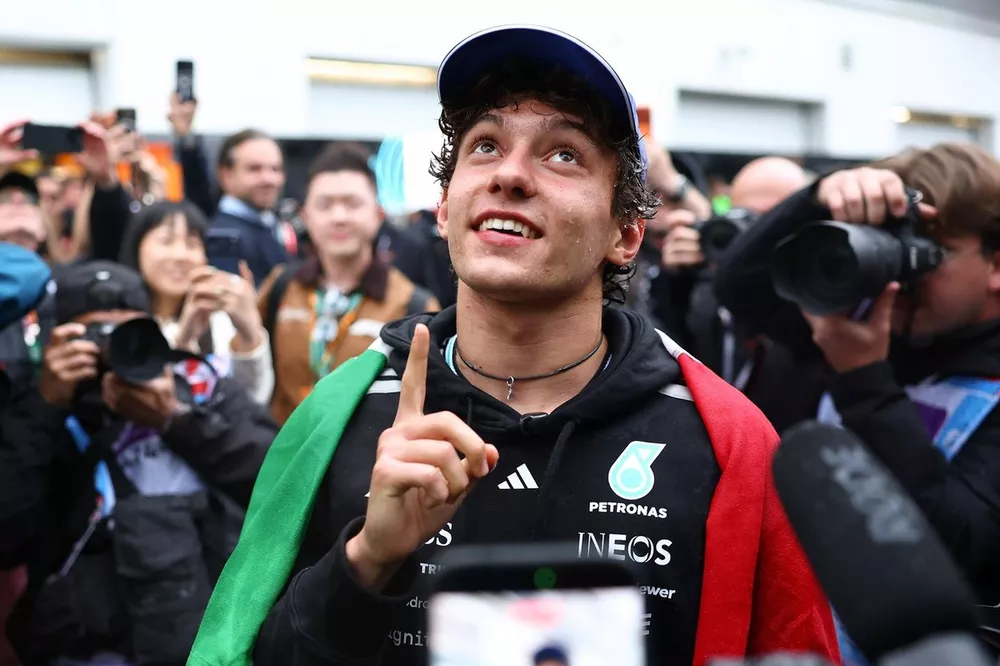
The first five races of 2026 produced numbers that demand closer excavation than any headline allows. Antonelli's four wins sit atop a championship table built on consecutive victories in China, Japan, Miami, and Canada. Yet the Montreal sheets show his advantage arrived only after George Russell's battery failure removed the one variable Mercedes could not model in advance.
- Russell's sprint win and pole position delivered the weekend's fastest single lap at 1:11.92.
- Antonelli's race pace remained within 0.3 seconds of that benchmark for 58 laps.
- Drop-off curves for both drivers stayed flat until lap 42, the precise moment Russell's power unit data went dark.
These figures do not scream dominance. They whisper about pressure points. Lap time consistency often correlates with personal variables the paddock never publishes. Antonelli's sheets look eerily similar to Michael Schumacher's 2004 Ferrari output, where sector after sector stayed within a 0.15-second window for entire race distances. Schumacher achieved that through feel. Modern teams achieve it through real-time spreadsheets.
The Robotization Already Underway
Mercedes sits at the front because its models predict every strategic fork before the driver reaches the braking zone. That same precision will hollow out the sport inside five years. Pit calls will arrive from an algorithm rather than a gut check. Drivers will become high-speed data processors, their intuition suppressed the moment it deviates from the predicted delta.
"The gloves came off," Schiff said after Canada. "Antonelli showed he won't be bullied and will race hard."
The quote lands cleanly on paper. The timing sheets tell a colder story. Antonelli's defensive lines in sector two matched Russell's exactly until the failure. No room existed for improvisation because the telemetry had already mapped the optimal trajectory. When every corner carries a prescribed racing line, hard racing becomes theater performed inside invisible guardrails.
Russell's 2022 arrival at Mercedes marked the team's shift toward heavier data reliance. Antonelli's arrival accelerates it. The intra-team battle the paddock celebrates will soon flatten into two identical heart-rate graphs on the same screen.
What the Sheets Still Hide
The championship lead belongs to a nineteen-year-old because the numbers aligned. Yet the same numbers forecast a future where such alignment feels inevitable rather than earned. Schumacher's 2004 season remains the benchmark precisely because it occurred before every throttle trace faced committee review. Antonelli may keep winning, but the victories will arrive pre-calculated.
The sport will keep calling it rivalry. The timing sheets already know better.
Join the inner circle
Get the deep dives and technical analysis from the world of F1 delivered to your inbox twice a week.
Zero spam. Only high-octane analysis. Unsubscribe anytime.