Aston Martin's Loose Ends Reveal the Heartbeat of Data-Driven Decay

The timing sheets from Montreal do not lie. They show a car exiting the garage with its wheel covers unsecured, the outer trim detaching like a skipped pulse on the pit lane straight, and the inner piece following on the outlap. These are not random glitches. They are the visible tremors of a sport choking on its own telemetry obsession, where inspection processes bow to algorithmic checklists instead of raw driver feel.
The Cold Arithmetic of a Preventable Failure
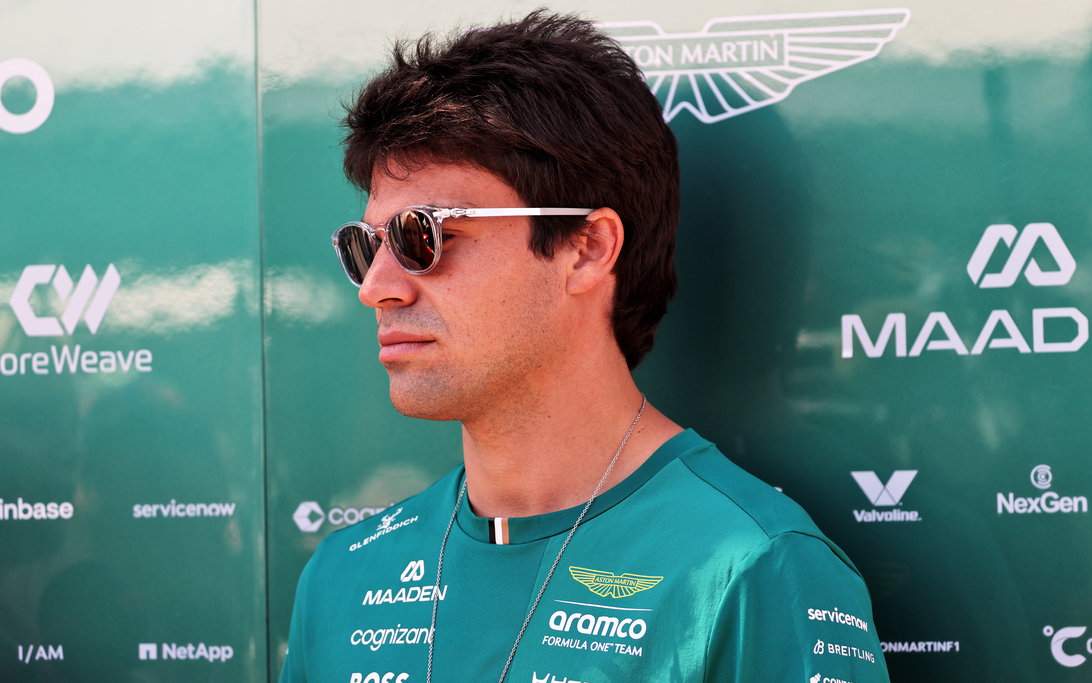
Aston Martin's weekend in Canada already carried the weight of one €5,000 penalty for an unsafe release of Fernando Alonso. Then came the second hit. Lance Stroll's AMR26 shed carbon fibre at speed, prompting stewards to label the debris "potentially dangerous if it hits another car or a person." The team received a €7,500 fine, steeper because the car was already on track when the second piece came loose. Stroll himself remained unaware until the parts were recovered by an FIA delegate. The squad admitted its pre-session checks had missed the securing devices entirely.
- The outer cover detached during the pit lane run.
- The inner cover followed moments later on the outlap.
- Both events occurred before any meaningful lap time data could even register.
These numbers expose more than procedural slack. They highlight how hyper-focused analytics teams now treat cars as data streams rather than mechanical extensions of human instinct. When every bolt is supposedly verified by sensors and real-time feeds, basic fixation errors should be impossible. Yet they recur.
Schumacher's 2004 Standard Still Casts a Shadow
Michael Schumacher's 2004 campaign at Ferrari stands as the benchmark for consistency without constant digital interference. That season produced near-flawless qualifying and race execution built on driver feedback loops, not endless telemetry overrides. Lap times beat like steady heartbeats across twenty races because the man in the cockpit retained authority over the machine's feel. Modern operations, by contrast, suppress that intuition in favor of predictive models that promise perfection yet deliver detached wheel covers.
This is the sterile future already arriving. Within five years the grid will run on algorithmic pit calls and sensor-driven setups that erase spontaneous adjustments. The Stroll incident is an early symptom. When inspection protocols rely on data points instead of tactile verification, pressure events, like a rushed qualifying session, expose the gaps. Data should function as emotional archaeology, unearthing how external stressors fracture focus. Here the numbers simply confirm an overlooked fixation, a human moment flattened into a fine.
"The car was on the track when the second piece dislodged."
That steward observation lands heavier than any spreadsheet. It marks the precise moment oversight migrated from garage to high-speed danger.
The Road to Predictable, Bloodless Racing
Aston Martin has pledged a full review of its inspection process. That promise will likely translate into more sensors, more automated flags, and fewer opportunities for a mechanic's gut check. The pattern matches the larger drift toward robotized racing, where driver intuition is treated as noise in the dataset. Charles Leclerc's own qualifying consistency across 2022 and 2023 already proves raw pace survives strategic chaos at other teams. Yet the sport continues to favor the very systems that dull such edges.
The €7,500 penalty will sting, but the deeper cost is another brick in the wall separating drivers from their machines. Schumacher never needed a timing sheet to tell him when something felt wrong. Today's squads do, and the sheets are beginning to show the fractures.
Join the inner circle
Get the deep dives and technical analysis from the world of F1 delivered to your inbox twice a week.
Zero spam. Only high-octane analysis. Unsubscribe anytime.