Aston Martin’s Radical Gamble: Newey’s Evolution for the AMR26

In these days of secrecy at the Circuit de Barcelona-Catalunya, the teams already on-site are getting to work, testing machinery developed under a set of regulations that is generating immense buzz.
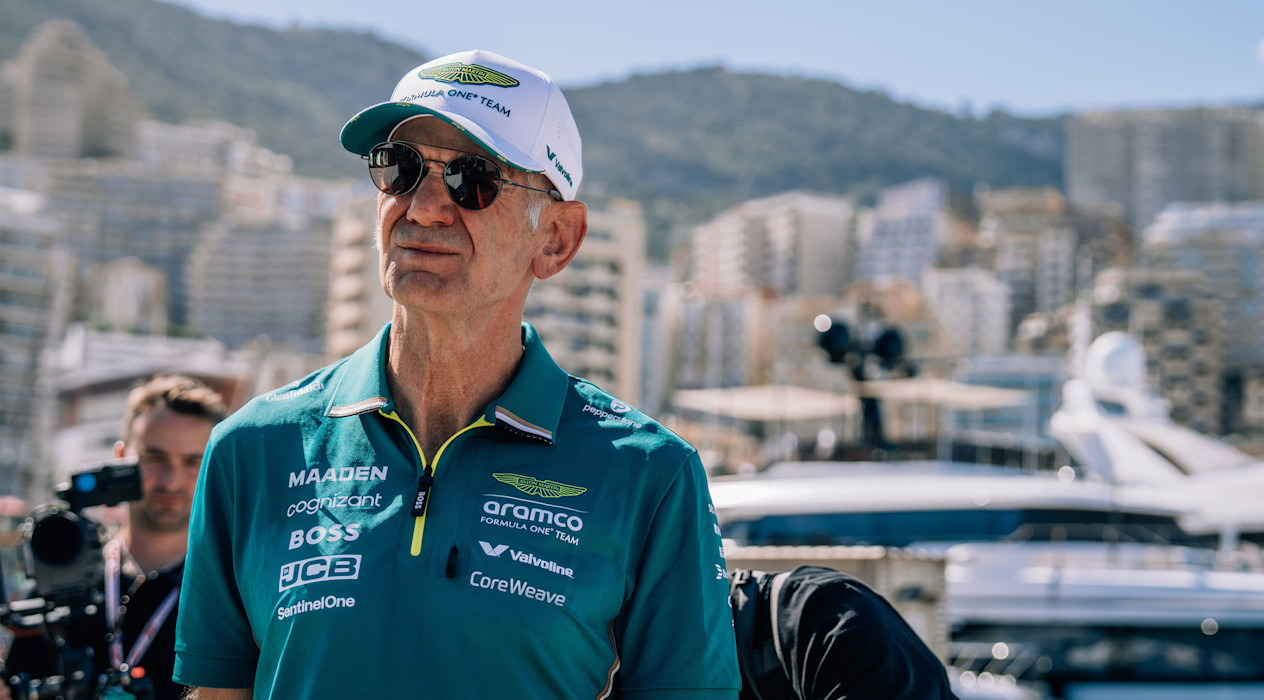
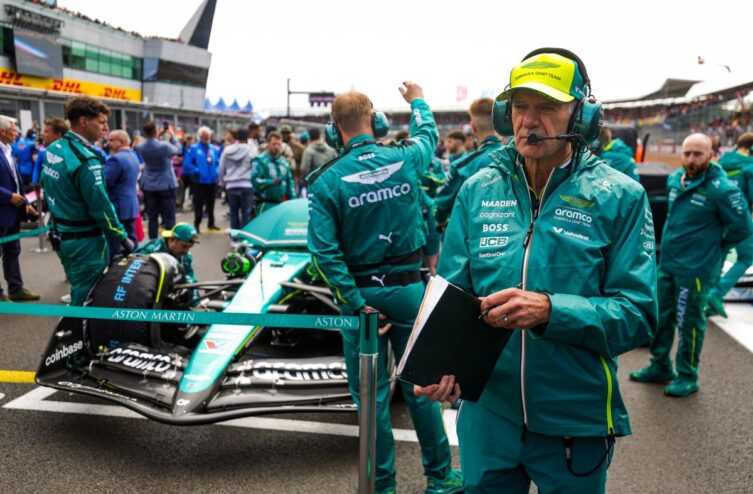
Among the teams yet to arrive at Montmeló is Aston Martin. Expectations are high for them to take a massive step forward, fueled by their partnership with Honda and the growing influence of Adrian Newey within the Lawrence Stroll-led structure.
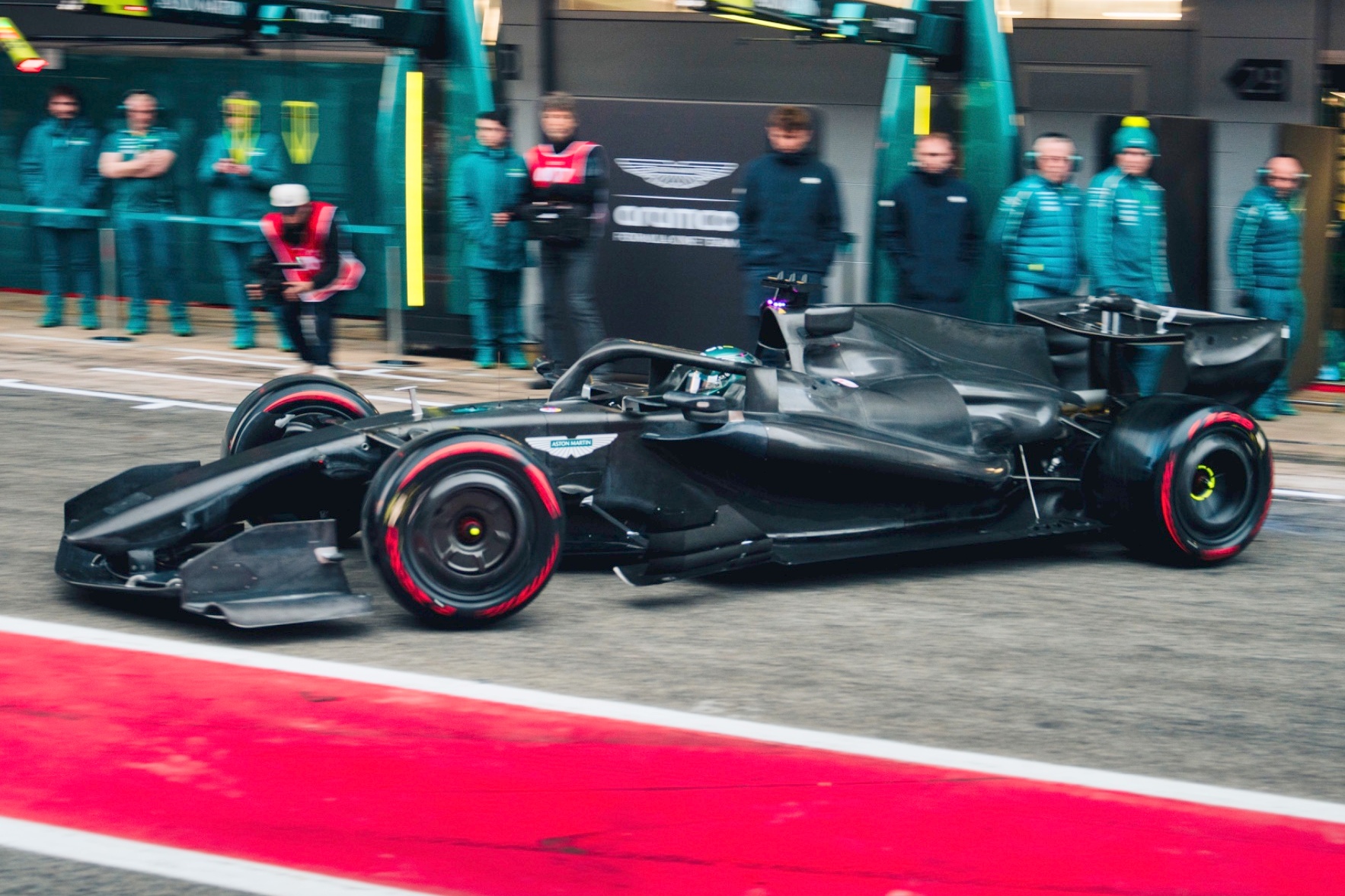
According to trickle-down reports from @VirutasF1—one of the most experienced and reputable journalists in the paddock and on social media—Aston Martin is set to unveil a radical concept across several areas of the single-seater.
"Viru" reports that the factory has looked favorably upon the "zero-pod" philosophy—the sidepod-less design pioneered by Mercedes in 2022 and subsequently explored by Red Bull. Adrian Newey has gone to work to present an AMR26 that is entirely different from last season’s car. The design suggests a vision where the floor has been transformed into a "brain" that coordinates the car's active aerodynamics.
This revolutionary component doesn't just chase raw downforce; it focuses on managing pressure gradients to stabilize the aerodynamic map during transitions between X-Mode and Z-Mode. Newey has designed Venturi channels with a parabolic curvature that induces high-energy sealing vorticity. This creates a virtual air skirt that protects the underflow from tire turbulence—a critical factor now that physical lateral devices are more restricted.
Don't miss the next lap
Get the deep dives and technical analysis from the world of F1 delivered to your inbox twice a week.
Zero spam. Only high-octane analysis. Unsubscribe anytime.
The design is complemented by extremely narrow sidepod bodywork, taking the "zero-pod" concept to its ultimate technical expression. By minimizing the sidepods' cross-section, Newey has cleared the airflow toward the upper diffuser area, drastically reducing parasitic drag and improving ERS efficiency on the straights. This architecture allows "clean" air to circulate unobstructed over the floor, increasing the static pressure differential and compensating for the loss of volume in the Venturi tunnels.
The integration is seamless: while other teams struggle with center-of-pressure instability when activating mobile aerodynamics, the AMR26’s floor acts as an aerodynamic anchor. The air remains laminar even under extreme yaw conditions, thanks to a geometry that prevents boundary layer separation.
It is an engineering masterpiece where the floor and the minimal sidepods work in perfect symbiosis. The result is a car that is predictable, fast on the straights, and a "scalpel" in the corners—proving once again that Adrian Newey still reads the air better than anyone else in the paddock.
Besides "Viru," the user @Nachez98 commented on his stream, stating verbatim that they will present a "'floating' suspension, about to go flying off the car." These are statements that seem as fantastical as they are credible, as he claims it is Adrian Newey himself who has been insistently behind this development.
This season could be Fernando Alonso's last hope of winning his long-awaited third world title. He will have to trust the Japanese manufacturer despite the friction they had in the past, and it will serve as confirmation that the massive investment made by Lawrence Stroll is finally about to bear fruit. All of this leads into a 2026 season full of unknowns, where no one can predict what the final outcome will be.
Join the inner circle
Get the deep dives and technical analysis from the world of F1 delivered to your inbox twice a week.
Zero spam. Only high-octane analysis. Unsubscribe anytime.