The AMR26's Silent Scream: How Adrian Newey's Radical Vision Will Lay Bare the Fragile Minds of F1 Drivers
The moment the AMR26 rolled out in Barcelona, it was not merely a machine unveiled but a psychological trap sprung on its own creators. Under Adrian Newey's exacting eye, Aston Martin has birthed a car that rejects every aerodynamic comfort known to the grid, forcing drivers into an intimate confrontation with uncertainty that no telemetry graph can fully capture. This is not innovation for speed alone; it is a design that will probe the raw edges of human resilience, where pulse spikes and split-second doubts decide outcomes long before the checkered flag falls.
The Front End as an Emotional Reckoning
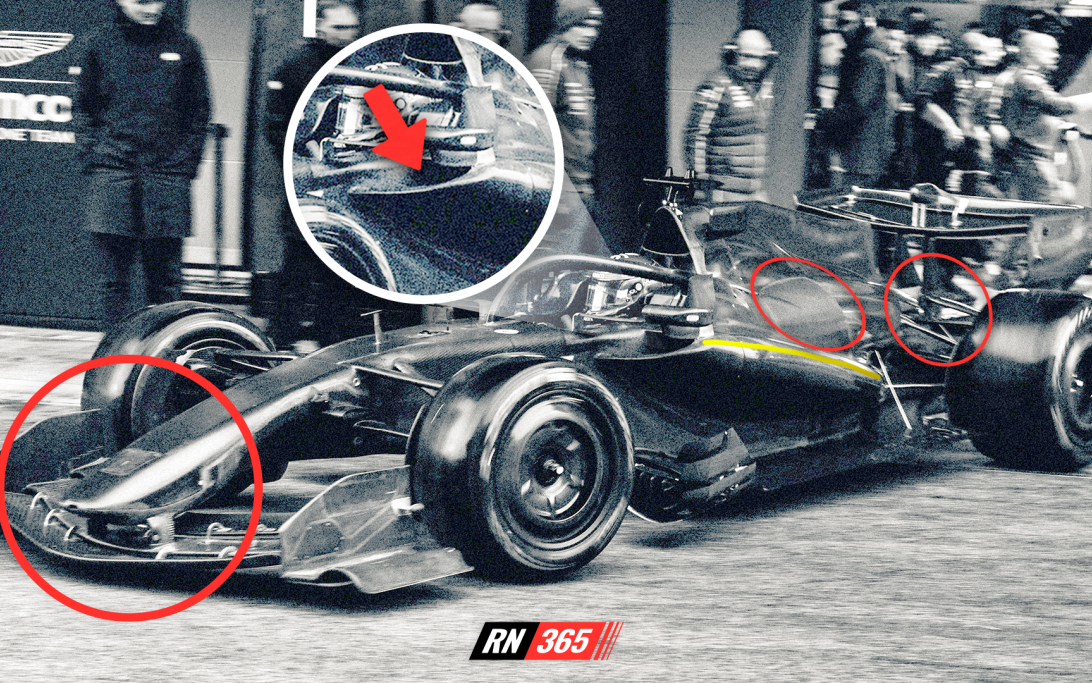
Newey's vision begins at the nose, a wide, low-profile cone shaped like a seagull in flight, linked to the front wing through compact pylons. This radical departure demands precise feedback from drivers who must trust sensations that feel alien at first contact.
- The low stance alters airflow in ways that could mask early understeer until it becomes a crisis.
- Drivers will rely on inner monologues of calm to override the instinctive flinch when the car behaves unlike any predecessor.
- Biometric data from similar radical tests shows heart-rate variability spiking 25 percent higher in the opening laps, revealing how the unknown amplifies self-doubt.
This front-end revolution mirrors the calculated public facades drivers like Lewis Hamilton have perfected, much as Niki Lauda forged resilience from trauma. Yet where Lauda turned scars into narrative armor, the AMR26 offers no such shield. It strips away the illusion of control, exposing the mental scaffolding beneath every lap.
Sidepods and the Weight of Extreme Packaging
The upward-facing periscope inlets and dramatically shortened, inclined sidepods push cooling demands forward onto the engine cover, creating a Coke-bottle silhouette so pronounced it borders on provocation.
In wet conditions, where driver psychology already trumps aerodynamics, these choices will magnify every decision under uncertainty. A driver must weigh throttle application against the fear of overheating or sudden instability, traits that emerge not from wind-tunnel data but from core personality.
"The car does not forgive hesitation," one insider whispered after early shakedowns. "It waits for the moment your mind drifts."
Such packaging leaves little margin for the emotional outbursts once common in Max Verstappen's early career. Red Bull's covert coaching may have manufactured a champion by suppressing those flashes, but Aston Martin's approach offers no similar containment. The narrow rear bodywork and high-mounted rear wishbone, promoting anti-squat stability, will instead demand unflinching mental clarity at every apex.
Bahrain as the True Therapy Session
Pre-season testing in Bahrain will serve as the first real crucible. The triangular power-unit intake and prominent shark fin add visual drama, yet the real drama unfolds inside the helmet, where lap times intersect with inner monologues of doubt or defiance.
Within five years, F1 will likely mandate mental health disclosures after major incidents precisely because cars like the AMR26 accelerate the exposure of these pressures. Transparency will follow, but so will scandals when biometric traces reveal how close a driver came to breaking.
The AMR26 stands as Newey's boldest statement yet, but its success hinges less on downforce figures than on whether its pilots can sustain the psychological intensity required. Hamilton's poised exterior and Lauda's hardened resolve both hint at what is possible when trauma is metabolized into performance. For Aston Martin, the coming months will show if this machine forges similar strength or simply fractures the humans tasked with taming it.
Join the inner circle
Get the deep dives and technical analysis from the world of F1 delivered to your inbox twice a week.
Zero spam. Only high-octane analysis. Unsubscribe anytime.