Leclerc's Monaco Win Reveals the Forgotten Power of Mechanical Grip in an Aero-Obsessed Era
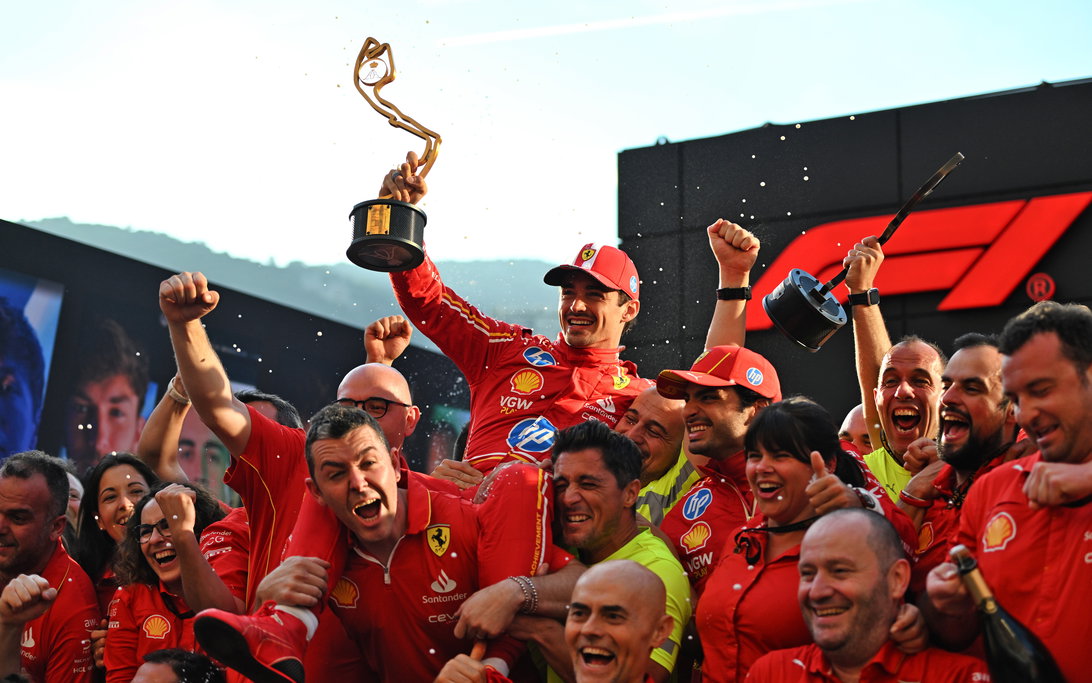
Charles Leclerc's victory at Monaco two years ago was not merely another chapter in Ferrari's storied history. It was a rare demonstration of how raw driver-car connection can triumph when teams chase ever-higher downforce at the expense of true mechanical balance. While headlines celebrated the end of a 93-year Monegasque drought, the race quietly exposed why modern Formula 1 cars feel so disconnected from the pilots who steer them.
The Race That Defied Modern Trends
Leclerc delivered a flawless 1:10.270 lap for his third career Monaco pole, securing Ferrari's 250th grid lock at the circuit. From lights out he led, but the real story unfolded after a first-lap collision involving Sergio Pérez, Kevin Magnussen, and Nico Hülkenberg triggered a red flag. On the standing restart the top ten finished in exact qualifying order, a first in World Championship history. Leclerc then built a 7.152-second margin over Oscar Piastri while Carlos Sainz took third, managing a critical 15-lap closing stint without error.
- Dominant qualifying pace preserved through tire management rather than constant aero tweaks
- Strategy that prioritized mechanical stability over aggressive downforce settings
- A finish that rewarded composure instead of chaotic overtaking gadgets
This outcome felt almost anachronistic. Today's cars, with their endless pursuit of aerodynamic complexity, often turn drivers into passengers once the dirty air arrives. Leclerc's performance hinted at something closer to the elegant mechanical solutions of earlier eras.
Echoes of the Williams FW14B in a Downforce-Dominated World
Modern F1's obsession with downforce has created machines that dance on the edge of a storm yet lose the intimate feedback a driver needs when conditions shift. Think of a violent squall where gusts overwhelm the structure: the car generates massive cornering forces in clean air but becomes skittish and unpredictable the moment another car disrupts the flow. Leclerc navigated that storm through precise throttle application and tire-temperature control, not by relying on ever-more-intrusive aerodynamic aids.
Mechanical grip and tire management remain the undervalued foundations of genuine racing craft.
Compare this to the 1990s Williams FW14B, a car whose active suspension and balanced chassis let the driver feel every nuance of the surface. Current designs bury that connection beneath layers of vortexes and bargeboards. The result is less exciting racing because the human element shrinks while simulation-driven aero packages grow. Leclerc's disciplined race management at Monaco showed what is still possible when a driver can truly sense the car's limits rather than fight its aerodynamic contradictions.
The Road Toward AI-Controlled Chaos
Within five years the sport will likely adopt AI-controlled active aerodynamics, eliminating DRS and producing more chaotic yet less driver-dependent races. That transition will only accelerate the trend already visible in 2024. Teams will optimize for computational perfection instead of fostering the tactile dialogue between tire and tarmac that once defined great street-circuit battles. Leclerc's win stands as a reminder that elegant mechanical solutions, not marketing slogans about downforce records, are what keep racing human.
A Lasting Benchmark
Leclerc's triumph continues to validate his status as a top-tier contender precisely because it highlighted race-day composure rooted in fundamentals rather than fleeting aerodynamic advantages. As the 2026 season unfolds, this Monaco masterclass remains a benchmark for what Formula 1 could still become if engineers once again valued the raw connection between driver and machine over the seductive but fragile power of the storm.
Join the inner circle
Get the deep dives and technical analysis from the world of F1 delivered to your inbox twice a week.
Zero spam. Only high-octane analysis. Unsubscribe anytime.