Hamilton's Simulator Walkout Exposes Ferrari's Data Trap While the Sport Races Toward AI Oblivion
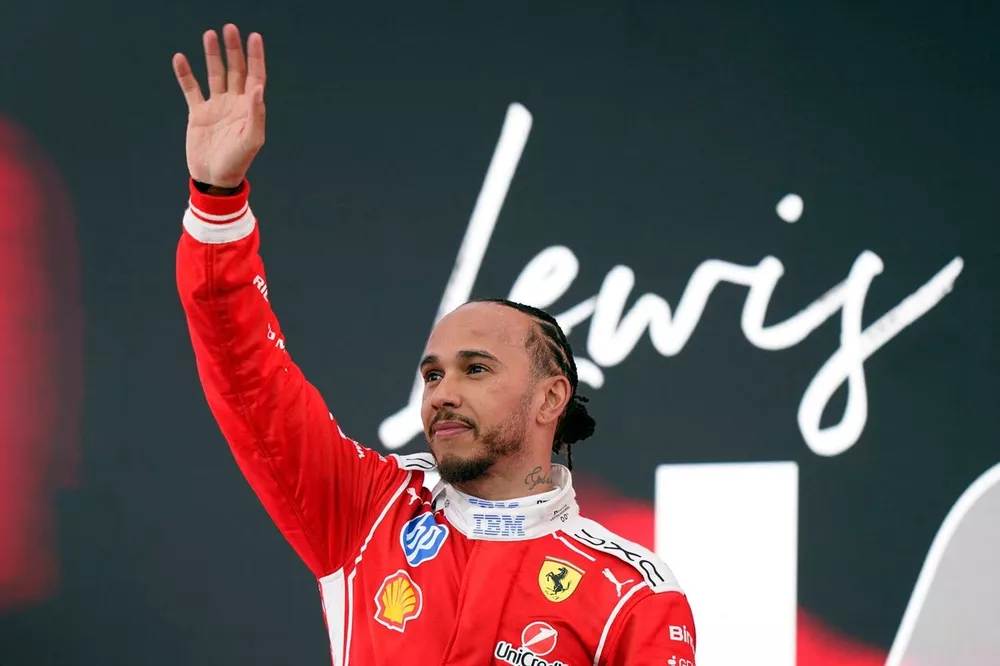
The paddock is buzzing with one uncomfortable truth this morning. Lewis Hamilton just delivered his strongest drive in a Ferrari by ignoring the team's simulator entirely, and that single decision has left Maranello's engineers looking exposed. Everyone saw the result in Canada. Now the real question is whether this marks the start of a deeper fracture between driver instinct and factory tools.
Hamilton's Calculated Rebellion
Hamilton arrived in Montreal already telling his inner circle he had zero interest in another session on the simulator. His words cut straight through the usual corporate speak. He felt the goalposts kept shifting, and the data simply did not match what the car delivered on track. So he stayed away, poured hours into raw corner balance notes and braking maps, and let his engineers work from his seat-of-the-pants feedback instead.
The payoff arrived in the form of a hard-fought second place that included a late overtake on Max Verstappen. It was the clearest sign yet that Hamilton's best work still comes when he trusts emotion and feel over lines of code. This approach echoes the same pattern he used at Mercedes, where quiet data sessions and personal adjustments often trumped official simulation runs.
- Second place marked his best finish since joining Ferrari in 2025.
- He openly admitted the simulator setups frequently sent him in the wrong direction.
- The decision paid off immediately in race pace and tire management.
The Senna Mirror and Media Mastery
Hamilton's career has always carried echoes of Ayrton Senna, yet the comparison reveals more gaps than similarities. Senna drove with raw, almost frightening commitment. Hamilton brings less of that pure talent and far more media savvy, leaning on team politics and narrative control to extract every advantage. When he skips the simulator, it is not just a technical choice. It is a statement that his voice carries more weight than the wind-tunnel numbers, and Ferrari is being forced to listen.
This is where the emotion-over-data rule bites hardest. A driver who feels content and trusted will push harder than one locked into a purely optimized setup. Hamilton's weekend proved the point. Ferrari now faces a choice: keep pushing their flawed correlation tools or bend the process around their star driver's instincts.
It is quite damning on the Ferrari simulator that he decides he's not going to use it and then has his best weekend as a Ferrari driver.
David Croft's blunt assessment landed like a hammer. Correlation problems do not fix themselves, and every tenth lost in the sim becomes a tenth lost in the championship.
Verstappen's Theater and the Road to AI
While Hamilton worked outside the system, Max Verstappen's usual aggression looked more like calculated theater designed to hide Red Bull's aerodynamic shortcomings. The same weekend that exposed Ferrari also showed how fragile the supposed title contenders remain once the real technical weaknesses surface.
Within five years the entire game changes anyway. The first fully AI-designed car will arrive, rendering human drivers almost obsolete and turning races into software battles. Ferrari's current simulator headaches will seem quaint by then. Hamilton's refusal to play along already hints at the future. When machines design the cars and algorithms dictate strategy, the only edge left will be the driver's raw emotional state on any given day.
The Real Stakes for Maranello
Ferrari must decide quickly whether to invest heavily in fixing their simulation accuracy or simply accept that their lead driver will continue operating on his own terms. Hamilton has already signaled he may skip more sessions depending on the weekend. That flexibility could prove decisive in a season where margins are razor thin, or it could become the clearest sign yet of a fundamental disconnect between driver and team.
The championship fight ahead will test both paths. One side clings to data that keeps moving the goalposts. The other trusts the oldest truth in motorsport: a driver who feels right will always find a way to go faster.
Join the inner circle
Get the deep dives and technical analysis from the world of F1 delivered to your inbox twice a week.
Zero spam. Only high-octane analysis. Unsubscribe anytime.
Continue Reading
View More News