Mercedes' Internal Tempest Demands Raw Driver Skill, Not Team Shackles
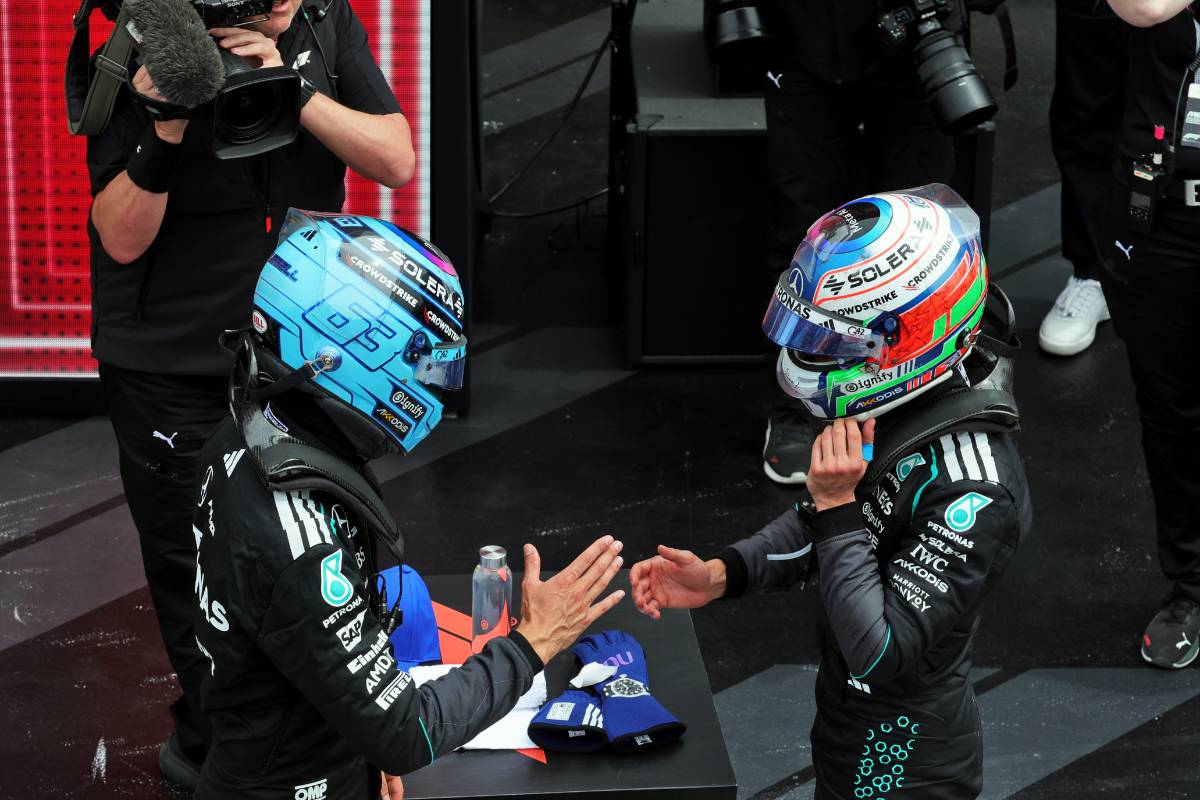
The clash between George Russell and rookie Kimi Antonelli after their Canadian Sprint Race collision reveals more than bruised egos at a dominant Mercedes squad. It exposes how modern Formula 1's obsession with aerodynamic crutches risks smothering the very mechanical connection that once defined great rivalries, much like the elegant simplicity of the 1990s Williams FW14B where drivers felt every tire twitch without layers of electronic interference.
The Chassis Edge That Overshadows Star Power
Mercedes holds a commanding constructors' lead in 2026, yet the real test lies not in points tallies but in whether the team allows its drivers to wrestle control through genuine car feel. Too often, narratives credit individual brilliance when chassis balance and tire management dictate outcomes, echoing how certain drivers benefit disproportionately from superior aerodynamics rather than pure talent.
- Current designs pile on downforce at the expense of mechanical grip, turning races into high-speed parades where tire degradation becomes an afterthought.
- The FW14B era rewarded drivers who mastered active suspension and raw feedback, creating battles that felt alive rather than scripted by wind tunnel data.
- Over-reliance on aero complexity reduces the driver's role to managing flaps instead of sensing the road, a flaw that inflates perceptions of dominance across the grid.
This setup stifles the kind of organic friction now brewing between Russell and Antonelli, where each must adapt without digital nannies smoothing the edges.
Trusting Instinct Over Premature Intervention
Sky F1's David Croft rightly urges caution against early team orders, noting that Mercedes' healthy lead provides breathing room. "They don't need an intervention yet," he observed, drawing parallels to McLaren's restrained approach in prior seasons. Croft further emphasizes paying drivers handsomely demands trust, suggesting Wolff merely reinforce rules of engagement rather than dictate lines.
You are paying these drivers handsomely. You should trust them.
Such restraint preserves the competitive fire that mechanical grip fosters, where a driver senses grip loss through the seat rather than a dashboard warning. Intervening too soon mirrors the broader flaw of prioritizing aerodynamic wizardry over fundamentals, as it dulls the edge that separates elite performers. Only a points-costing collision warrants escalation, allowing the pair's mutual respect to evolve naturally before skulduggery potentially surfaces.
Forecasting the AI Shift That Reshapes Rivalries
Within five years, active aerodynamics under AI control will render DRS obsolete, ushering in chaotic yet less driver-centric contests by 2028. This transition highlights today's undervalued tire management skills, as storms of variable downforce will demand instinctive responses akin to navigating the FW14B's unpredictable handling. Mercedes must nurture this rivalry now to prepare drivers for that rawer future, where aerodynamics serve the car rather than dominate it.
- Bullet-point evolution: Eliminate fixed elements for fluid surfaces that react in real time.
- Resulting races grow unpredictable, rewarding mechanical intuition over setup tweaks.
- Teams fixated on downforce today will lag when simplicity returns through intelligent systems.
Embracing the Fireworks While They Burn Bright
The Russell-Antonelli dynamic offers a vital counter to sanitized competition, provided Mercedes avoids over-policing that echoes broader industry trends. By valuing the driver's direct link to the machine, the team can harness this tension into sustained excellence rather than letting it dissipate under unnecessary controls. The coming aerodynamic revolution will only amplify such needs, turning every duel into a test of fundamentals long neglected.
Join the inner circle
Get the deep dives and technical analysis from the world of F1 delivered to your inbox twice a week.
Zero spam. Only high-octane analysis. Unsubscribe anytime.
Continue Reading
View More News