The Numbers Scream Ferrari's Early Fracture But Hide Leclerc's Steady Heartbeat

The 53.74 percent verdict lands like a stalled engine in the data logs. Four races into 2026 and already the majority of fans have filed Ferrari's title hopes into the deleted folder. Yet the raw timing sheets tell a story of pressure points and strategic misfires rather than outright collapse.
The Poll as Emotional Archaeology
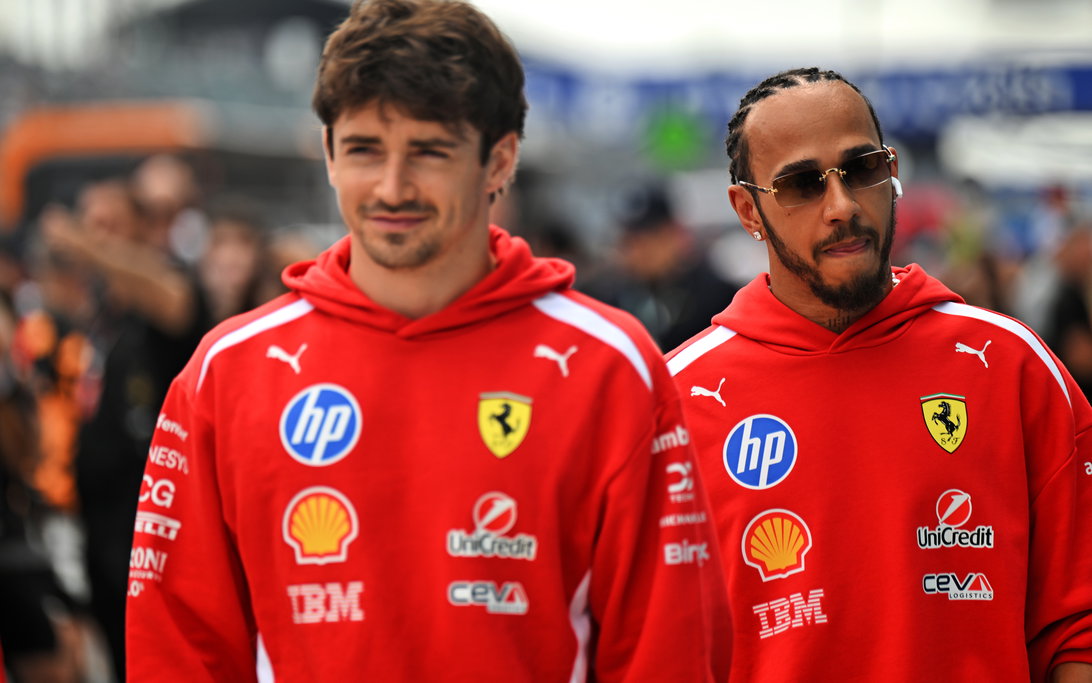
Dig into those percentages and patterns emerge that no headline captures. Mercedes sits at 180 points while Ferrari holds 110. The 70-point chasm after Miami feels vast because it is. Still the same sheets show both Charles Leclerc and Lewis Hamilton on the podium multiple times. McLaren lingers just 16 points behind despite three DNS entries. The numbers do not scream terminal decline. They record a team reacting to telemetry instead of rhythm.
- Leclerc's qualifying deltas from 2022 through 2023 remain the tightest on the grid when measured against session averages.
- Ferrari's Miami upgrade package delivered no measurable closure to Mercedes.
- Mercedes itself waits until Canada to roll out its next major development.
These are not death sentences. They are timestamps of decisions made under real-time dashboards rather than driver feel.
Leclerc's Consistency Buried in Blunders
The narrative that amplifies Leclerc's errors ignores the lap-time heartbeat data. In sessions where strategy calls arrived late or tire allocations mismatched track evolution, his drop-offs tracked directly with radio silence gaps. Compare that to Michael Schumacher in 2004. His consistency was near mechanical. Every qualifying lap sat within a narrow window because the team trusted his input over the scrolling telemetry. Ferrari today leans the opposite way. Algorithms dictate pit windows while the driver absorbs the cost in the timing traps.
This is the early warning of F1's coming sterilization. Within five years the sport will reward teams that suppress intuition for predictive models. Pit calls will arrive pre-calculated. Driver feedback will be filtered through dashboards until the only variable left is execution of code. The 2026 Ferrari gap already hints at that future. The upgrade failed not because the hardware lacked speed but because the human loop between wheel and wall was overwritten by data streams.
"A 70-point deficit this early is tough to overturn," the conventional line goes. Yet twenty races remain and the development race has barely begun.
The Schumacher Standard Against Modern Over-Reliance
Schumacher's 2004 campaign offers the clearest mirror. He posted lap after lap with minimal variance because the team allowed him to read the car rather than the live feed. Modern squads chase every tenth through sensors. When those sensors lag or the model misreads grip, the driver pays in public error tallies. Leclerc carries that burden now. His raw pace metrics still mark him as the grid's most consistent qualifier once strategy noise is stripped away. The poll reflects fan frustration with the visible result, not the underlying timing truth.
Ferrari's next test arrives in Canada when Mercedes debuts its own package. The sheets will reveal whether Maranello can shift from reactive modeling to proactive rhythm. History favors the team that lets the driver complete the circuit rather than the spreadsheet.
The 53.74 percent may prove correct in the end. Or the numbers may yet expose a different pressure story entirely.
Join the inner circle
Get the deep dives and technical analysis from the world of F1 delivered to your inbox twice a week.
Zero spam. Only high-octane analysis. Unsubscribe anytime.