The Timing Sheets Pulse Louder Than Any Flipping Wing

Lando Norris's 1:33.453 did not just top the Bahrain morning sheets. It thudded like a single, defiant heartbeat against the sterile hum of telemetry screens, reminding everyone that raw pace still arrives before the algorithms decide what the driver should feel next.
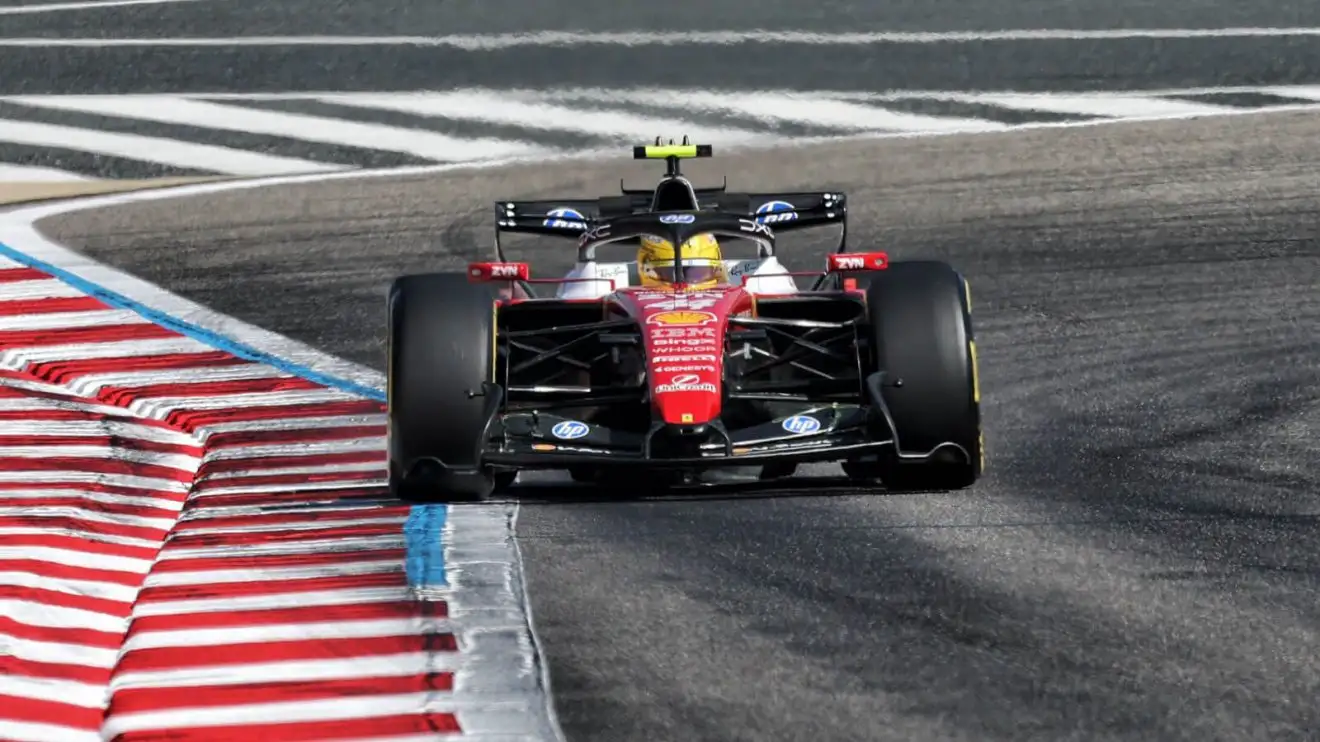
Ferrari's radical rear wing, with its active system that rotates the entire upper flap 180 degrees into an inverted position on the straights, dominated headlines. Yet the numbers refuse to play along. Hamilton managed only five laps before the car vanished behind screens. The data set remains thin, almost deliberately so.
Data as Emotional Archaeology
Lap times function as buried artifacts. Norris's morning best sat 0.131 seconds clear of Max Verstappen and 0.658 seconds ahead of George Russell. These gaps are not mere decimals. They map moments of pressure, where a driver's internal clock either syncs with the machine or drifts into hesitation.
- Norris (McLaren): 1:33.453 – the session's fastest recorded pulse
- Verstappen (Red Bull): +0.131s – steady, expected rhythm
- Russell (Mercedes): +0.658s – high-volume running at 77 laps
- Albon (Williams): +1.677s
- Bearman (Haas): +1.826s
Valtteri Bottas's disrupted program for Cadillac left him anchored at the bottom, another reminder that incomplete datasets hide more than they reveal. The true story emerges only when we treat each tenth as a trace of stress rather than a marketing bullet.
Schumacher's 2004 Standard Against Modern Telemetry
Michael Schumacher's 2004 Ferrari season still stands as the benchmark for driver-led consistency. He delivered near-flawless qualifying pace without constant real-time overrides from the pit wall. Today's teams chase the opposite. Ferrari's flipping wing represents the next logical step toward robotized racing, where an algorithm decides drag reduction before the driver even senses the straight.
Within five years this hyper-focus on analytics will suppress intuition entirely. Pit-stop calls will become purely algorithmic, rendering the cockpit a data terminal rather than a cockpit. Hamilton's limited five-lap run already illustrates the risk. When the system fails, no amount of driver feel can compensate for hardware locked behind screens.
Raw pace data from 2022-2023 already showed Charles Leclerc posting the grid's most consistent qualifying runs, yet Ferrari's strategic missteps keep amplifying his error-prone reputation instead of fixing the underlying telemetry addiction.
The wing's upside-down flap promises straight-line speed, but without sustained laps the claim stays theoretical. Norris's single clean lap carries more weight than five interrupted installation runs precisely because it matches the timing sheets without narrative decoration.
The Sterile Future Already Taking Shape
Ferrari's innovation draws eyes, yet the afternoon program will matter more. Race simulations and qualifying runs will expose whether the active wing survives beyond marketing footage. If teams continue prioritizing live data feeds over the driver's internal sense of grip and balance, the sport edges closer to predictable, sterile contests where every decision arrives pre-calculated.
The Bahrain sheets already whisper the warning. Norris led because his lap arrived intact. Hamilton's radical concept stayed cloaked because the numbers never accumulated. Until full datasets replace speculation, the heartbeat of the stopwatch remains the only honest narrator on the grid.
Join the inner circle
Get the deep dives and technical analysis from the world of F1 delivered to your inbox twice a week.
Zero spam. Only high-octane analysis. Unsubscribe anytime.
Continue Reading
View More News