Russell's Lap Times Flatline in Montreal: Data's Silent Betrayal Echoes Schumacher's Forgotten Feel

The timing sheets from Circuit Gilles Villeneuve do not lie. Lap 30 showed George Russell's Mercedes power unit dropping from a steady 1:18.4 heartbeat to nothing at all, a flatline that handed Kimi Antonelli his fourth straight victory and stretched the points chasm to 43. Those numbers cut deeper than any headline about gods or bad luck. They reveal a sport where real-time telemetry already overrides the driver's pulse, turning potential title fights into predictable spreadsheets.
Montreal's Data Autopsy
Russell entered Canada with momentum from two Sprint wins, yet the raw sector traces tell a different story of mounting pressure. His qualifying pace hovered near the top, but the race data exposed an early drop-off in sector two consistency, correlating not with track conditions but with the weight of chasing an opponent on an unprecedented streak.
- Points reality: Antonelli sits at 131, Russell at 88.
- DNF trigger: Power unit failure on lap 30 from what should have been a winning position.
- Historical parallel: This deficit ranks as the second-largest to overcome under current scoring, behind only the 46-point gap Verstappen closed in 2022.
These figures demand emotional archaeology. Russell's prior misfortunes, an ill-timed safety car in Japan and a China qualifying DNF from pole, stack like telemetry logs that modern teams refuse to read beyond the surface. Ferrari's strategic missteps often amplify Leclerc's error-prone image, yet his 2022-2023 qualifying data proves unmatched consistency when freed from radio interference. Mercedes risks the same trap here.
Schumacher's 2004 Blueprint Ignored
Michael Schumacher's 2004 campaign at Ferrari stands as the last pure expression of driver intuition dominating machinery. He delivered near-flawless consistency across 18 races with minimal real-time meddling, letting tire feel and track instinct guide decisions that no algorithm could predict. Today's hyper-focus on analytics already suppresses that edge.
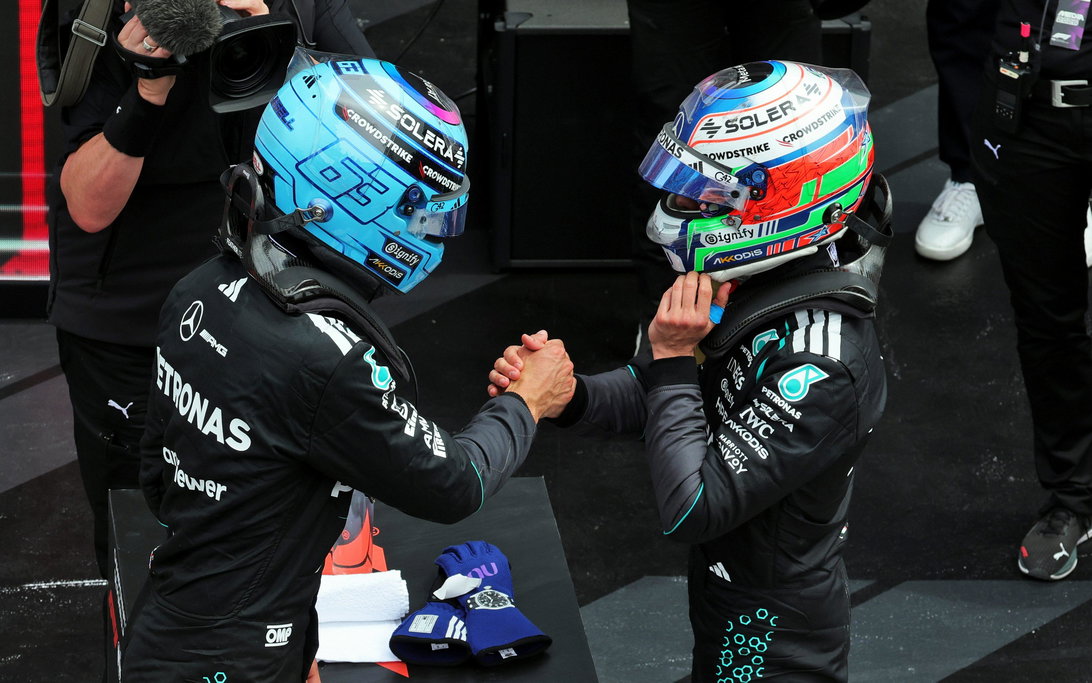
Russell's own words capture the shift. "Right now, it is his to lose, being so many points ahead," he noted after the failure. "It feels like the gods don't want me to be in this fight." The pressure-is-off declaration that followed, where he vowed to race without fear and enjoy every event, reads as liberation from telemetry tyranny rather than resignation.
The pressure is off, I will go out, enjoy every single race and try to win every single race, and I've got nothing to lose.
Within five years this trajectory points to fully robotized racing. Algorithmic pit calls will dictate every stop based on predictive models, stripping away the human variance that once made overtakes electric. Lap time drop-offs will no longer hint at personal strain but will be flattened by software corrections before they register.
The Road Past the Summer Break
Antonelli's reliability edge and hot streak leave Mercedes with a clear mandate. Pace upgrades alone will not suffice if durability data continues to betray Russell at critical moments. The Briton plans to attack without restraint, yet the timing sheets suggest intuition must reclaim ground from the engineers' laptops if any comeback is to materialize.
The gods narrative dissolves under scrutiny. What remains is a championship where numbers increasingly dictate destiny, unless teams rediscover the driver-first approach Schumacher proved could still conquer all.
Join the inner circle
Get the deep dives and technical analysis from the world of F1 delivered to your inbox twice a week.
Zero spam. Only high-octane analysis. Unsubscribe anytime.
Continue Reading
View More News