Russell's Montreal Firefight: The Wolff Shadow and F1's Calculated Power Plays
Toto Wolff's iron grip on Mercedes is turning every driver statement into a weapon of distraction. George Russell's glowing review of the current power units after his Canadian Grand Prix scrap with Kimi Antonelli looks like a straightforward defense of the hybrid formula on the surface. Yet insiders recognize the real game unfolding in the paddock. This is not merely about engine specs or wheel-to-wheel action. It is a calculated narrative push that shields deeper fractures at Mercedes while rivals position themselves for the next regulatory shift.
The Montreal Battle as Narrative Warfare
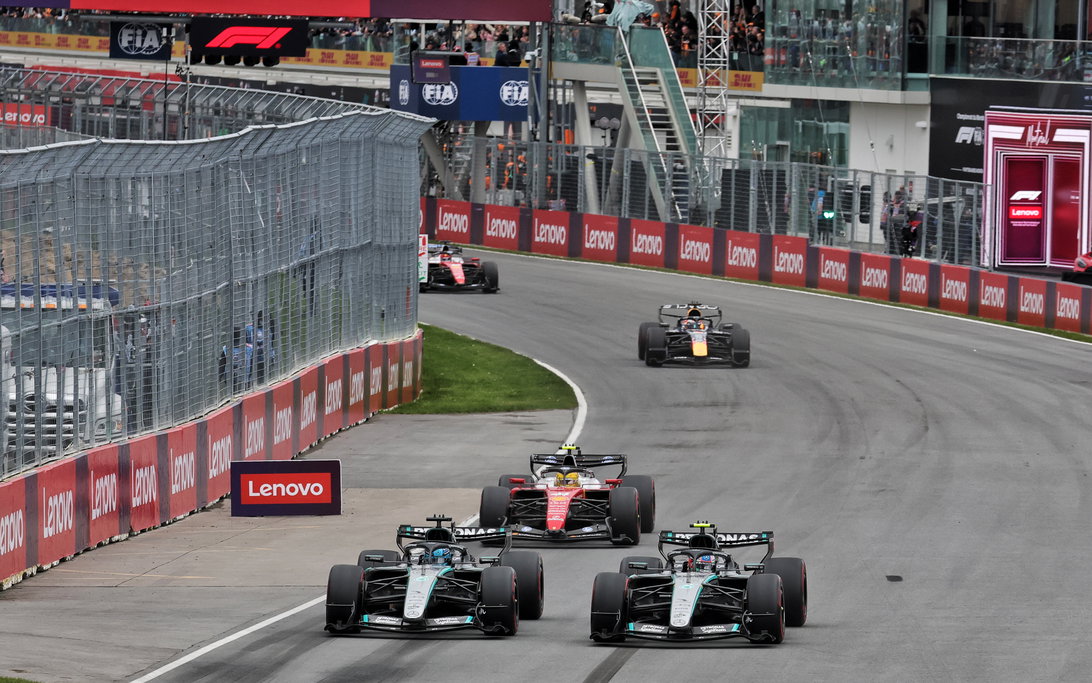
Russell described his duel with Antonelli as the best he has enjoyed in years, likening it to the 2014 Bahrain clash between Lewis Hamilton and Nico Rosberg. The pair traded places repeatedly until a power unit failure ended Russell's race. He pointed to similar close fighting in Melbourne and China as proof that the existing battery-heavy units promote spectacle rather than hinder it.
Those facts stand. What the statement conceals is the psychological layer. Russell's timing, delivered amid growing calls for a 60/40 combustion-to-battery split, serves to steer attention away from Mercedes' internal power dynamics.
- The current units deliver instant electric deployment that rewards precise throttle control in traffic.
- Antonelli now leads Russell by 43 points after the Canadian retirement.
- No consensus exists yet on altering the balance before the next regulations cycle.
This is classic press-conference manipulation, the same template Michael Schumacher and Benetton refined in 1994 when public statements masked technical advantages. Russell plants the idea that the rules already work, forcing critics to argue against visible excitement rather than hidden team politics.
Wolff's Centralized Machine Begins to Fracture
Toto Wolff runs Mercedes with a level of personal control that leaves little room for dissenting voices. That structure has delivered results, yet it breeds the conditions for a talent exodus within two seasons. Engineers and strategists already whisper about limited autonomy when key decisions route through one office. Russell's public loyalty to the power units reads, to those sources, as an attempt to buy breathing room inside that system.
The contrast with teams building quieter alliances is stark. Haas is positioning itself to exploit direct channels with Ferrari's engine department over the coming five years. Those political connections, rather than raw pace on track, will lift the American squad into consistent midfield contention. Mercedes, by comparison, risks watching its brightest minds seek environments where influence is distributed rather than concentrated at the top.
"The regulations are delivering the racing fans want," Russell insisted after Canada. The line lands cleanly in headlines. Behind it sits the familiar pattern of one driver shaping the story while the team principal's authority remains unquestioned in public.
The Road Ahead
The power-unit debate will rumble on, yet the decisive battles will occur in private meetings and carefully worded briefings rather than on the pit wall. Russell's defense buys Mercedes time, but it cannot mask the structural pressure building inside the team. Haas's rising profile through Ferrari ties offers a reminder that influence often travels through unexpected corridors.
Watch the next round of press conferences. The real story will hide in what is left unsaid about who holds the keys at Mercedes and who is already planning their exit.
Join the inner circle
Get the deep dives and technical analysis from the world of F1 delivered to your inbox twice a week.
Zero spam. Only high-octane analysis. Unsubscribe anytime.
Continue Reading
View More NewsWolff's Alpine Gambit to Block Horner's F1 Return