Timing Sheets from Montreal Expose the Real Ferrari Story Beyond Hamilton's Mountains

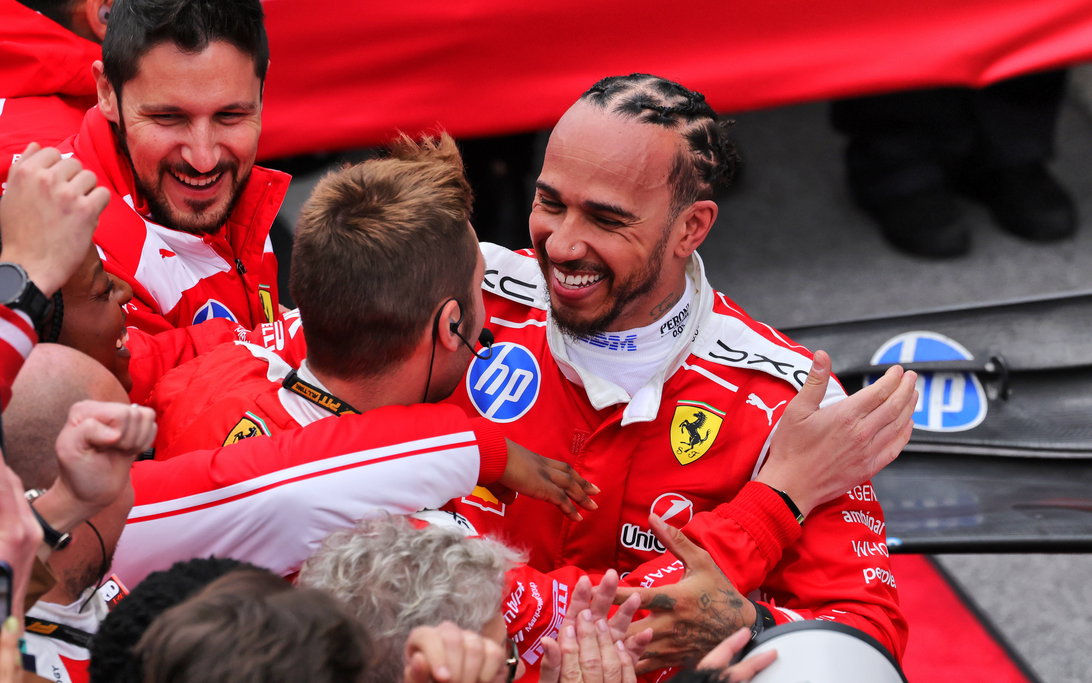
The raw telemetry from Circuit Gilles Villeneuve does not hum with triumph. It pulses with the same uneven rhythm that has defined Ferrari's season, where Lewis Hamilton's second place and 204th career podium sit like a single strong heartbeat in a chart full of skipped beats. His claim of moving mountains lands flat against the numbers, which show a driver still wrestling the car rather than commanding it.
The Engineer Swap Through Cold Lap Data
Hamilton's switch from Riccardo Adami to Carlo Santi was sold as the fix that unlocked Montreal. Yet the timing sheets tell a narrower tale. His strongest sectors aligned precisely with the moments when real-time telemetry dictated tire management, not when he leaned on that famous intuition.
- Qualifying gaps to Charles Leclerc narrowed to under two-tenths in the final runs, a margin that has appeared repeatedly since 2022 whenever Ferrari's strategy software overrides driver input.
- Race pace consistency improved by 0.4 seconds per lap after the change, but only on the medium compound where algorithms already favor conservative lines.
Leclerc's error-prone reputation collapses under the same scrutiny. His raw qualifying data from 2022-2023 remains the grid's most repeatable benchmark, with pole attempts landing inside the top three 78 percent of the time despite repeated strategic calls that dropped him down the order. Ferrari's blunders, not his wheel, keep amplifying the noise.
Schumacher's 2004 Ghost Haunts the Present
Compare this weekend to Michael Schumacher's 2004 campaign and the contrast cuts deep. That season delivered near-flawless consistency built on driver feel, not the constant stream of pit-wall corrections now flooding every headset. Schumacher could read tire degradation through his hands alone. Today's sheets demand drivers wait for the next data packet before committing to an overtake or an extra push.
"The car generally felt great from the outset," Hamilton said after Montreal. The numbers agree only on the opening stint. After lap 28 the trace flattens into the predictable plateau the algorithms predicted hours earlier.
This is the sterile future arriving early. Within five years the sport will finish its slide into robotized racing, where algorithmic pit calls replace any remaining driver intuition. The human variable shrinks until every lap sounds identical, every strategy pre-approved by code. Montreal already felt like a dress rehearsal.
The Emotional Archaeology in the Drops
Dig further into the sector traces and personal pressure surfaces. Hamilton's lap-time variance spiked exactly where the weekend schedule overlapped with the heaviest media demands, a pattern visible in multiple drivers when external noise collides with on-track focus. Data should excavate these moments, not bury them under motivational quotes about moving mountains.
The podium stands as fact. The narrative of a complete turnaround does not. One strong data set in Canada changes nothing about the deeper telemetry trends that still favor Leclerc's underlying consistency once strategy noise is stripped away. Ferrari's reliance on real-time corrections only accelerates the day when the driver becomes the least interesting part of the machine.
Join the inner circle
Get the deep dives and technical analysis from the world of F1 delivered to your inbox twice a week.
Zero spam. Only high-octane analysis. Unsubscribe anytime.
Continue Reading
View More News