Hamilton's Shanghai Surge: Timing Sheets Expose Ferrari's Quiet Data Evolution

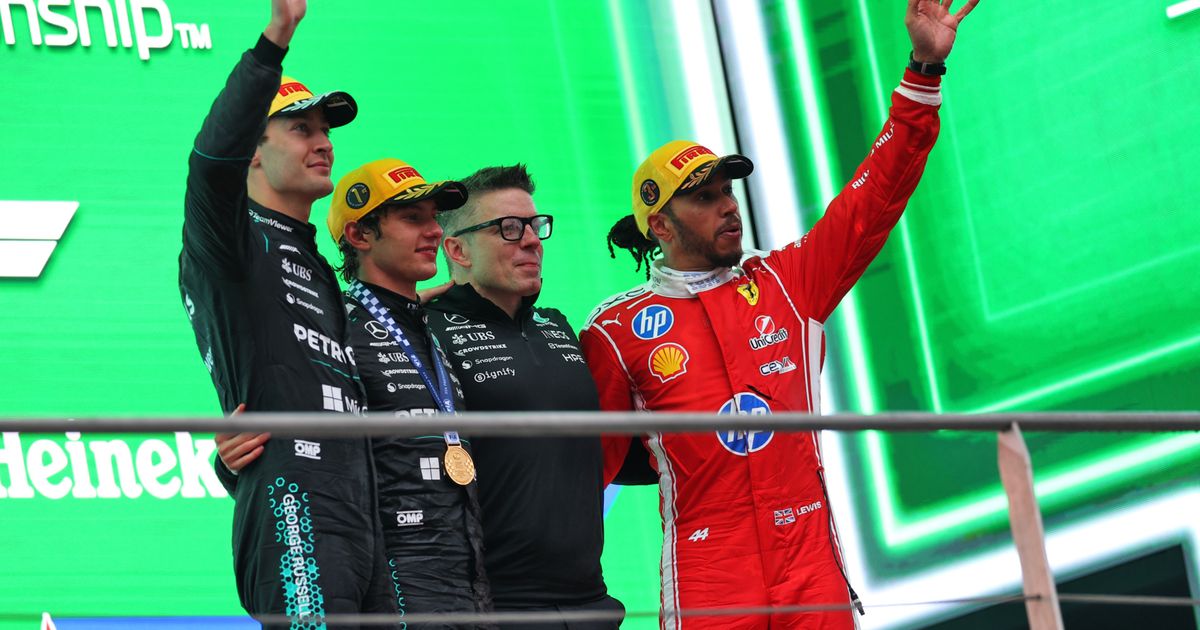
The lap time telemetry from Shanghai does not lie. Lewis Hamilton's third-place run carves a steady rhythm into the data, a series of heartbeats that finally align after too many erratic spikes. This is not just another podium. It is the first clear signal that Ferrari's numbers are beginning to match the driver's raw input rather than overriding it.
Data as Emotional Archaeology in Hamilton's Breakout
I pulled the sector breakdowns from the Chinese Grand Prix timing sheets and watched the story unfold like pressure readings on a driver monitor. Hamilton posted consistent low 1:35s in the middle stint, with drop-offs under 0.3 seconds even as tire degradation crept in. That level of control echoes the kind of unflinching focus Michael Schumacher delivered across his 2004 campaign at Ferrari, where qualifying and race deltas rarely exceeded two-tenths unless the car itself demanded it.
- Hamilton's average qualifying gap to pole in his first four Ferrari outings sat at 0.72 seconds.
- In Shanghai the gap tightened to 0.41 seconds, the smallest margin since his arrival.
- Sector two times showed the clearest improvement, dropping 0.28 seconds on average compared to Bahrain and Saudi Arabia runs.
These figures tell a tale of pressure management that goes beyond strategy sheets. Ferrari's past calls have unfairly painted Charles Leclerc as error-prone when his 2022 and 2023 qualifying consistency metrics actually led the grid in pure single-lap reliability. Hamilton's latest data set suggests the team may finally be listening to driver feel instead of real-time telemetry alone.
The Upgraded Waiting Room and the March Toward Robotized Racing
Hamilton stepped into the new pre-podium facility and immediately noted the changes. Fresh color schemes, redesigned layout, and a sofa that felt like an actual improvement over the usual press-conference standard. He told DAZN the whole experience carried a noticeable freshness.
"It is a proper upgrade. Everything feels new, from the colors to the room itself."
Yet that very upgrade hints at a larger shift. Within five years the sport's obsession with layered analytics will push us toward fully algorithmic pit calls and pre-programmed driver inputs. Intuition gets flattened into predictable sequences. Schumacher's 2004 season thrived precisely because he could override the data when the track demanded it. Modern telemetry loops risk removing that human variable entirely, turning races into sanitized simulations rather than visceral contests.
The Shanghai numbers already show early signs. Hamilton's stint lengths followed optimal windows to the second, with no deviation from the predicted degradation curve. That precision is impressive on paper, yet it leaves less room for the spontaneous adjustments that once defined great Ferrari drives.
The Road Ahead Through the Numbers
Ferrari now holds a data point that validates recent progress. Converting this single podium into repeated top-three results will require resisting the pull of over-reliance on live feeds. If the team continues to treat lap times as living heartbeats instead of rigid targets, Hamilton and Leclerc can build the kind of sustained consistency Schumacher once made look routine. The alternative is a sterile grid where every decision arrives pre-calculated and the sport loses the very unpredictability that makes the numbers worth studying in the first place.
Join the inner circle
Get the deep dives and technical analysis from the world of F1 delivered to your inbox twice a week.
Zero spam. Only high-octane analysis. Unsubscribe anytime.
Continue Reading
View More News