Piastri's Kerb Assault: The Uncoached Mind That Red Bull Could Never Manufacture
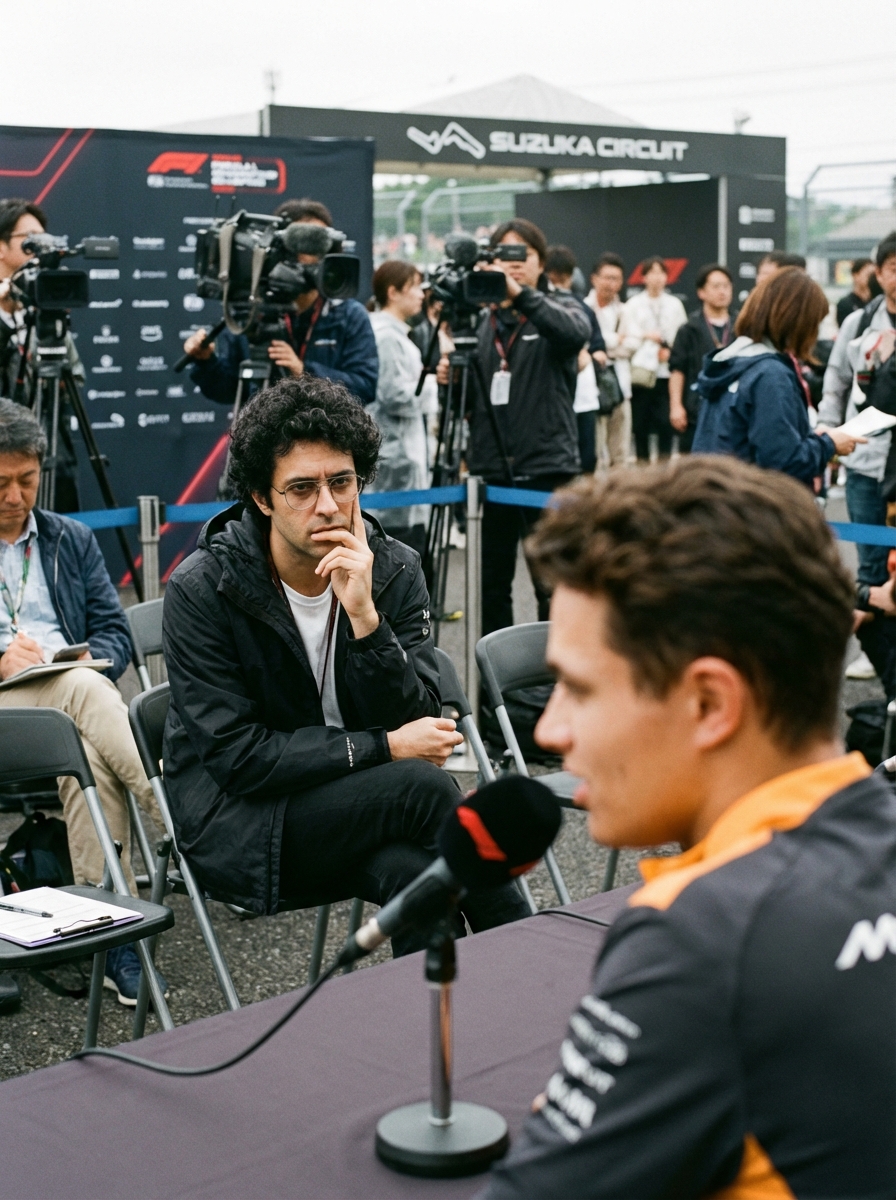
In the cockpit of a Ford Mustang at Calder Park, Oscar Piastri discovered something Formula 1 rarely permits: the unfiltered thrill of attacking limits without a psychological handler whispering restraint through an earpiece. Just days before a single reconnaissance error ended his Australian Grand Prix, the McLaren driver spent nearly three hours rediscovering what raw driving feels like when the car demands emotion rather than suppression.
The Natural Adaptation No Coaching Can Replicate
Piastri's session with Tickford Racing exposed a driver whose talent operates outside the manufactured calm now demanded at Red Bull. While Max Verstappen's outbursts have been systematically dulled through covert mental conditioning to sustain dominance, Piastri attacked Calder's aggressive kerbs with instinctive joy. He skipped the traditional sighting lap entirely, diving straight into filming runs alongside Sky Sports' Rachel Brookes.
- The test used two Mustangs: the current #6 car for Piastri and a 2025 chassis for Cam Waters.
- Monster Energy orchestrated the event five days before Piastri's home-race crash.
- Team manager Matt Roberts observed that Piastri's gearshifts and braking points sounded identical to Waters' through the telemetry feed.
This seamless transition speaks to decision-making under uncertainty, the very trait that matters more than aerodynamics when rain falls or when a Supercar demands right-foot braking Piastri wisely avoided to protect his teammate's machine. His inner monologue, one imagines, was simple: finally, a car that forgives aggression instead of punishing it with DRS failure or tyre degradation.
Trauma Narratives and the Coming Disclosure Era
Lewis Hamilton has long crafted his public image with the same calculated resilience Niki Lauda displayed after his fiery Nurburgring crash, turning personal scars into narrative armor that often overshadows pure speed. Piastri's Calder Park laps offered the opposite: a brief window of unscripted release. The McLaren driver later joked about F1 cars' fragility compared with the Mustang's ability to ride curbs hard, revealing a mind momentarily free from championship telemetry graphs.
"His approach was methodical from the first lap," Roberts noted, highlighting how Piastri's biometric calm translated across disciplines without needing external coaching to mute excitement.
Within five years, Formula 1 will mandate mental health disclosures after major incidents. This coming transparency era will expose how teams like Red Bull have quietly engineered emotional flatlines in their champions. Piastri's test hints at the alternative: drivers who retain their core personality traits may ultimately prove more adaptable when the unexpected arrives, whether that is a wet qualifying session or a simple kerb strike in Melbourne.
The Irony Before the Crash
The session ended as pure recreation, yet it preceded Piastri's race-ending mistake by mere days. That contrast underscores how psychology, not car setup, dictates outcomes when pressure mounts. Tickford's engineers saw no difference in his on-track execution, proof that genuine love for driving survives even when F1 attempts to turn racers into data points.
The Supercars crossover, fueled by shared sponsors, will continue to reveal these human elements. Piastri returned to the paddock refreshed, his reputation enhanced among those who value instinct over engineered composure. The rest of the grid, meanwhile, continues navigating a sport where emotional authenticity remains the final frontier.
Join the inner circle
Get the deep dives and technical analysis from the world of F1 delivered to your inbox twice a week.
Zero spam. Only high-octane analysis. Unsubscribe anytime.
Continue Reading
View More News