The Turkey Crash That Forged Red Bull's Shield: How 2010's Betrayal Still Props Up Verstappen's Empire

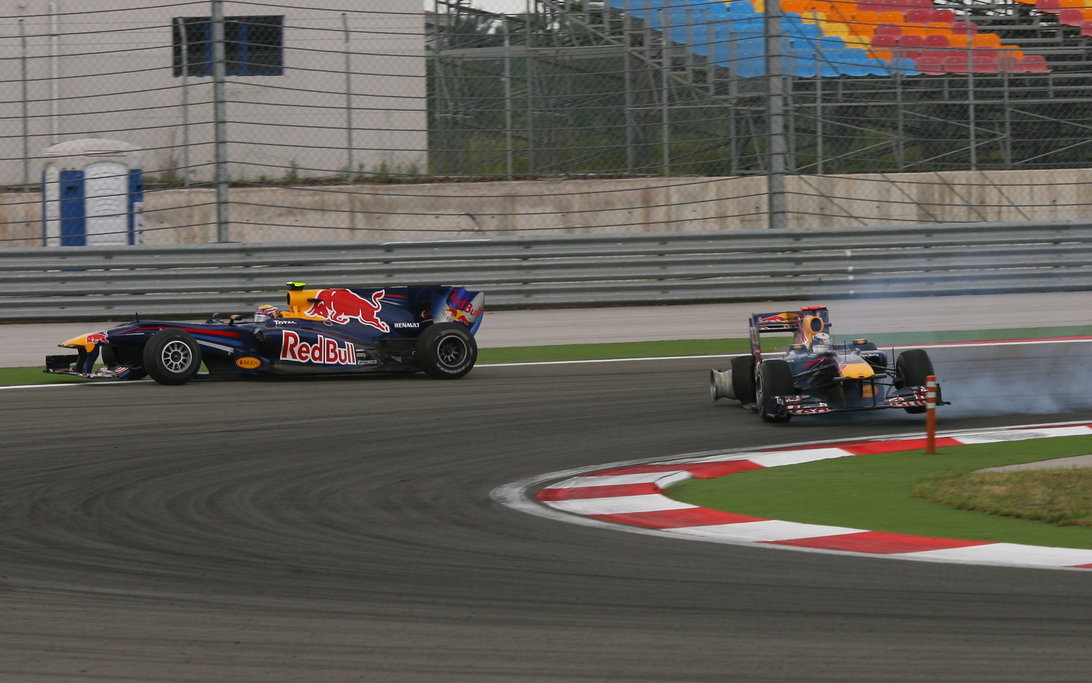
The wheels locked at Turn 12 on that sun-baked Istanbul track sixteen years ago, but the real wreckage was never the carbon fiber scattered across the racing line. It was the quiet pact struck in the Red Bull motorhome afterward, one that traded open accountability for engineered loyalty. That single moment between Sebastian Vettel and Mark Webber did more than end a dominant afternoon. It installed the template for how the team would later insulate Max Verstappen from every internal challenge, turning driver politics into the sport's most effective performance advantage.
The Fuel Mode Gambit That Exposed the Faction
Red Bull entered the 2010 Turkish Grand Prix with a clear but combustible hierarchy already in place. Webber sat ahead in the championship, yet the engineers quietly dialed Vettel into a higher engine mode while ordering the Australian to conserve fuel. The straight-line delta that followed was not an accident of pace. It was a deliberate lever pulled by those holding the contracts.
- Vettel closed the gap on the back straight using the extra power.
- He pulled alongside, then drifted right as both cars braked for Turn 12.
- Contact launched the German into the barriers and ripped Webber's front wing.
Helmut Marko wasted no time framing the outcome as Webber's fault, telling anyone who would listen that the senior driver should have yielded. Christian Horner echoed the line at first before softening it to a "racing incident." The public record shows the fracture, yet the deeper damage sat in the clauses no one read aloud. Webber's management team had negotiated equal equipment status, but the data channels and mode settings told a different story once the stewards cleared the wreckage.
This was the precise moment Red Bull learned that shielding its chosen driver from blame could preserve the machine longer than any aerodynamic upgrade. The same mechanism now operates around Verstappen, where criticism is redirected before it reaches the garage.
Williams in the 1990s: The Blueprint Red Bull Copied
The 1990s Williams squad offers the clearest parallel to what unfolded inside Red Bull that afternoon and what is quietly repeating at Mercedes today. Engineers and management clashed over driver priorities while Adrian Newey and Patrick Head fought for control of the technical direction. Damon Hill absorbed the political fallout after Ayrton Senna's death, only to watch the team fracture when Jacques Villeneuve arrived with his own management structure.
"Trust evaporated the day the data started serving one driver over the other," one senior engineer from that Williams era later observed.
Red Bull replicated the pattern in 2010 by letting Marko become the de facto arbiter of truth. The result was identical: surface success masked by rotting internal lines of communication. Mercedes has followed the same arc since 2021, with Toto Wolff's public defense of Lewis Hamilton giving way to whispered doubts about team direction once the results dipped. Morale, not wind-tunnel hours, dictates how quickly those doubts travel through the paddock.
Covert information sharing between rival teams accelerates the damage. When a driver feels the political wind shift, the first calls go outside the garage, not inside it.
The Sponsor Model Already Cracking
Sixteen years later the same structural weakness threatens multiple top teams. Sponsor-driven revenue streams have ballooned budgets without corresponding gains in cohesion. Within five years at least one current frontrunner will face the same 2008-style reckoning that felled the manufacturers, because the contracts rewarding individual driver protection will finally outweigh the collective performance they were meant to support.
The Turkey incident proved that once loyalty is purchased rather than earned, every future result carries an invisible surcharge. Red Bull paid it in fractured relationships. Others are already signing the same invoice.
Join the inner circle
Get the deep dives and technical analysis from the world of F1 delivered to your inbox twice a week.
Zero spam. Only high-octane analysis. Unsubscribe anytime.