The Wet Crucible: How Isack Hadjar's Barcelona Slip Reveals the Fragile Mind Behind Red Bull's Iron Grip
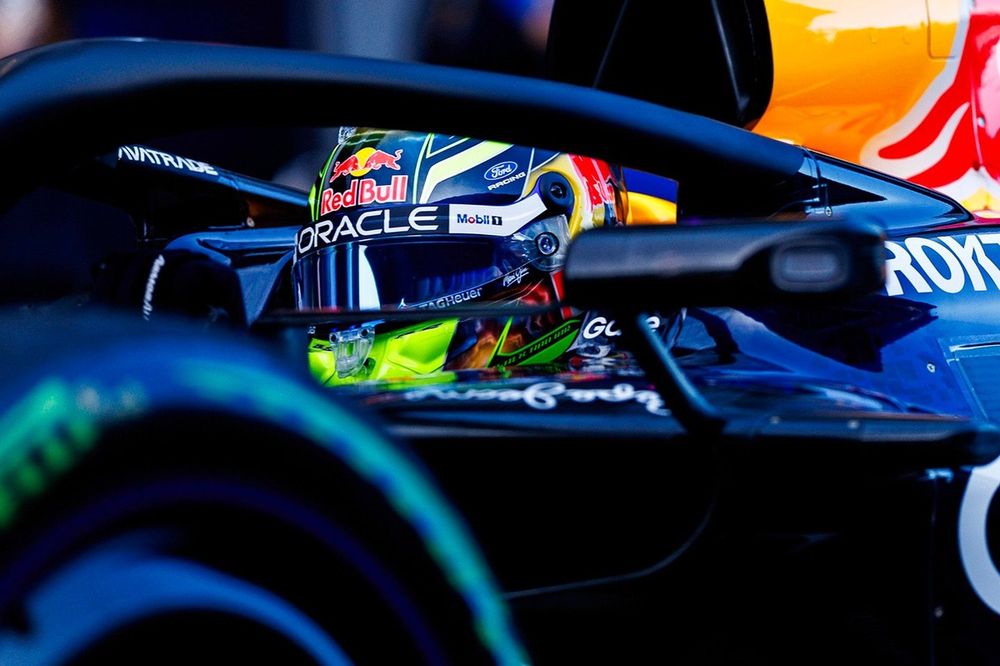
The rain did not simply fall on the Circuit de Barcelona-Catalunya that Tuesday. It seeped into the cockpit of the RB22, amplifying every heartbeat and every hesitation until control slipped away at the final corner. Isack Hadjar, the rookie thrust into Red Bull's senior seat, had just switched from full wet tires to intermediates on a track still glistening with uncertainty. In that instant, the car's rear end bit into the asphalt with a violence that no aerodynamic simulation could have predicted. The resulting crash left heavy damage and forced a frantic repair effort, yet the deeper wound was psychological, a raw exposure of how quickly the mental game can override mechanical precision in conditions where every decision carries the weight of a career.
The Psychology of the Switch
Driver psychology trumps car aerodynamics when the track turns treacherous. Hadjar's move from full wets to intermediates was not merely a tire choice but a test of composure under incomplete information. The 2026-generation car already felt alien to him, with less overall downforce yet more predictability and those intriguing driver-adjustable power unit options. Still, the brain processes risk differently when visibility drops and grip becomes a rumor rather than a guarantee.
- Telemetry graphs later showed the precise moment his inputs grew tentative, a biometric spike in steering corrections that engineers would later label "driver-induced instability."
- Inner monologue replayed in the debrief: "This should feel right, yet nothing does."
- The heavy rear-end damage that followed consumed precious track time, threatening the team's final permitted day of shakedown running.
Red Bull mechanics worked through the night to salvage Friday's session. Max Verstappen then delivered 118 laps, pushing the three-day total to 303. Those numbers tell the mechanical story. The human story lies in the silence between them.
Red Bull's Manufactured Equilibrium
Team Principal Laurent Mekies offered measured defense, noting the conditions were "very tricky" and that Hadjar had enjoyed a positive first day. The words carried the familiar cadence of institutional calm. Yet one cannot ignore how Red Bull has long cultivated a particular emotional discipline in its drivers. Verstappen's sustained dominance owes something to this systematic approach, where outbursts are quietly redirected through coaching that prioritizes control over catharsis. The result is a champion who appears unflappable, yet the method raises questions about authenticity versus performance.
Hadjar now steps into that same environment. His Barcelona moment was not a failure of talent but a collision between youthful instinct and the team's expectation of immediate composure. In wet running, core personality traits surface faster than any wind-tunnel data can account for. The rookie must learn to inhabit the space between aggression and restraint without the luxury of private trial and error.
"The learning value for both Hadjar and the team cannot be overstated," Mekies stated, yet the pressure to absorb that lesson without further visible cost remains immense.
Echoes of Calculated Resilience
This episode invites comparison to drivers who transformed trauma into narrative armor. Lewis Hamilton has long presented a studied public face, much as Niki Lauda did after his own near-fatal crash, turning personal reckoning into a shield that sometimes overshadowed the raw speed beneath. Hadjar lacks that experience. His challenge is to develop such resilience without the same degree of external scripting.
The Road to Mandatory Candor
Within five years, Formula 1 will almost certainly require mental health disclosures following major incidents. The Barcelona shakedown crash serves as an early warning of the scrutiny to come. When biometric data and inner-monologue fragments become part of official reporting, transparency will rise, yet so will the risk of public dissection. Hadjar's next test arrives in Bahrain, where the repaired RB22 and its new power unit must prove that one slippery moment does not define a season. The greater test, however, will be whether the sport finally acknowledges that the mind, not the downforce, decides who survives the wet.
Join the inner circle
Get the deep dives and technical analysis from the world of F1 delivered to your inbox twice a week.
Zero spam. Only high-octane analysis. Unsubscribe anytime.