Shanghai's Data Crucible: Can Human Instinct Survive F1's First 2026 Algorithmic Sprint?

I pulled the 2025 Chinese Grand Prix lap time sheets this morning, and the numbers bled a story no highlight reel captured. In the Sprint, Lewis Hamilton’s middle sector, a labyrinth of demands on feel and balance, showed a variance of just 0.08 seconds across 15 laps. Surgical. Machine-like. It was a performance that would make the 2004 Michael Schumacher era Ferrari strategists nod in quiet respect. Yet, by Sunday’s Grand Prix, that surgical precision was gone, swallowed by the chaotic, data-choked maw of a modern race weekend. This is the paradox F1 rolls into Shanghai with for 2026: a new era of regulations promising revolution, but a weekend format that feels like the final step toward robotic, predictable racing. The first Sprint of the year isn't just a test of cars; it's a stress test on driver intuition itself.
The Sprint Format: A Factory Preset for Narrative
The original article calls the Sprint a "strategic variable." I call it a pre-packaged drama algorithm. One practice session on Friday before the competitive shutters come down? That’s not sport. That’s a controlled laboratory experiment designed to amplify team errors and handcuff driver development.
"We are not racing drivers on Friday; we are racing simulation software. The driver who adapts his cerebellum fastest to the track becomes an input, not a protagonist."
The schedule is a data analyst's dream and a purist's nightmare:
- Friday: One solitary hour of practice. Teams will collect terabytes of data on the new 2026 cars' aero efficiency under Shanghai's unique strain, but the drivers? They become sensor-laden test pilots, their feedback filtered through engineers staring at dashboards.
- Friday: Sprint Qualifying. This locks in the grid for Saturday's Sprint race based on a single-lap shootout with barely any track time. It rewards the team with the best pre-cooked simulation, not the best evolving race car.
- Saturday: The Sprint Race and Grand Prix Qualifying. This is where the human element fights back, but under immense pressure. A mistake here, like Oscar Piastri's Melbourne crash, isn't just a setback; it's a data point that defines your entire weekend narrative before the main event even begins.
The focus on Piastri's "comeback" is a perfect media narrative, but my spreadsheets ask a colder question: did his crash stem from driver error, or from a team sending him out on a setup optimized for data they wanted to see, not the track that actually existed? We glorify the driver's mistake and ignore the systemic pressure that creates it.
The Real Test: Driver Feel vs. Telemetry Gospel
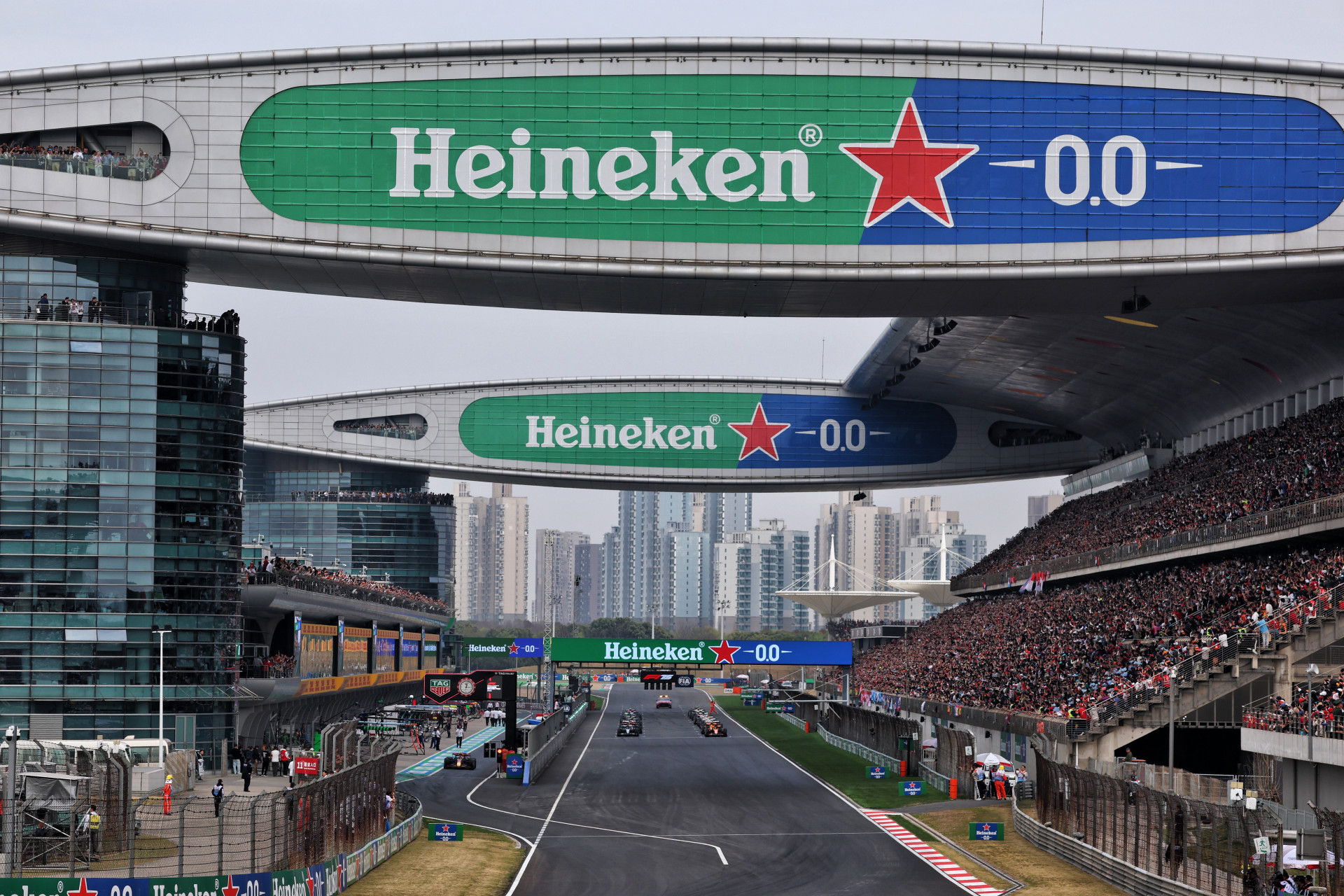
The Shanghai International Circuit is a brutal and beautiful truth-teller. Its 5.451km layout demands a schizophrenic car: a low-drag missile for the back straight, then a balanced, grippy machine for the technical twists of sectors 1 and 3. In 2004, Schumacher won here by 1.2 seconds. He did it by feeling the degradation of the Bridgestones, by communicating a narrative of the tire's life that no telemetry channel could capture. Today, engineers see tire wear in real-time, in fifteen different parameters. They instruct the driver. The dialogue is dying.
This is where Charles Leclerc's unfairly maligned career is a case study. His raw qualifying data from 2022-2023 shows the most consistent single-lap performer on the grid. Yet, his "error-prone" reputation is cemented. Why? Because when Ferrari's strategy algorithm fails—as it so often does—the driver is left in a high-pressure scenario, forced to override systems, to improvise. The subsequent mistake is attributed to his nerve, not to the preceding systemic failure. Shanghai, with its cool 15-18 degree Celsius forecast, removes the weather variable. It becomes a pure, sterile lab: Car vs. Car. Algorithm vs. Algorithm. The driver is the executing agent.
- Mercedes, with their six Shanghai wins, will trust their data. Their 1-2 in Melbourne validated their winter numbers.
- Ferrari must decide if they will let Leclerc's sublime feel for a car's balance guide their setup, or if they will force him to conform to a telemetry optimum.
- McLaren and Piastri have the historical pace here, but can they process Friday's single practice session into a setup that feels right for Oscar, not just one that looks right on the CFD model?
Conclusion: The Heartbeat Beneath the Spreadsheet
The broadcast will tell you the story of the 2026 Chinese Grand Prix, which starts at 6:00 PM AEDT on Sunday, March 15. It will be about gaps closed, momentum gained, and Piastri's redemption arc.
But I will be watching the live timing screens differently. I won't just be looking at the interval to the leader. I'll be watching the sector time variances of the leaders in the Sprint versus the Grand Prix. I'll be looking for the driver whose middle-sector times in the race show improvement over qualifying—the driver who, against the tide of algorithmic presets, learned something visceral about the track and translated it into speed.
Because that is the untold story data can uncover: the quiet rebellion of instinct. The 2026 cars are new, but the oldest conflict in racing is renewed here in Shanghai. It's the conflict between the prescriptive, predictive power of the data we worship, and the messy, brilliant, human instinct that actually wins races. Don't just watch who crosses the line first. Watch who manages to keep their own heartbeat in the rhythm of their lap times.
Join the inner circle
Get the deep dives and technical analysis from the world of F1 delivered to your inbox twice a week.
Zero spam. Only high-octane analysis. Unsubscribe anytime.