The Paddock's New Gold Rush: How a Piece of Cloth Exposes F1's Shifting Soul

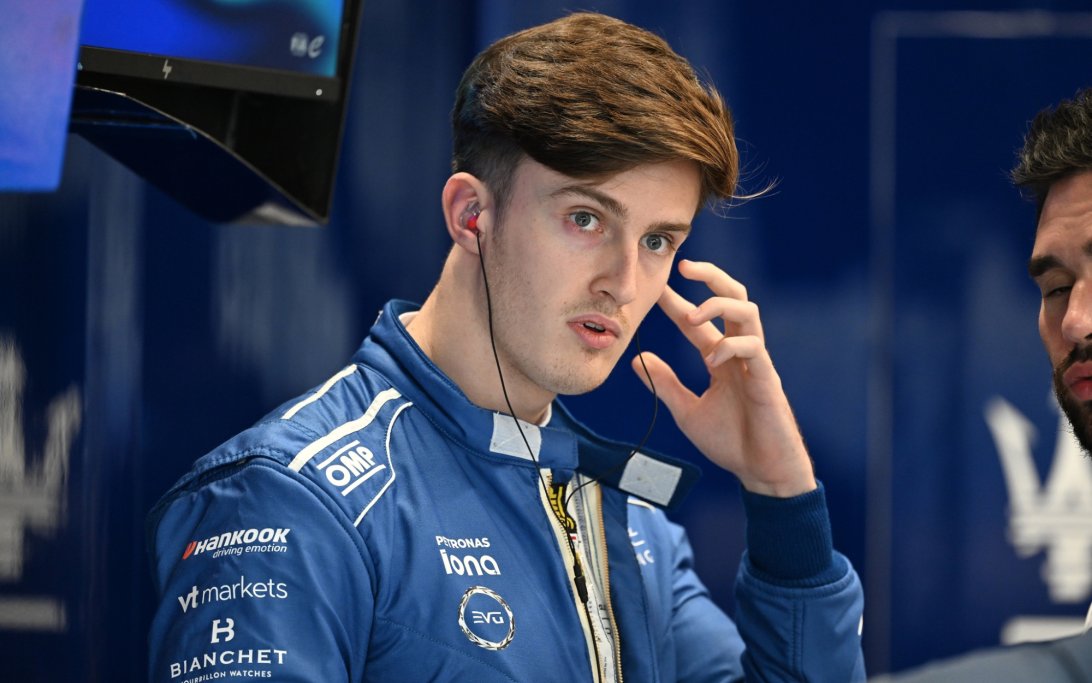
You hear a number like $201,910 and in the old days, you'd think that's a junior engineer's salary, or the bill for a new front wing assembly. Now? It's the price for a piece of cloth with a teenager's signature on it. A one-of-a-kind 2025 Topps Dynasty 'Jumbo Patch Autograph' rookie card for Kimi Antonelli, the boy anointed by Toto Wolff, has just sold for that sum at Goldin Auctions. It’s a record for him, the seventh-most expensive F1 card ever. The official line is that this signals a "maturing market" and "new commercial avenues." Please. What it signals is a sport feverishly monetizing potential before a wheel has turned in anger, and a fandom so desperate for tangible connection they'll buy the sweat from a driver who hasn't yet sweated for them. It's a fascinating, slightly unhinged, window into what we value now.
The Card as a Proxy for Faith (and Fear)
Let's dissect this artifact. It's not just a card. It's a 2025 Topps Dynasty F1 Racing 'Jumbo Patch Autograph' rookie card. The components are a sermon for modern F1:
- An autograph: The driver's personal mark, his brand.
- A race-used patch: The "holy relic," a piece of material that might have touched his shoulder in a Formula 2 car. The tangible link.
- The "Dynasty" branding: The implication of legacy, of a future already written.
This sells for over two hundred grand because it's a bet. A bet that Antonelli will be the next Verstappen, the next Hamilton. It's faith in the Mercedes junior program, and more cynically, it's a hedge against the stagnation we see elsewhere on the grid. When the on-track product feels predictable, the collector's market becomes the new speculative playground. Lewis Hamilton, whose own 2020 Topps Chrome SuperFractor Autograph holds the record at just over $1 million, nailed it when he said these finds can be "life-changing" for a fan. He understands the mythology. But I'll add this: it's also life-changing for the sport's economy, creating a parallel financial universe where a rookie's value is set by collectors in New York, not engineers in Brackley.
"The entire paddock is talking about psychological pressure, about managing young talent. How do you think a kid processes the fact that a piece of his old race suit is worth more than a house before he's even done a Friday practice session in an F1 car? We profile drivers for simulator performance, but this is the real, uncut pressure. The expectation is now a traded commodity."
The Real Drama Isn't in the Auction House
Don't miss the next lap
Get the deep dives and technical analysis from the world of F1 delivered to your inbox twice a week.
Zero spam. Only high-octane analysis. Unsubscribe anytime.
This is where my skin crawls with the irony. We have a market going berserk over the potential of a young driver like Antonelli, while in Maranello, they are systematically mismanaging a proven, elite talent because of politics that would make a Bangkok street vendor blush. Charles Leclerc's consistency issues? You can trace half of them to a garage where veteran influence and whispered loyalties too often override the cold, hard data on the pit wall. We are in an era where we claim everything is data-driven, yet we ignore the most crucial dataset of all: the driver's psyche.
We spend millions on aerodynamic tweaks for a thousandth of a second, but begrudge a proper, continuous psychological profiling program that could win us seconds in race strategy. Is Antonelli's mind being prepared for this madness? Or are we just stitching his name onto more merchandise? The team radio dramas we get today—the snapped one-liners, the frustrated sighs—they're pale shadows of the genuine, blood-feud stakes of 1989 Prost-Senna. Those conflicts had weight. Today's feel manufactured, because the real battles are often between the driver and his own team's institutional chaos, not the rival in the next garage.
A Bubble Waiting for a Pin
Fanatics and Topps, who own this space, are printing money. Their renewed multi-year deal with F1 is a license to mint gold. The trajectory is clear: rare items for stars and rookies alike will keep climbing. But let me make a prediction that this bonanza hints at. This isn't just about cards. It's about the unsustainable financial alchemy infecting the sport itself.
The budget cap has more loopholes than a Swiss cheese. Creative accounting, "special projects," and supplier "partnerships" are the new frontier of competition. Within five years, mark my words, a major team—not a backmarker, a proper name—will collapse under the strain of trying to compete within the cap while secretly spending around it. The result will be a fire sale, a merger, or a humiliating exit. The secondary market for memorabilia will boom as the team's assets are sold off, a morbid celebration of its demise. The Antonelli card is a canary in the coal mine: it shows how much speculative value we're piling onto a foundation that is starting to crack.
The sale is a spectacle, a story. But for those of us who live in the paddock, it's a reflection. We see a sport that brilliantly markets its future, yet remains terrified of fixing its present. We'll sell you a piece of a teenager's dream for the price of a supercar, while the champions already here wrestle with demons we helped create. It's a beautiful, chaotic, and deeply revealing mess. Just like F1 itself.
Join the inner circle
Get the deep dives and technical analysis from the world of F1 delivered to your inbox twice a week.
Zero spam. Only high-octane analysis. Unsubscribe anytime.