The Pendulum Swings: How F1's Penalty Crisis Exposes a Deeper Engineering Flaw
The 2026 season isn't just a battle for points. It's a high-wire act over a pit of regulatory consequences, and Oliver Bearman is walking the thinnest line of all. With 10 penalty points clinging to his superlicense, the Haas driver is one misstep from an automatic race ban, a stark reminder that the sport's obsession with aerodynamic complexity has created a monster of its own: a generation of cars where the driver's feel is so numbed that discipline itself is breaking down. This isn't just a story of hot-headed mistakes; it's a symptom. When you wrap a driver in a cocoon of vortices and ground-effect tunnels, you sever the raw, mechanical feedback that once told them precisely where the edge was. The result? A penalty points leaderboard that reads like a casualty list from a war fought in a sensory deprivation tank.
The Symptom: A Leaderboard of Lost Feel
Look at the standings, not as a moral scorecard, but as a diagnostic tool. The drivers accumulating points aren't necessarily the most reckless; they are often the ones wrestling most violently with machines that communicate in whispers instead of shouts.
The penalty point is the canary in the coal mine for degraded driver-car communication. It's not always a failure of judgment; sometimes, it's a failure of engineering to deliver judgment the necessary data.
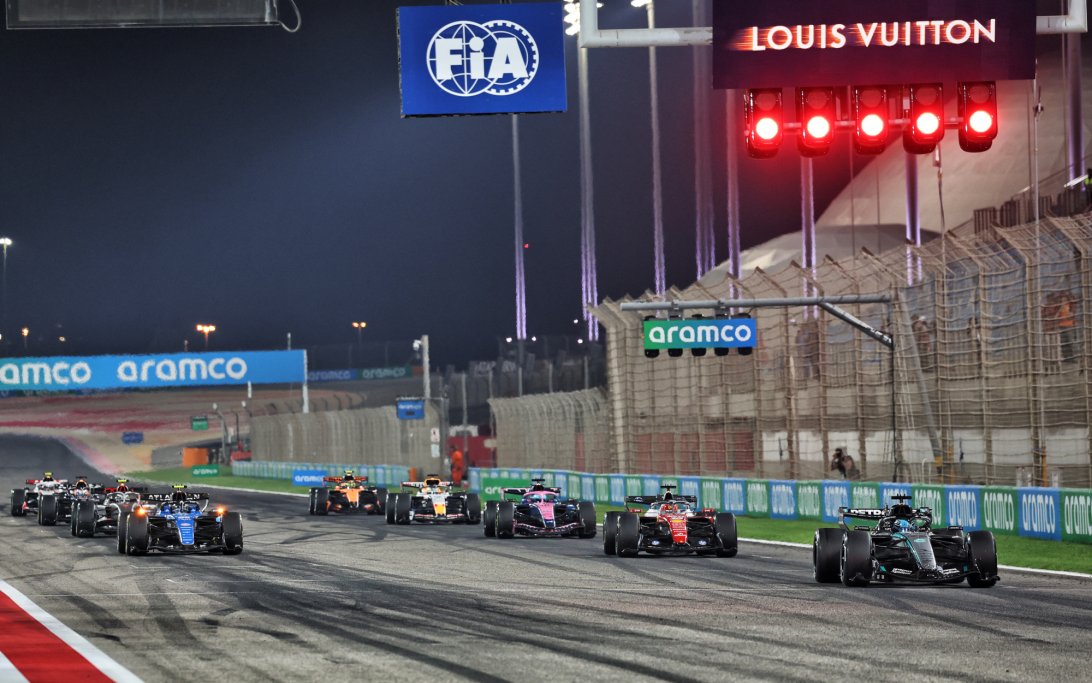
The data is telling. Bearman's infractions span from red flag violations to collisions a scattergun pattern suggesting a driver constantly recalibrating where the limits are, because the car won't tell him. Then look at the rookie, Kimi Antonelli at Mercedes, sitting on 5 points all for causing collisions with front-runners. A talent of his caliber isn't suddenly clumsy. He's driving a weapon tuned for ultimate downforce, a car where the mechanical platform is slave to the aero map. Touch another car, disrupt that delicate aero balance, and you're a passenger. The penalty is for the collision, but the root cause is a design philosophy that values air management over tactile connection.
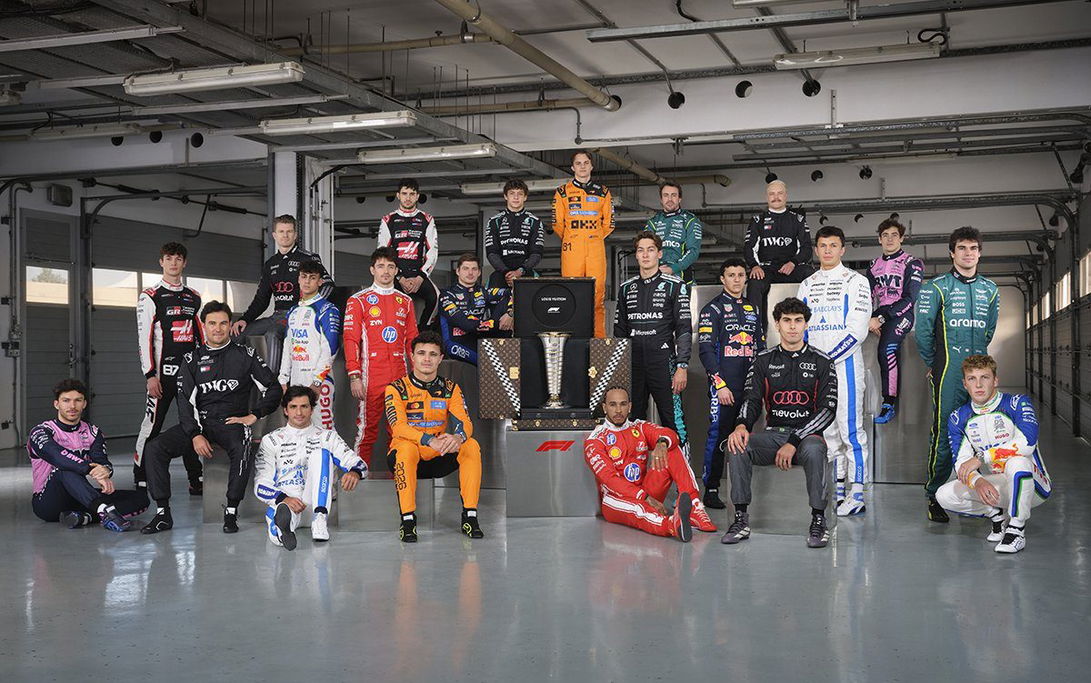
- The Precarious (6+ Points): Bearman (10), Lawson (6), Stroll (6). Drivers operating under constant threat, where team strategy must now account for judicial jeopardy.
- The Aggressive Learners: Antonelli (5). A rookie paying the price for cars that offer no forgiveness at the limit.
- The Managed Risk: Sainz (4), Piastri (4), Verstappen (3), Hamilton (3). Veterans using experience to compensate for the car's lack of clear communication, though not always successfully.
- The Clean Slates: Alonso, Norris, Russell among nine drivers with zero points. This is the most fascinating group. Is it superior discipline, or have their engineers somehow, against the tide, preserved a shred of mechanical honesty in their chassis?
Notice who isn't near the top: Max Verstappen, with just 3 points. And here's my contentious kernel: his relative cleanliness isn't solely a function of his much-hyped skill. It's a function of the Red Bull's historically superior chassis balance. For years, that car has been the best at translating aero performance into a drivable, predictable platform. It flatters the driver, giving a clearer signal. Take that advantage away as the 2026 regulations are designed to do and watch the playing field level, not just in lap time, but in penalty points accrued.
The Disease: Aerodynamic Overreach and the Ghost of the FW14B
We must ask why this is happening now. The current penalty crisis has its roots in a philosophical shift that began decades ago. I constantly return to the 1990s Williams FW14B. That car had active suspension, yes, a technical marvel. But its genius was in how that technology served the mechanical grip. It kept the platform stable to maximize the efficiency of its aerodynamics, which were themselves simpler, more honest shapes. The driver felt the road. Today, we have the inverse: brutally complex, inert suspension systems designed solely to serve an even more brutally complex aerodynamic concept. The tail wags the dog.
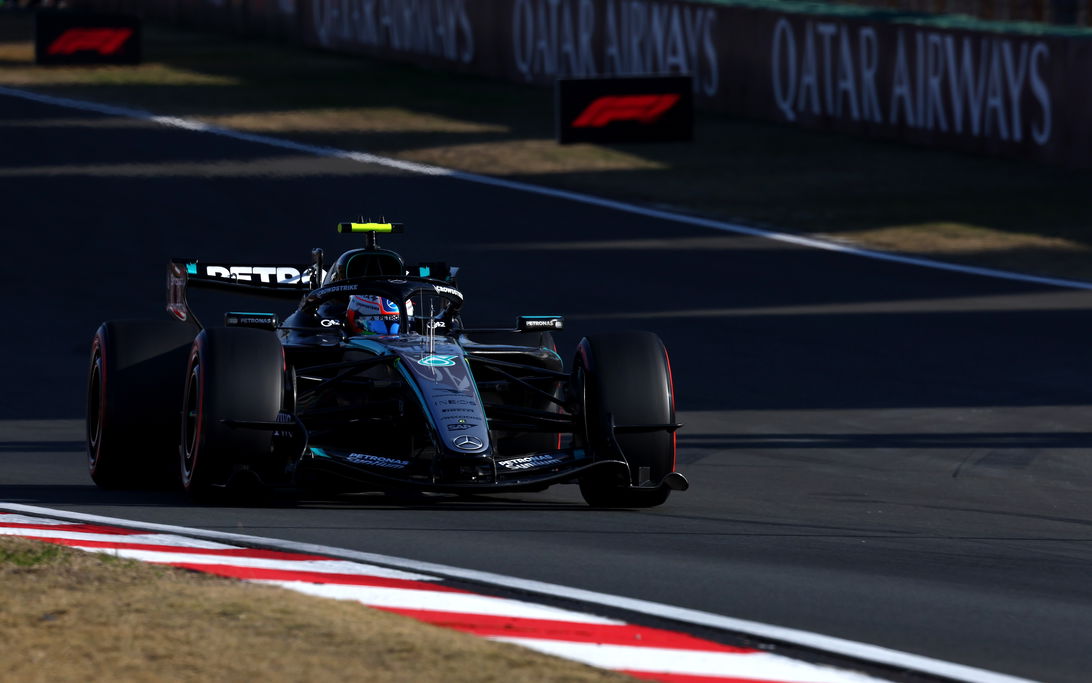
The modern car is a "storm-cage" on wheels. Engineers spend millions simulating and controlling vortices, sealing floors, and managing wake. The driver is not a pilot of a machine, but a custodian of a localized weather system. When that system is disrupted by a curb, a gust of wind, or the dirty air of a car ahead, the result is a sudden, often inexplicable loss of performance or grip. No wonder collisions happen. The driver is the last to know.
This leads to my core belief: mechanical grip and tire management are the lost arts of F1. Teams pour resources into wind tunnel hours, neglecting the fundamental connection between rubber, asphalt, and a compliant suspension. We've traded the visceral, controllable slide for the catastrophic, aerodynamic "stall." One feels like racing. The other feels like a penalty point waiting to happen.
The Prognosis: A Chaotic, AI-Driven Future
So, where does this lead? The 2026 regulations aim to address this by simplifying aero and increasing manual driver control. It's a step, but a timid one. My prediction remains: by 2028, we will see the introduction of AI-controlled active aerodynamics. This isn't science fiction; it's the logical endpoint. If the aerodynamic systems are too complex for a human to manage optimally in real-time, you offload that task to a machine.
Imagine a car where an AI constantly adjusts wing elements, brake ducts, and floor edges to maintain optimal downforce and reduce drag without the crude, gameable DRS. It would create chaotic, unpredictable racing as cars' performance profiles shift corner-by-corner. It would also further sideline the driver's input. The penalty points of the future might then be for "exceeding AI management parameters" or "causing an aerodynamic system fault."
For now, the human element still pays the price. The pressure on Oliver Bearman is immense, with his earliest points not expiring until May 2026. His season, and Haas's, now hinges on his ability to find a limit in a car that does everything it can to hide that limit from him. Teams will instruct their at-risk drivers to avoid battles, to become points conservators rather than racers. Is that the spectacle we want?
The 2026 penalty standings are more than a disciplinary list. They are a stark audit of modern F1 design. We are punishing drivers for mistakes that our own engineering arrogance has made inevitable. Until we rediscover the value of a car that speaks clearly to the person in the cockpit, this leaderboard of shame will remain a permanent, and telling, fixture of the championship.
Join the inner circle
Get the deep dives and technical analysis from the world of F1 delivered to your inbox twice a week.
Zero spam. Only high-octane analysis. Unsubscribe anytime.
Continue Reading
View More News