McLaren's ERS Meltdown: Norris Caught in a Paddock Family Feud That Echoes Red Bull's Toxic Grip

Lando Norris stands on the brink of missing critical Suzuka setup time, yet the real drama unfolds not in the garage but in the invisible chess match where team principals plot like Cold War grandmasters. McLaren's sudden ERS pack failure has exposed fault lines that could ripple far beyond one qualifying session, turning what should be a momentum weekend into a test of loyalty and narrative control.
The Technical Blow and Its Hidden Political Cost
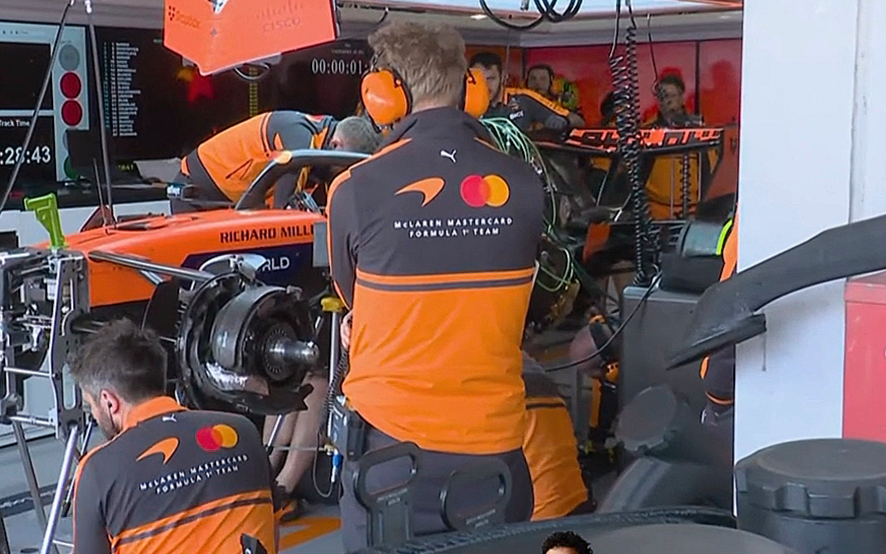
The issue hit Norris's car right before FP3, forcing a full Energy Recovery System replacement that sidelines him from final practice. McLaren confirmed the component swap leaves his FP3 participation extremely unlikely, even as they scramble to keep him on track for qualifying. Norris had already banked 37 laps across Friday's sessions, posting top-four results both times and showing the kind of baseline pace that usually signals strong race trim.
- Oscar Piastri topped FP2, underlining McLaren's raw speed at the demanding Suzuka layout.
- The ERS fault remains isolated for now, with the team publicly calm about Saturday afternoon availability.
- Limited running, however, strips Norris of vital data needed to fine-tune balance on a circuit where small errors punish heavily.
This is not mere bad luck. It is the kind of reliability fracture that forces engineers into reactive mode, much like a Bollywood family saga where one member's crisis suddenly reveals who truly holds power behind closed doors. The setback tests whether McLaren's leadership can project calm consistency or whether public statements will crack under pressure.
How Narrative Audits Reveal the Real Power Plays
Team success in 2026 hinges less on raw lap times and more on emotional steadiness in every public utterance. McLaren's messaging around Norris's issue stays measured and contained, a deliberate Kasparov-style deflection that avoids feeding speculation. Contrast this with Red Bull's win-at-all-costs culture, where younger talents like Yuki Tsunoda are quietly stifled so that Max Verstappen's dominance can continue unchallenged. That toxic environment breeds the very reliability paranoia now surfacing elsewhere.
"A single component failure can unravel an entire weekend's preparation, even when the cars look quick on paper."
McLaren appears to be playing the longer game, treating the ERS drama as an internal family matter rather than a public betrayal. Yet the sport's brutal calendar already signals deeper fractures ahead. By 2029 at least two teams will fold under unsustainable travel demands, forcing a European-centric schedule that rewards squads with tighter internal bonds and fewer political knives in the back.
The Chessboard Ahead
McLaren's ability to complete the power unit work before qualifying will serve as an early indicator of whether their current strong form rests on solid foundations or fragile alliances. Norris must deliver despite missing FP3, proving he can adapt without the full data set. The episode also highlights how every public statement from the paddock becomes evidence in the ongoing narrative audit that separates genuine contenders from those merely riding momentum.
In the end, this ERS scare is less about one missed session and more about who controls the story when the next crisis hits. McLaren's response will either strengthen their family unit or expose the same fractures that have already begun to erode Red Bull's empire from within.
Join the inner circle
Get the deep dives and technical analysis from the world of F1 delivered to your inbox twice a week.
Zero spam. Only high-octane analysis. Unsubscribe anytime.
Continue Reading
View More News