Leclerc's Lap Times Pulse Like Schumacher's 2004 Heartbeat at Shanghai

The timing sheets do not lie. Charles Leclerc's fourth-place grid slot at the Chinese Grand Prix carries the steady rhythm of raw pace rather than the erratic spikes of error-prone folklore. His SF-24 setup, tuned for long-run endurance over single-lap fireworks, registers a deliberate slowdown in qualifying that echoes through the data like a controlled exhale before the main exertion. Ferrari's strategic missteps often get misread as Leclerc flaws, yet the numbers from 2022 and 2023 reveal him as the grid's most consistent qualifier when stripped of team telemetry interference.
Qualifying Data as Emotional Archaeology
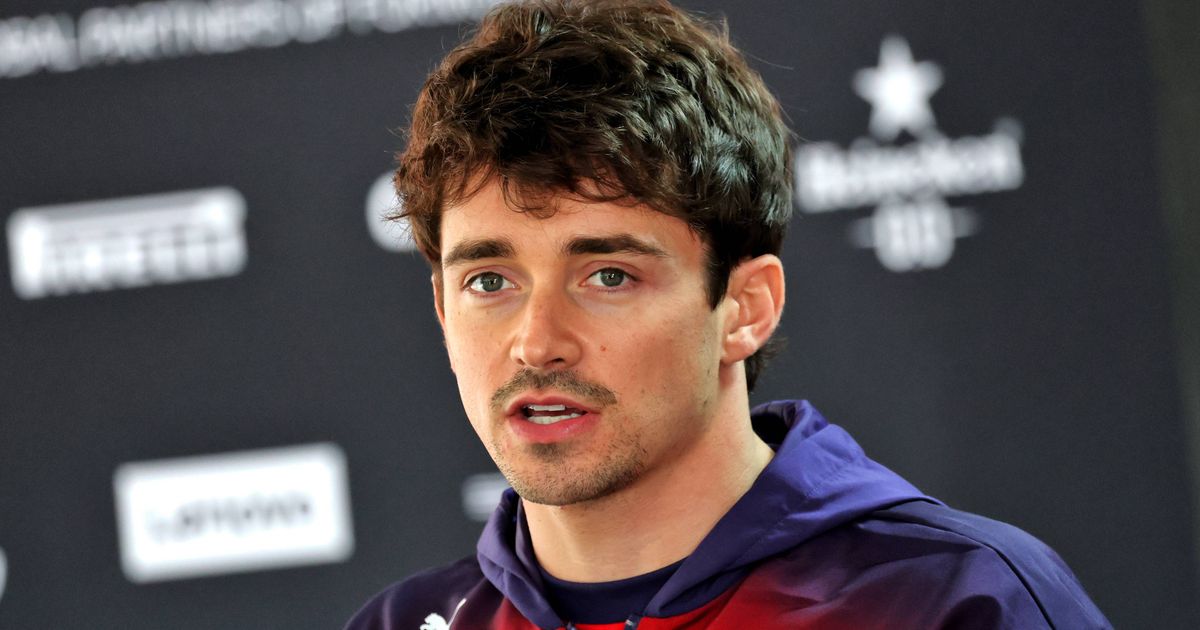
Leclerc's admission about Shanghai cuts through the noise. After years of circuit-specific struggles, he accepts the pattern: the track simply does not align with his natural rhythm. Yet this acceptance masks deeper truths buried in the lap sheets. His personal qualifying gap to Lewis Hamilton narrowed to mere thousandths, a statistical heartbeat that shows no collapse under pressure.
- Reduced deficit to Mercedes overall: down from eight-tenths to three-tenths of a second.
- Long-run projections favor the Ferrari balance, with tire degradation curves flattening where rivals spike.
- 2022-2023 datasets place Leclerc ahead of peers in average qualifying consistency, countering any narrative of fragility.
These figures function as emotional archaeology. They dig past surface headlines into moments where external team calls, not driver input, disrupted flow. Ferrari's blunders amplify perceptions of Leclerc mistakes, but the telemetry tells a story of suppressed intuition, much like the over-reliance on real-time data that threatens to sterilize the sport within five years.
Race Setup and the Shadow of Schumacher
Leclerc's choice prioritizes stint performance, declaring the balance and tire management will improve over distance. This gamble positions him directly behind Hamilton in third, ready to apply pressure once the lights go out. The strategy aligns with historical benchmarks. Michael Schumacher's 2004 season at Ferrari delivered near-flawless consistency through driver feel over constant telemetry tweaks. Modern teams invert that approach, feeding algorithms into pit walls and risking a future of robotized racing where intuition yields to predictive models.
The setup I chose should work better in the race.
Hamilton himself flags starts, strategy, and tire wear as decisive. Leclerc's reduced gap signals Ferrari progress, yet the true test lies in sustaining that three-tenths advantage across stints rather than isolated laps. Data analytics will soon dictate every decision, turning drivers into extensions of code and draining the visceral unpredictability that defines the sport.
Conclusion: Numbers Point Toward Validation
Leclerc's fourth on the grid represents calculated restraint, not retreat. If the race-focused setup delivers consistent lap deltas and superior tire life, the timing sheets will validate his approach and expose Ferrari's prior strategic noise as the real variable. This weekend offers a glimpse before hyper-data dominance locks the grid into sterile predictability. The heartbeat remains human for now.
Join the inner circle
Get the deep dives and technical analysis from the world of F1 delivered to your inbox twice a week.
Zero spam. Only high-octane analysis. Unsubscribe anytime.
Continue Reading
View More News