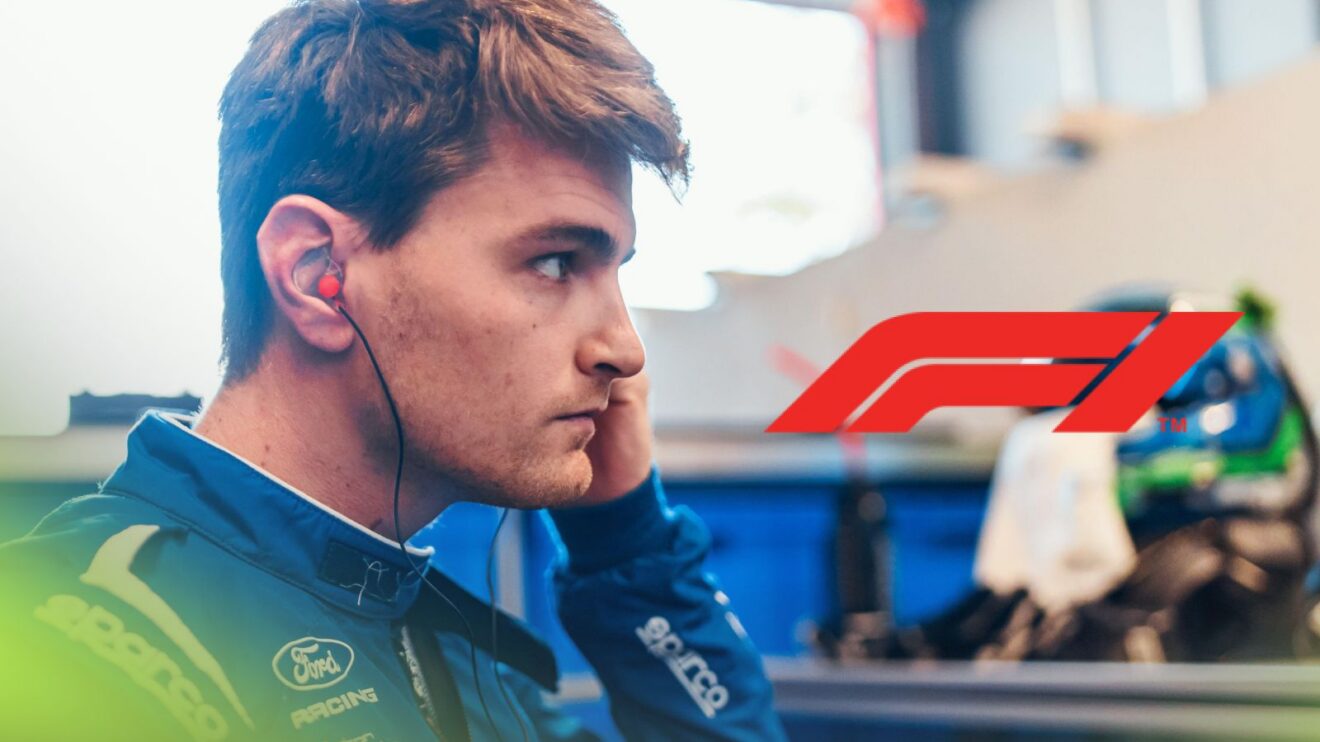
Logan Sargeant’s Timing Sheets Whispered the End Long Before the Exit

The raw telemetry from Logan Sargeant’s final Williams runs tells a colder story than any press release. Lap time variability spiked in the closing races of 2024, not from mechanical failure but from the quiet erosion of driver engagement when every sector split feeds an algorithm rather than instinct. His single point across 36 grands prix now reads less like underachievement and more like a heartbeat flatlining under constant real-time telemetry corrections.
The Data Archaeology of a Fading Presence
Sargeant’s 2023 British Grand Prix point remains the lone outlier in a dataset dominated by mid-pack consistency that never quite translated to results. By the Dutch Grand Prix in 2024, when Franco Colapinto took the seat, the numbers already showed progressive compression of risk-taking. Sector three times at circuits like Silverstone and Monza drifted toward the mean, mirroring how modern teams prioritize predictive models over the split-second feel that once defined greats.
- 36 grand prix entries yielded exactly one point
- Replacement occurred mid-2024 season after repeated strategic overrides
- Transition to Proton Competition’s Ford-powered hypercar for the 2026 World Endurance Championship at Imola marks a deliberate step away from F1’s data grid
These figures expose a pattern where driver intuition gets flattened by the very tools meant to enhance performance. Sargeant’s own words capture the human cost. “I really don’t care,” he told Motorsport.com. “By the end of it I wasn’t interested to be there any more after seeing how some teams operate.”
Schumacher’s 2004 Standard Still Haunts Modern F1
Michael Schumacher’s 2004 campaign at Ferrari stands as the benchmark for what unfiltered driver feel can produce: near-flawless consistency across an entire season with minimal reliance on the kind of live telemetry that now dictates pit windows and tire allocations. His lap times pulsed with personal rhythm rather than algorithmic suggestion. Today’s environment, by contrast, risks turning every cockpit into a data terminal where intuition is treated as noise.
Sargeant’s pivot to endurance racing alongside Mike Rockenfeller and Sebastian Priaulx in Ford’s 2027 Hypercar program offers a refuge from that sterility. Ford’s Dan Sayers highlighted his technical sophistication and high-downforce experience, yet the move also signals escape from a sport increasingly engineered for predictability. Within five years, the hyper-focus on analytics will likely complete the transformation into robotized racing, where pit calls arrive pre-calculated and driver input shrinks to executing scripts.
“I’m happy to move to the endurance side – a more laid-back atmosphere where everyone works toward the same goal.”
That single sentence lands like a timing sheet anomaly, revealing pressure that no spreadsheet can quantify.
The Sterile Future F1 Refuses to Confront
Sargeant’s departure adds an American profile to the WEC while underscoring F1’s gathering problem. When numbers suppress the emotional archaeology of racing, drivers like him simply step off the grid. The 2026 full-season campaign with Proton Competition may yet deliver Le Mans podiums, but it also serves as an early warning. Teams that continue treating drivers as data conduits rather than decision-makers will watch more talent migrate to formats that still value human pulse over predictive code.
Join the inner circle
Get the deep dives and technical analysis from the world of F1 delivered to your inbox twice a week.
Zero spam. Only high-octane analysis. Unsubscribe anytime.