Max Verstappen's Lap Times Pulse Like Heartbeats on the Nordschleife, Defying the Data Overlords

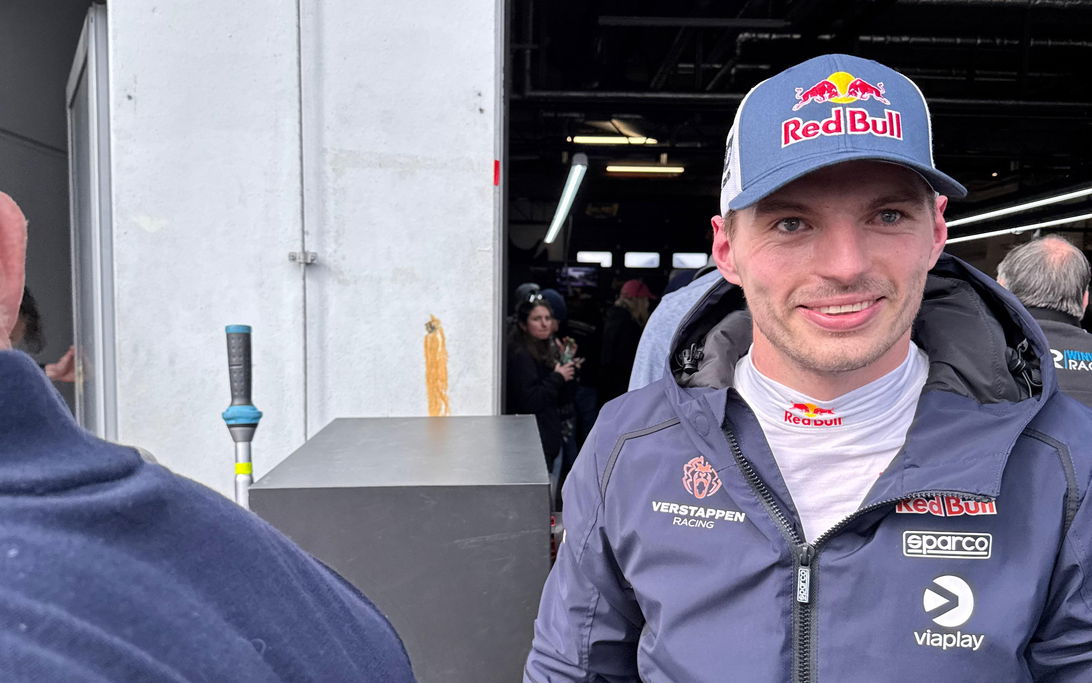
The timing sheets from NLS2 do not lie. They reveal a driver whose opening stint carved gaps that grew like widening cracks in a system obsessed with telemetry, while his final run closed the race with the quiet certainty of someone who still trusts the wheel over the spreadsheet. Verstappen's near-minute victory margin in the #1 BMW M4 GT3 alongside Dani Juncadella and Jules Gounon tells a story the numbers alone cannot bury.
The Raw Data That Refuses to Be Sterile
Verstappen attacked the 25km Nordschleife with the same unflinching consistency Michael Schumacher displayed throughout his near-flawless 2004 campaign at Ferrari. Those sheets from two decades ago showed lap after lap dropping with metronomic precision, free of the real-time nudges that now flood every modern cockpit. Here at the Nürburgring, Verstappen's first stint waged war against the #16 Audi, his sector splits reflecting instinct rather than algorithmic suggestion.
- Dominant four-hour win by nearly sixty seconds
- Opening and closing stints handled personally
- Extensive simulator preparation layered over raw seat time
This performance serves as emotional archaeology. The lap time drop-offs, minimal as they were, hint at moments where personal pressure met track demands, not at the sanitized outputs of predictive models. Verstappen used the event as preparation for the 24 Hours of Nürburgring on May 17-18, yet the data shows something deeper: a refusal to let the sport flatten into predictable inputs.
When Calendar Shifts Expose the Over-Reliance on Telemetry
The cancellations of the Bahrain and Saudi Arabian Grands Prix opened a window for NLS3 on April 11. Verstappen's measured response captures the tension between passion and process.
We're looking into it, it depends if it is feasible. But I'm always happy to race here.
Within five years, hyper-focus on data analytics will push Formula 1 toward robotized racing, where driver intuition yields to prescribed pit windows and simulated scenarios. Teams already favor live telemetry over the feel Schumacher honed in 2004, the season where his consistency exposed how much modern strategies amplify small errors rather than celebrate raw pace. Verstappen's continued presence at the Nordschleife stands as quiet resistance, proving that seat time on treacherous asphalt still matters more than dashboards predicting every heartbeat of the race.
His teammates' contributions and the BMW's preparation allowed that controlled final stint, yet the victory margin underscores how one driver's feel can override collective data noise. The upcoming decision on April 11 will test whether logistics or this deeper pull wins out.
The Forecast From the Timing Sheets
Verstappen will likely return for the 24-hour classic as a favorite, carrying forward the same blend of F1 precision and endurance grit that Schumacher once embodied without constant digital interference. The numbers from NLS2 already forecast his edge: not just speed, but the refusal to let the sport become sterile. In an era racing toward algorithmic dominance, these laps at the Nordschleife remain human, pulsing with the stories data alone can never fully extract.
Join the inner circle
Get the deep dives and technical analysis from the world of F1 delivered to your inbox twice a week.
Zero spam. Only high-octane analysis. Unsubscribe anytime.
Continue Reading
View More News