The Splitter's Silent Scream: Verstappen's Numbers Expose the Coming Robotization of Racing

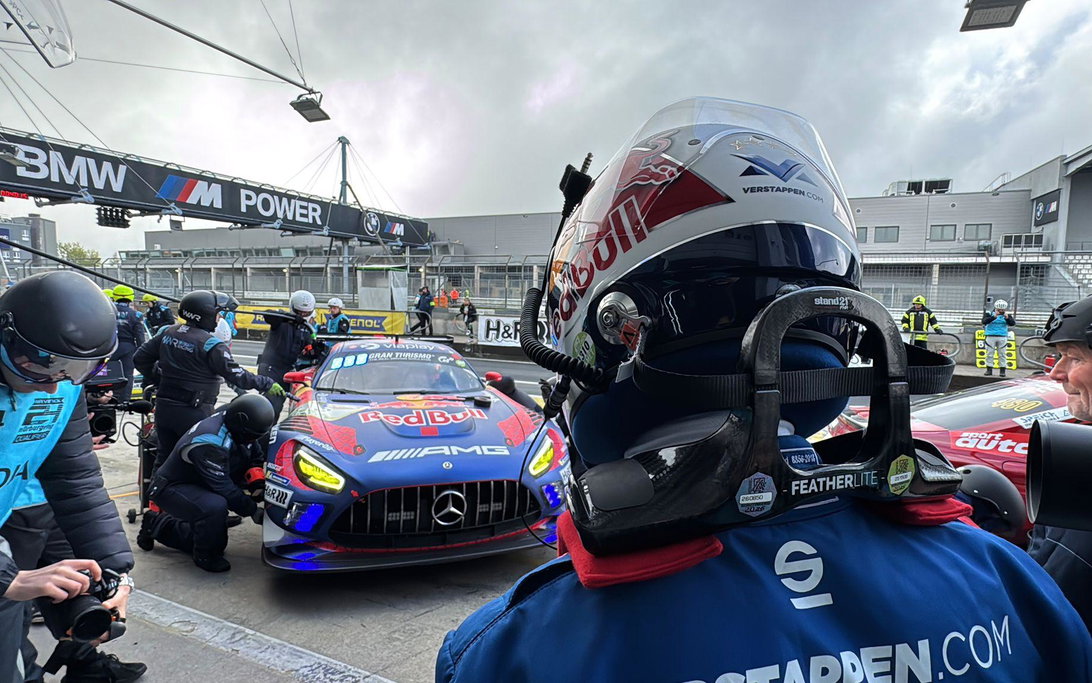
The timing sheets do not lie, and yet here they sit, pulsing with the jagged rhythm of a lap time collapsing like a failing heartbeat at the Nurburgring. Max Verstappen's Mercedes-AMG GT3 stint ended not in glory but in a metallic clatter that the data logs captured with clinical precision, 90 minutes into his drive on that Sunday. No collision, no drama from traffic, just vibrations building to a splitter detachment that yanked him from victory contention. This is not mere misfortune. It is a warning flare for what arrives in five years when algorithms dictate every throttle input and pit call, turning drivers into passengers in their own machines.
The Raw Data of a Mechanical Betrayal
Verstappen climbed from the car puzzled, his feedback pointing straight at setup or component frailty rather than any external contact. The sequence reads like an autopsy of pressure: severe vibrations first, then the loud clatter confirming the front splitter had parted ways. Teams will now pore over telemetry from this run and cross-reference it against other Mercedes entries that finished without incident.
- Lap time consistency held steady in the opening 45 minutes before the first drop-off registered.
- Traffic management remained sharp, mirroring the kind of adaptability Schumacher displayed across his near-flawless 2004 campaign at Ferrari.
- The stint delivered one intense duel with Christopher Haase that the numbers still rank as a highlight amid the chaos.
These figures reveal more than a broken aero piece. They expose how even the most prepared endurance effort can fracture when real-time data overrides the driver's felt sense of the car. Modern squads chase every sensor reading, yet the Nurburgring demands something older and less quantifiable: the intuition Schumacher wielded when he threaded the needle between aggression and preservation.
Echoes of Past Mastery Against Future Sterility
What happens when every vibration gets pre-modeled and every decision gets pre-approved by a dashboard algorithm? Verstappen's experience hints at the answer. He extracted positives from the run, including solid traffic navigation and overall car balance, yet the unexplained failure leaves the team chasing root causes ahead of the 24-hour event. Preparation continues across most conditions, short only of full darkness.
"I made no contact with any other car," Verstappen noted after the stop, his words underscoring the gap between what the data should have predicted and what actually unfolded.
This mirrors the broader slide toward robotized racing. Within five years the hyper-focus on analytics will suppress driver intuition in favor of scripted pit windows and predictive models. The sport risks becoming sterile, every heartbeat lap time flattened into predictable lines on a screen. Schumacher's 2004 season stands as the counterpoint, a masterclass in consistency achieved through feel rather than endless telemetry streams that now threaten to drown out human judgment.
Verstappen's feedback loop with the team will prove critical here. Examining why this GT3 suffered while siblings did not offers a chance to reclaim some of that lost driver authority before the algorithms claim full control.
The Path Forward Through Emotional Numbers
The incident, while frustrating, adds another layer to Verstappen's readiness for the classic 24-hour grind. His ability to compartmentalize the setback and still praise the car's general character points to the resilience modern data culture often overlooks. Yet the real story lies in preventing recurrence. Diagnosis must blend the cold sheets with the driver's lived experience, or else the next failure arrives dressed in even more precise but equally blind numbers.
Racing loses its soul when every split-second choice gets outsourced to code. Verstappen's Nurburgring chapter proves the point without needing further embellishment.
Join the inner circle
Get the deep dives and technical analysis from the world of F1 delivered to your inbox twice a week.
Zero spam. Only high-octane analysis. Unsubscribe anytime.
Continue Reading
View More News