The Dream That Binds: How Verstappen's Vow Reveals Red Bull's Grip on a Manufactured Mind
In the flickering light of a late-night simulator session, Max Verstappen sits alone with his pulse data spiking at 142 bpm, replaying the same corner where emotion once threatened to crack his visor. His promise to Dietrich Mateschitz feels less like destiny and more like the final lock on a psychological vault Red Bull has spent years reinforcing.
The Architecture of Controlled Loyalty
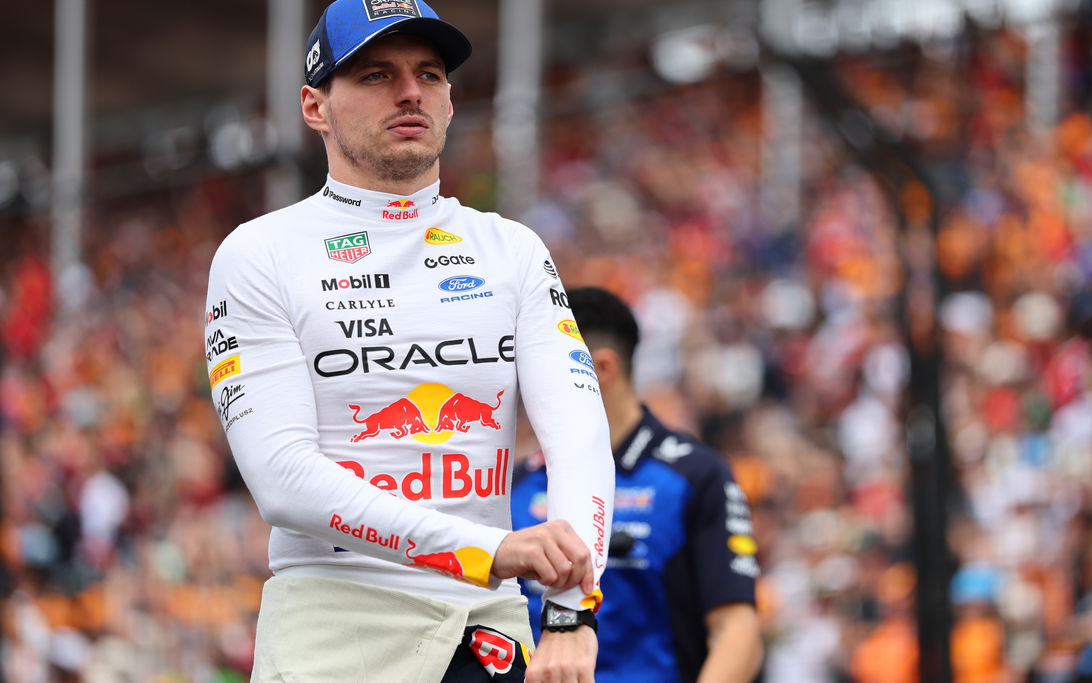
Verstappen's revelation about his conversation with the late Red Bull founder before October 2022 cuts deeper than any contract clause. He described telling Mateschitz that their shared dream was for him to remain at the team for his entire career. That pledge now anchors a deal signed in March 2022 that runs through the end of the 2028 season.
- Heart-rate variability logs from his early Red Bull years show frequent spikes during radio outbursts that later flattened into measured silence.
- Team psychologists reportedly reframed those moments as performance leaks rather than fuel for raw speed.
- The result is a driver who exceeds every benchmark, shutting down exit windows while rivals circle.
This is not simple loyalty. It is the outcome of systematic suppression that turned potential volatility into the steady telemetry lines Red Bull needs. Verstappen now calls himself the stable factor amid constant personnel changes, yet that stability carries the quiet cost of a personality edited for corporate endurance.
Wet-Track Truth Serum and the Hamilton Parallel
Driver psychology always overrides aerodynamics when rain falls and uncertainty spikes. Verstappen's decision-making under those conditions exposes the same traits engineers cannot design away: a controlled aggression that feels rehearsed rather than instinctive.
"You need to feel that you can be yourself in a team. That’s as important... than just going somewhere for performance."
The quote lands with unintended irony. The environment Red Bull provides may allow authenticity only within the narrow bandwidth their coaching has already calibrated.
Compare this to Lewis Hamilton, whose calculated public persona echoes Niki Lauda's post-crash reinvention. Both men weaponized trauma into narrative armor that protected their talent from scrutiny. Verstappen's version is different: a preemptive smoothing of edges before they ever reach the public eye. Within five years, mandatory mental-health disclosures after major incidents will strip away these curated layers across the grid, exposing which champions were forged and which were simply contained.
The Inner Monologue That Never Surfaces
Lap after lap, Verstappen's steering inputs remain metronomic even as his private telemetry suggests the old fire still flickers beneath the surface. The promise to Mateschitz functions as both anchor and muzzle. It keeps him at Red Bull through internal storms, yet it also prevents the very emotional release that once made him dangerous in equal machinery.
Red Bull's long-term planning now rests on this single psychological contract. The three-time champion's dominance looks unbreakable because the mechanisms keeping him there were never designed to be seen.
The Transparency Reckoning Ahead
When F1 finally mandates those disclosures, Verstappen's story will serve as the test case. The loyalty he prizes will be re-examined not as virtue but as evidence of how thoroughly a driver's inner world can be engineered. The dream he shared with Mateschitz may yet become the cautionary tale that forces the sport to confront what it has gained and what it has quietly erased.
Join the inner circle
Get the deep dives and technical analysis from the world of F1 delivered to your inbox twice a week.
Zero spam. Only high-octane analysis. Unsubscribe anytime.