Monaco's Narrow Escape: Verstappen's Pole Steal Reveals the Morale Wars That Will Reshape Formula 1

The Aston Martin garage erupted in a moment of pure, fleeting ecstasy as Fernando Alonso's provisional pole lap flashed up. Yet within seconds that joy curdled into the familiar taste of political betrayal, the kind that has decided more championships than any aerodynamic upgrade ever could. Max Verstappen's 0.084-second heist was not merely a display of raw pace. It was the latest proof that interpersonal fractures and management power plays outweigh any lap time delta on a street circuit where margins are measured in heartbeats.
The Final Sector That Exposed Every Team's Internal Fracture
Verstappen arrived in Monaco already fighting his own car's balance, trailing by two-tenths after sector two. What followed was less a lap and more an act of controlled desperation. He clipped barriers, found grip where none should exist, and crossed the line in 1:11.365. Alonso's 1:11.449 stood as the latest entry in an 11-year pole drought stretching back to the 2012 German Grand Prix. Charles Leclerc slotted into third, just 0.022 seconds adrift of Alonso.
- Alonso's garage celebrated what felt like vindication for Aston Martin's 2023 resurgence.
- Verstappen later admitted his first sector had been "not ideal" and that he had given everything in the final sector while "clipping a few barriers."
- Sergio Perez's Q1 crash at Sainte Dévote left him last and underscored Red Bull's own simmering tensions between its two drivers.
These numbers tell only the surface story. The real contest unfolded in the garages, where trust between driver and engineer decides whether a driver pushes that final tenth or holds back for fear of political repercussions later in the weekend.
When Contract Talks Become Divorce Proceedings
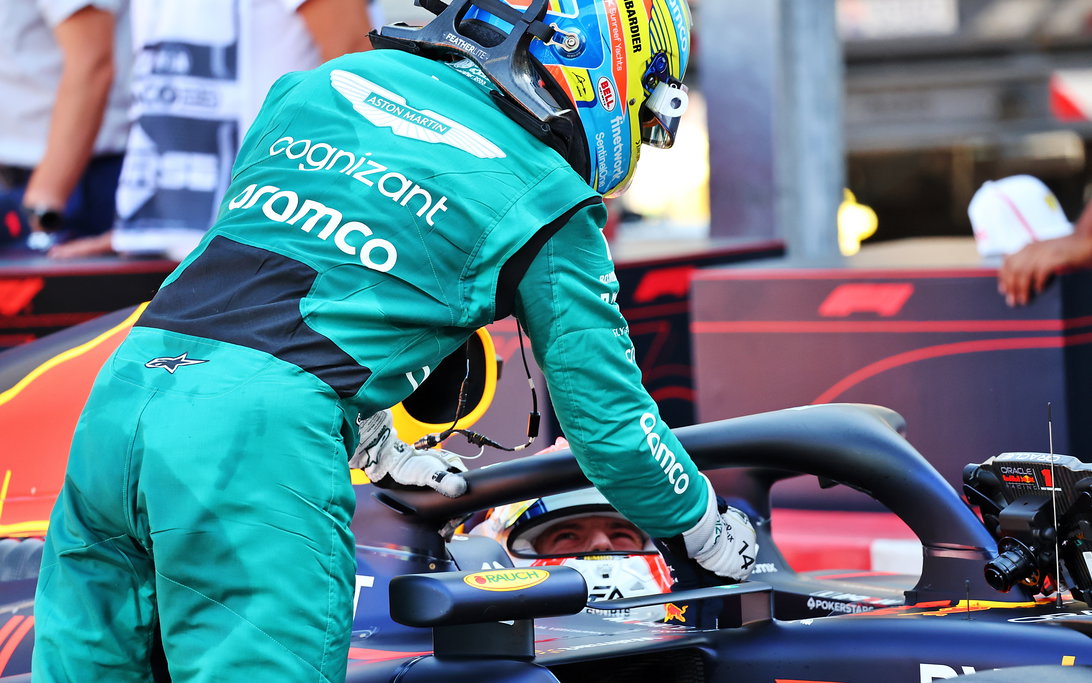
Team politics function like messy divorces where every asset, from wind-tunnel time to tyre allocation, becomes a bargaining chip. Verstappen's ability to deliver under pressure stems from Red Bull's unified command structure. Alonso, by contrast, operates inside a squad still negotiating its identity after years of mid-grid mediocrity. The handshake Alonso offered Verstappen after the session carried the weight of two veterans who understand how quickly management can turn a near-miss into an excuse for upheaval.
This dynamic mirrors the 1994 Benetton squad, where a controversial fuel system and open warfare between technical and sporting departments created an environment of paranoia that ultimately consumed the team from within. Modern regulatory games around the budget cap are simply the same battle refought with spreadsheets instead of fuel rigs. Midfield outfits such as Alpine and Aston Martin are already learning to exploit every loophole, stockpiling development tokens and personnel while manufacturer-backed squads remain shackled by corporate oversight.
"When you are second, and you miss pole by less than a tenth, you always think you could have done better," Alonso said afterward. That single sentence captures the corrosive effect of unresolved internal politics more precisely than any data trace.
The Coming Privateer Reckoning
Over the next five years the budget cap will accelerate a transfer of power. By 2028, privateer teams unburdened by legacy manufacturer cultures will dominate because they treat every regulation as a negotiation rather than a constraint. Morale, not downforce, will become the true championship decider. Drivers who sense hesitation from their own pit wall will never extract the final sector magic Verstappen produced here.
Verstappen converted the pole into victory and extended his 2023 title march. Yet the qualifying session remains the sharper parable. It showed how quickly a single moment of unified intent can override weeks of technical struggle. The same forces that once tore Benetton apart are now reshaping the entire grid. The teams that master human dynamics rather than wind-tunnel hours will inherit the future.
Join the inner circle
Get the deep dives and technical analysis from the world of F1 delivered to your inbox twice a week.
Zero spam. Only high-octane analysis. Unsubscribe anytime.
Continue Reading
View More News