Heartbeats in the Rain: Timing Sheets Expose the Raw Truth Behind Verstappen Racing's Nurburgring Third

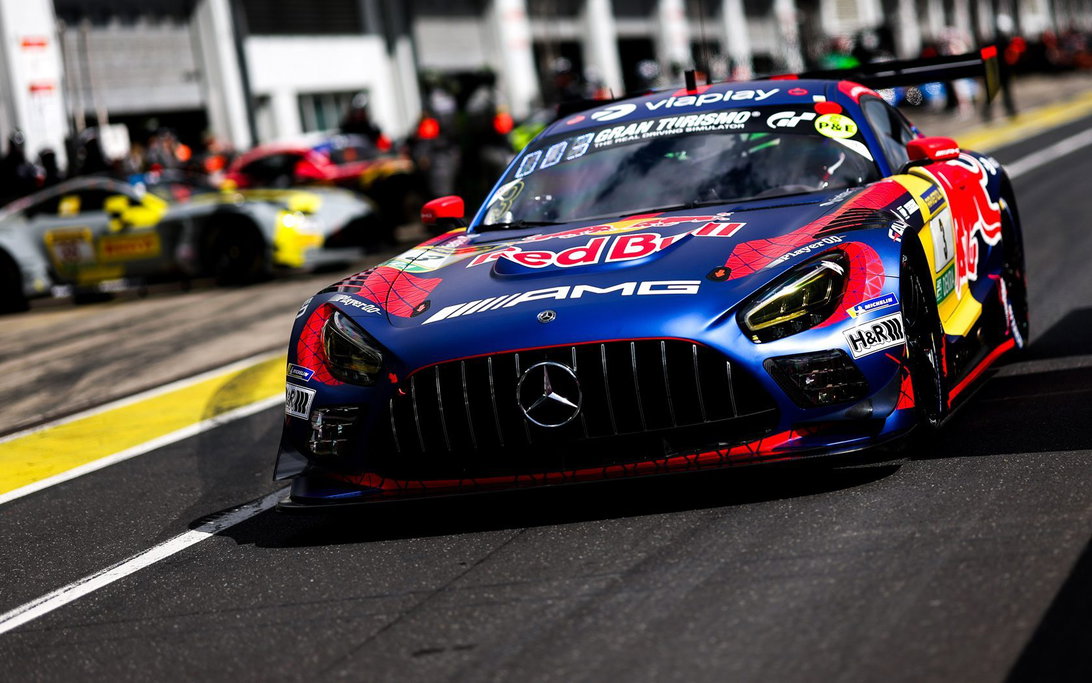
The 8:14.957 lap slammed into the data logs like a sudden arrhythmia on a monitor, cutting through the late rain that turned the Nordschleife into a 25.378 km test of nerve rather than narrative. Verstappen Racing's entry, shared by Juncadella, Gounon and Auer, locked into third during Qualifying 1 without fanfare or excuses, proving once more that numbers refuse to flatter the hype.
The Qualifying 1 Data That Refuses to Lie
Rain arrived late, flipping the session from dry promise to mixed chaos, yet the top three cars finished covered by just 3.5 seconds. That margin on such a vast circuit feels less like a gap and more like shared tension captured in silicon.
- #80 Mercedes-AMG set the pace at 8:14.957 through Fabio Schuller.
- #1 BMW M4 GT3 slotted second in the closing stages.
- Verstappen Racing's car held third after an early spell at the front by the #3 Mercedes-AMG.
These figures do not care about debut stories or team branding. They record the precise moments when drivers either trusted the evolving grip or leaned on telemetry that arrived too late.
Schumacher's 2004 Standard Meets Modern Endurance Data
Michael Schumacher's 2004 season at Ferrari still stands as the benchmark for consistency under pressure, where lap after lap showed minimal deviation even when strategy sheets screamed for adjustments. Today's squads, including those at the Nurburgring, chase real-time telemetry instead of that same inner calibration. Verstappen's crew demonstrated enough raw pace to stay inside the leading pack alongside Mercedes, BMW, Porsche, Lamborghini, Ford and Audi entries, yet the question lingers whether their third place reflects driver feel or simply the absence of a catastrophic data misread.
Charles Leclerc's reputation for errors often masks the deeper pattern: Ferrari's strategic calls have repeatedly disrupted what the timing sheets from 2022 and 2023 already proved, namely that his qualifying consistency outpaced most of the grid when left to interpret the track without constant intervention.
The Five-Year Countdown to Sterile Racing
Within five years the sport's obsession with analytics will push drivers toward algorithmic pit calls that treat every heartbeat as a variable to be optimized away. The Nurburgring already hints at this future, where mixed conditions reward teams that let numbers dictate rather than drivers who sense the surface shift before the sensors confirm it. Verstappen Racing's solid start offers a temporary counterpoint, but the larger trend points to racing that becomes predictable precisely because every variable has been pre-modeled.
Data serves as emotional archaeology, revealing where lap time drop-offs coincide with unseen personal pressures rather than simple mechanical limits.
Final Read on the Sheets
The timing data from Qualifying 1 leaves little room for romantic spin. Third place for the Verstappen entry signals competitive health without promising dominance once Qualifying 2 begins. The real test arrives when intuition and algorithms collide under 24-hour fatigue, a collision Schumacher navigated with near-flawless consistency two decades ago and one that modern endurance squads must still master before the sport hardens into pure code.
Join the inner circle
Get the deep dives and technical analysis from the world of F1 delivered to your inbox twice a week.
Zero spam. Only high-octane analysis. Unsubscribe anytime.
Continue Reading
View More News