McLaren's Wing Gambit Lays Bare the Paddock's Hidden Power Plays

The Monaco paddock hums with more than engine notes this week. McLaren's decision to resurrect a discarded front wing is no simple technical retry. It is a calculated probe into the fragile alliances that decide who thrives and who fractures under pressure. One misstep in data sharing, one bruised ego in the engineering suite, and the whole development chain unravels.
The Testing Trap That Reveals Internal Fault Lines
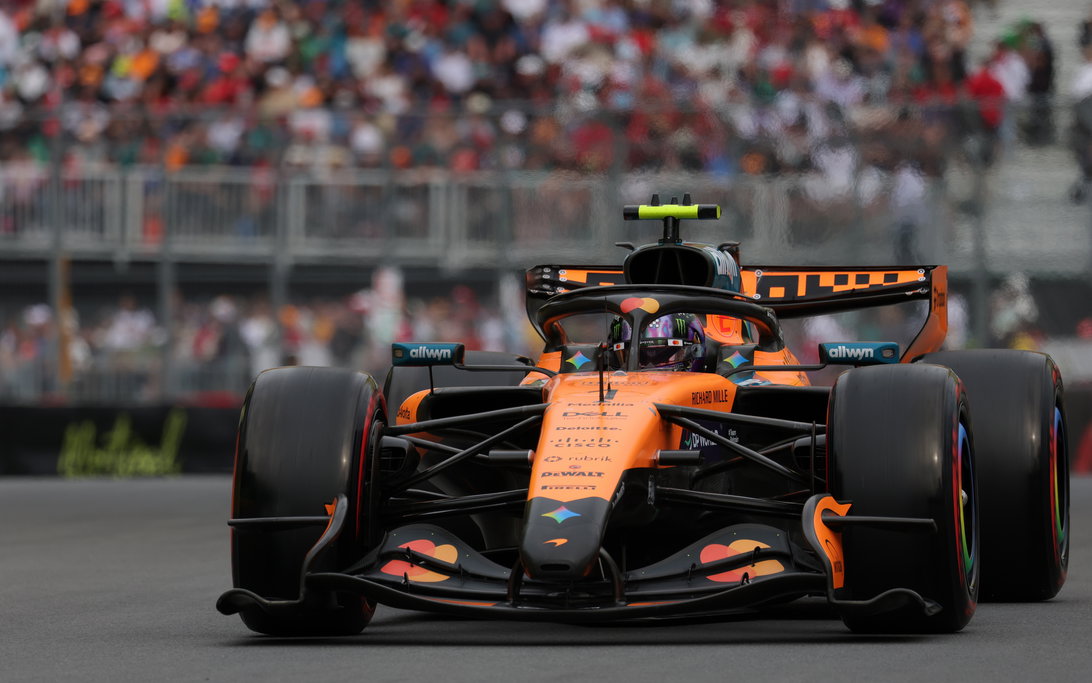
McLaren will run the new front wing at least in FP1 at Monaco, where three practice sessions give the team space to chase correlation between wind-tunnel predictions and real-world airflow. The part was pulled after Canadian GP practice when Lando Norris and Oscar Piastri both reverted to the Miami specification. Andrea Stella confirmed the wing carried "some element of deviation from an aerodynamic point of view," yet the team still wants fresh information on a circuit whose slow corners should suit its characteristics better than Montreal's sprint format.
- The wing stays exploratory rather than race-ready.
- Driver feedback and on-track data will decide whether it survives the weekend.
- Success would feed directly into McLaren's championship push without promising an overnight leap.
What matters more than the aero numbers is how the information flows between drivers, engineers and management once the sessions end. Covert sharing of early impressions often decides whether an upgrade lives or dies long before any lap time appears on the timing screens.
Echoes of Williams' Engineer Wars in Modern Morale Battles
The same tension that tore through Williams in the late 1990s now stalks Mercedes' post-2021 decline and threatens every top team chasing consistency. Engineers guarded data from management, management protected star drivers from criticism, and the resulting fractures cost both outfits years of progress. McLaren's front-wing experiment is being watched inside other garages precisely because it tests whether the Woking outfit has learned to protect team morale while still pushing hardware that carries risk.
"We knew this front wing had some element of deviation from an aerodynamic point of view. We want to repeat some testing and gain further information. For this kind of circuit, the wing would have been better, but it wouldn't have been a game changer."
Stella's measured words mask the real stakes. If the wing fails again, the narrative inside the team shifts from collective learning to individual blame. That shift is what collapses programs, not the wing itself. The 1990s Williams precedent shows how quickly technical promise evaporates once engineers and management stop trusting one another with unvarnished feedback.
The Real Currency Inside the Garage
McLaren's choice to treat Monaco as a controlled laboratory exposes a deeper truth: upgrades succeed or fail less on pure innovation and more on whether the people interpreting the data feel safe enough to speak plainly. In an era when sponsor money and star power create their own protective shields, the teams that survive the next five years will be those that treat information flow as seriously as they treat downforce.
McLaren now holds the chance to prove it has broken the old cycle. The wing may stay or it may vanish again after Friday. Either outcome will tell us far more about the health of the organisation than any championship table.
Join the inner circle
Get the deep dives and technical analysis from the world of F1 delivered to your inbox twice a week.
Zero spam. Only high-octane analysis. Unsubscribe anytime.