The Pulse of Close Calls: Mercedes Data Logs Expose a Championship Heart Skipping Beats

The timing sheets from Montreal do not whisper they scream. Lap deltas between George Russell and Kimi Antonelli flickered like erratic heart monitors during the Canadian sprint and grand prix, each tenth of a second a warning that raw aggression was overriding the calm telemetry Mercedes claims to worship.
Close Quarters in the Data Stream
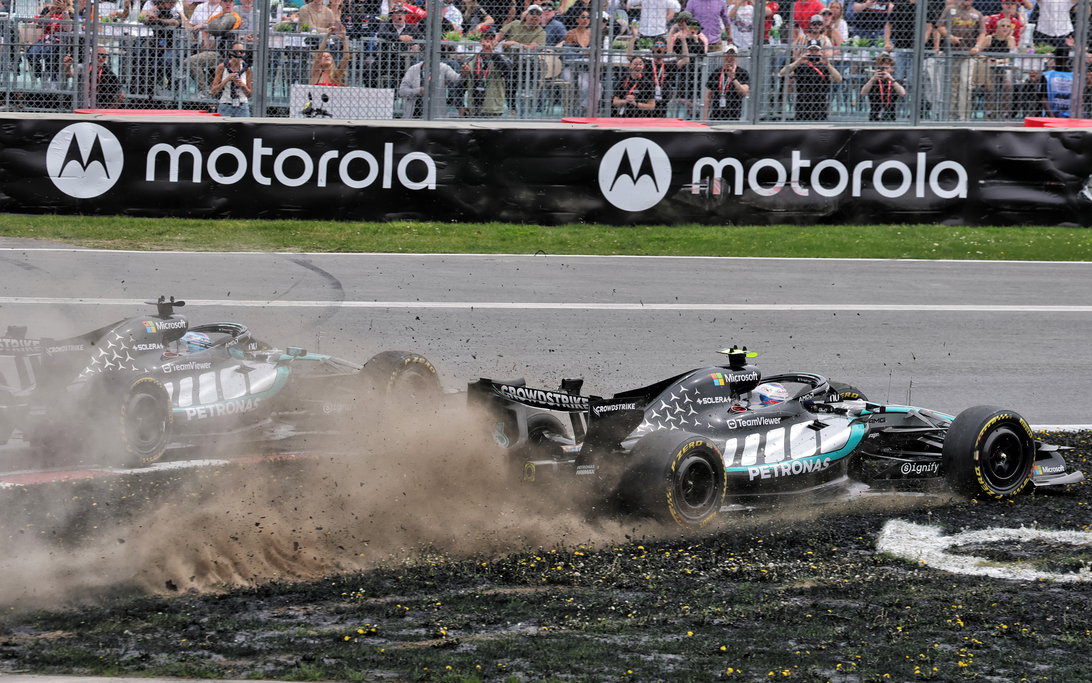
Mercedes trackside engineering director Andrew Shovlin admitted the wheel-to-wheel moments crossed into dangerous territory. The pair nearly touched in both the sprint and the main race, yet the team clings to its philosophy of letting drivers race. Timing traces reveal Antonelli running wide twice while chasing Russell, his radio complaints about penalties arriving precisely when sector times showed him losing rhythm under pressure.
- Russell retired from the lead with an ERS module failure, a mechanical heartbreak that handed Antonelli his fourth straight victory and a 43-point championship cushion.
- Wolff told Antonelli to park the debate until the garage, a classic move to cool the numbers before they ignite.
- Shovlin later noted on the Nu Silver Arrows radio show that most exchanges stayed clean but a few moments risked one car collecting the other from behind.
These incidents are not mere drama. They are data points where driver feel collided with real-time instructions, exactly the friction that Schumacher avoided in his 2004 masterclass at Ferrari. That season his lap consistency rarely wavered beyond two-tenths across entire weekends because the team trusted his internal clock over constant radio chatter.
When Telemetry Starts Dictating the Dance
Modern squads like Mercedes now treat every sector split as gospel, feeding drivers algorithmic pit windows and overtake probabilities. The Canadian weekend proved the limit. Antonelli's championship lead grew because Russell's car failed, not because superior strategy prevailed. One more contact and both drivers could have left points on the asphalt, a scenario the data models supposedly prevent yet still permitted.
"There were a couple of points in Canada where it got too close for comfort."
Shovlin's words land like a caution flag. Within five years this hyper-focus on analytics will flatten intuition into predictable lines on a graph. Pit calls will arrive pre-calculated, driver input reduced to confirming the screen rather than feeling the grip fade. The sport risks becoming a sterile simulation where no one dares deviate from the predicted delta.
Lessons Carved From 2004 Consistency
Schumacher's Ferrari year stands as rebuke. His near-flawless runs came from trusting tire feel and track evolution, not from engineers overriding his radio with fresh spreadsheets every lap. Today's Mercedes pair possesses similar raw speed, yet the team hedges every move with data overlays. The result is battles that flirt with contact because neither driver fully owns the decision to back out.
Bullet-point margins matter here. Antonelli extended his lead by capitalizing on Russell's retirement, but the underlying lap-time volatility in their earlier duels signals pressure leaking into performance. Personal events, travel fatigue, even media noise can shave those vital hundredths; the numbers always tell.
The Sterile Future Beckons
Mercedes plans further talks before the next race to keep racing aggressive yet clean. That intent collides with the trajectory of the sport. As analytics tighten their grip, the margin for human error shrinks while the appetite for manufactured closeness grows. The Canadian timing sheets already hint at the cost: two drivers pushed to the edge, one car broken, a championship stretched by mechanical fortune rather than pure pace.
The data never lies, but it also never feels the wheel twitch two corners early. Until teams remember that distinction, every future battle will carry the same electric risk, only now scripted by algorithms instead of instinct.
Join the inner circle
Get the deep dives and technical analysis from the world of F1 delivered to your inbox twice a week.
Zero spam. Only high-octane analysis. Unsubscribe anytime.
Continue Reading
View More News