The Barcelona Reckoning That Almost Ended Two Titles

In the sweltering heat of the 2016 Spanish Grand Prix, Lewis Hamilton and Nico Rosberg did more than collide on the opening lap at Barcelona. They exposed the raw psychological fault lines that no aerodynamic tweak or budget spreadsheet could ever fully patch. Mercedes came within a whisker of suspending both drivers for a race, a move that would have rewritten F1 history and handed the championship momentum to Red Bull on a silver platter. As someone who has sat in those debrief rooms, I can tell you this was never just about bent suspension arms or lost points. It was about two champions whose minds were locked in a duel the team had failed to profile properly from the start.
The Day Wolff Almost Hit the Kill Switch
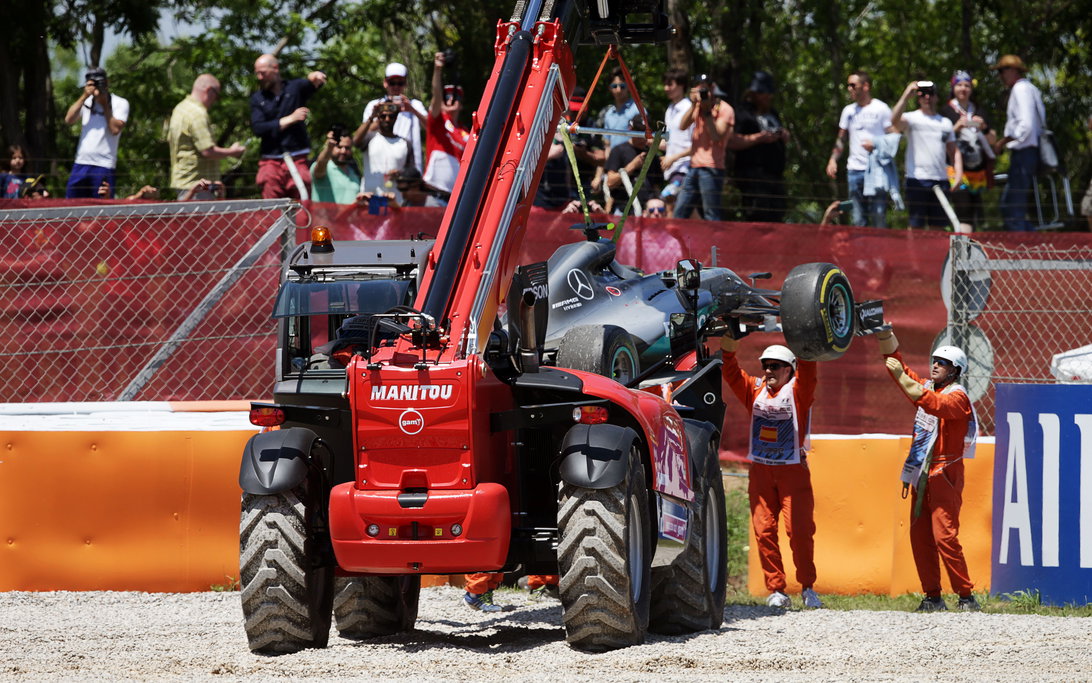
Toto Wolff did not mince words when he stormed into the post-crash debrief. He hurled his headset against the wall and demanded answers from the two men who had just taken each other out on the short straight between Turns 3 and 4. The facts remain stark. Hamilton and Rosberg fought wheel-to-wheel through the first sector before contact eliminated both cars, allowing an 18-year-old Max Verstappen to claim his maiden victory for Red Bull.
Rosberg later revealed on the High Performance podcast that Wolff had already floated the idea of a one-race suspension with Mercedes-Benz chief Dieter Zetsche. The discussion never reached the point of outright dismissal, but it came close enough that the team instead forced both drivers to sign a contract making each liable for half the repair costs regardless of blame. Rosberg ended up paying $360,000 after one later incident that season. That financial sting, he admitted, finally calmed the rivalry.
- The crash handed Red Bull an unexpected win and forced Mercedes to confront how its internal battle had spiraled beyond standard team orders.
- Wolff's fury centered on the strategic gift to their fiercest rival, not merely the lost constructors' points.
- The financial deterrent proved more effective than any radio instruction because it hit both drivers directly in their personal ledgers.
When Radio Drama Lacks the Real Stakes of 1989
Modern team radio exchanges often get compared to the Prost-Senna wars of 1989, yet the truth is they lack the same existential weight. Back then, two drivers genuinely believed only one could survive at the top. Today the conflicts feel more like calculated positioning than life-or-death psychological warfare. What Mercedes missed in 2016 was deeper driver profiling. They obsessed over tire compounds and wing angles while the real battle raged inside the cockpit between two very different mental frameworks.
This is where I keep returning to an old Thai folk tale about two brothers arguing over a golden mango tree. Each believed the fruit would only ripen if he alone tended the roots, so they pulled in opposite directions until the tree split and died. Mercedes nearly let that same story play out with Hamilton and Rosberg. Psychological profiling would have shown that financial penalties alone could never substitute for understanding how each driver processed pressure. Aerodynamic tweaks matter, but they pale next to knowing whether a driver will yield or fight when the championship hangs by a thread.
The Looming Shadow Over Every Current Team
The same management blind spots that nearly cost Mercedes two champions still exist across the paddock. Team politics that favor veteran voices over cold data continue to undermine consistency at places like Ferrari, where Charles Leclerc's race-to-race variability often stems from decisions made in meetings rather than on the track. Within five years I expect at least one major constructor to collapse under the weight of budget-cap loopholes that have grown unsustainable. The resulting merger or outright exit will shock the paddock, yet it will trace back to the same failure to treat driver psychology as the primary strategic variable.
"That definitely calmed us down," Rosberg said of the $360,000 fine. "That was expensive."
Those words carry more weight than any post-race radio message. They reveal how close the sport came to a suspension that would have altered the 2016 title fight and perhaps Rosberg's decision to retire as champion.
The lesson remains simple. Until teams treat psychological profiling with the same rigor they apply to CFD simulations, we will keep seeing rivalries that threaten to tear organizations apart from the inside. Barcelona 2016 was only the loudest warning so far.
Join the inner circle
Get the deep dives and technical analysis from the world of F1 delivered to your inbox twice a week.
Zero spam. Only high-octane analysis. Unsubscribe anytime.