The Numbers Beneath the Wolf: Mercedes' Front Wing and the Pulse of True Pace

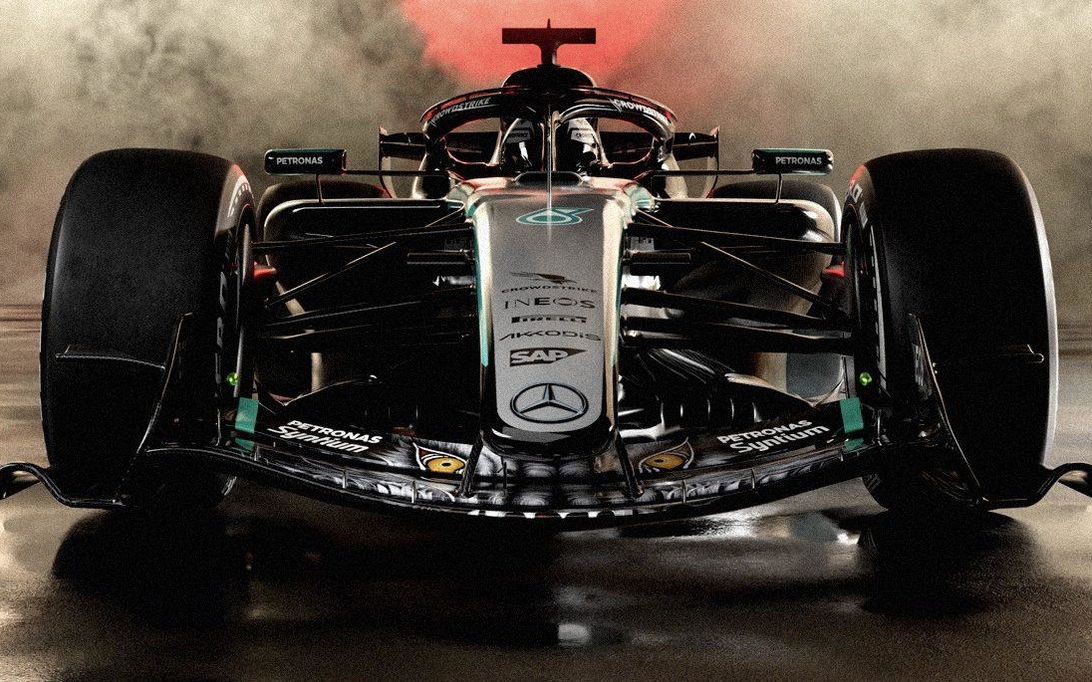
The timing sheets from Suzuka do not roar with hype. They whisper in precise decimals, exposing whether a wolf graphic on the front wing endplate signals real aerodynamic intent or merely another layer of narrative varnish layered over the W15's already formidable early season numbers.
Data as Emotional Archaeology
Mercedes arrives at the demanding Suzuka circuit with both championships in hand after securing the only pole and victory recorded so far in 2024. The wolf motif joins a sequence that began with Haas's Godzilla theme and continued through Visa Cash App RB's redesign. Team statements insist the design stands alone, separate from any reference to Toto Wolff. Yet the numbers invite deeper excavation.
Lap time drop offs often trace invisible pressure lines across a driver's weekend. When Mercedes posted its strongest long run pace in the opening races, the deltas revealed a car that maintains rhythm even as fuel loads shift. This consistency echoes patterns seen when drivers operate with minimal real time interference. The front wing graphic may project aggression, but the telemetry already encodes that mindset in sector two exit speeds and tire management curves.
- Wolf graphic placement on the endplate aligns with standard silver and black scheme
- No alteration to core aerodynamic maps confirmed in initial runs
- Third consecutive one off visual update across the grid this season
These surface facts matter less than the underlying heartbeat. Each clean lap from George Russell and Lewis Hamilton registers as a steady pulse rather than erratic spikes.
Schumacher's 2004 Blueprint Against Modern Telemetry
Michael Schumacher's 2004 campaign at Ferrari delivered near flawless consistency built on driver feel rather than constant data streams. He extracted margins from the car when telemetry suggested otherwise, setting a standard that modern teams now risk erasing through hyper reliance on algorithmic prompts. Mercedes' current dominance rests on the W15's measured pace, yet the push toward predictive pit calls and pre scripted strategy layers threatens to suppress the very intuition that once turned raw speed into championships.
This is where the sport edges toward sterility. Within five years the same data obsession that fuels these livery experiments will favor robotic decision trees over split second human judgment. Pit windows will tighten around calculated probabilities, leaving less room for the instinctive calls that defined Schumacher's dominance. The wolf on the wing offers visual theater, but it cannot mask how over layered analytics already flatten the emotional variance that once made qualifying sessions feel like personal reckonings.
"The car tells its story in the deltas, not the decals."
Charles Leclerc's reputation for errors often masks Ferrari's strategic missteps. Raw qualifying data from 2022 through 2023 positioned him among the grid's most consistent performers when strategy noise was stripped away. Mercedes avoids that particular trap by letting the W15's numbers dictate terms at Suzuka. Still, the larger trajectory remains clear: every new visual flourish risks distracting from the quiet march toward data driven predictability.
The Track Will Decide the Real Story
Suzuka rewards aerodynamic efficiency above all. The W15 has already demonstrated the pace required to convert early championship leads into further points. Whether the wolf motif adds psychological edge or simply decorates an already dominant package will register first in the sector times and tire wear graphs. Those sheets remain the only honest record.
Join the inner circle
Get the deep dives and technical analysis from the world of F1 delivered to your inbox twice a week.
Zero spam. Only high-octane analysis. Unsubscribe anytime.